The player says, “I want to do X.”
This is the moment at which the GM must make a ruling. It’s the moment in which they must decide what the result of the player character doing X will be. And, at a very fundamental level, this is what a roleplaying game is all about: Any given session of play can basically be defined by the sequence of these interactions.
In the previous installment we talked about how player expertise activates character expertise (i.e., a player must say that their character is doing something before the character does it) and also how player expertise can trump character expertise (i.e., you don’t need to mechanically determine whether a character makes a particular choice if the player has already explicitly made that choice).
Keeping that general philosophy in mind, we’re now going to look at the Art of Rulings from a slightly different angle by breaking the ruling down into three concrete steps:
1. The player states their intention.
2. The action being attempted is resolved.
3. The outcome of the action is narrated.
At face value, these seem pretty simple: The player says they want to hit someone with a sword. You make an attack roll to determine whether or not they do. Based on the mechanical resolution, you say whether or not they hit them.
In practice, though, things can get a lot more complicated than that. And you’ll find that there are more than a few pitfalls along the way.
ARE YOU SURE YOU WANT TO DO THAT?

It’s become something of a cliché:
Player: I jump down to the ground.
GM: Are you sure you want to do that?
Here’s the thing: If your players are suggesting something which is self-evidently suicidal to the GM, then there has probably been some sort of miscommunication. Simple example—
Player: I jump down to the ground.
GM: Okay. You fall 200 feet, take 20d6 points of damage, and die.
Player: What? I thought the building was only 20 feet high!
That being said, I’m not a big fan of the coy, “Are you sure you want to do that?” method. While it may warn the player away from some course of action, it’s unlikely to actually clear up the underlying confusion.
It’s generally preferable to actually explain your understanding of the stakes to the player to make sure everyone is on the same page. For example—
Player: I jump down to the ground.
GM: The building is 200 feet tall. You’ll take 20d6 points of damage if you do that.
Player: Ah. Right. Well, let’s try something else then.
Although the misunderstanding can just as easily be on the GM’s side—
Player: I jump down to the ground.
GM: Are you sure you want to do that?
Player: What? Is it covered in lava or something?
GM: No, but the building is 200 feet tall. You’ll take 20d6 points of damage if you do that.
Player: I’m planning to cast feather fall. I just want the princess to think I’ve committed suicide.
GM: Carry on.
This carries beyond deadly situations. For example, if you’re running a mystery scenario and one of the players says, “I inspect the carpet.” and you don’t know why they want to inspect the carpet, just ask them.
Player: I inspect the carpet.
GM: What are you looking for?
Player: You said it rained last night at 2 AM. If the killer entered through the window after 2 AM, there would be mud on the carpet.
GM (knowing the murder took place at 4 AM): Yup. It looks like somebody tried to clean it up, but you find some mud scraped onto the molding near the window.
If you don’t ask the question and you don’t understand what they’re looking for, you might end up feeding them false (or at least misleading) information.
Which suggests a general principle:
If you don’t understand what the players are trying to achieve with a given action, find out before adjudicating the action.
INTENTION IS NOT INITIATION
It also suggests something else: Intention is not initiation.
In the excitement of the moment, we often use strong declarative statements at the gaming table: “I jump off the roof!” or “I stab him with my sword!”
It’s certainly possible to interpret such statements as irrevocable (and there are some inexperienced GMs who do), but as we’ve just seen that frequently results in unsatisfying results. It’s better to understand those statements for what they really are: “I am intending to jump off the roof.” or “I want to stab him with my sword.”
With that being said, there obviously is a point of transition beyond which the player can’t “take back” their action: It’s the point at which we begin to resolve the intended action. That tipping point is where the action is actually initiated.
Intention should also not be mistaken for outcome. For example, if a player says, “I want to stab him through the chest with my sword!” that is not necessarily what will happen. It’s not even necessarily what will happen with a successful attack roll. For example, the player might succeed on their attack roll (successfully striking their target), only for the halfling’s shirt to be ripped aside revealing a shirt of mithril. (Or, alternatively, maybe their damage roll just isn’t high enough to support the outcome of their sword passing through the target’s chest cavity. We’ll come back to this.)
Of course, in practice the divisions between intention, initiation, resolution, and outcome will frequently collapse at the table. For example, if a player says something like, “I tell Lady Gwendolyn that she is the most beautiful maiden I have ever seen.” then, in practice, that simply happens. Similarly, “I walk across the room” usually has the automatic result of that happening – intention, initiation, and resolution are simultaneous, and outcome is almost simultaneous because the next words spoken are likely to be some variation of, “You are now on the other side of the room.”
Obviously, this is good for the flow of gameplay. You don’t have to (nor should you) pause and break the interaction down into its constituent parts every single time. But keeping in mind that these are, in fact, separate steps will be useful whenever the matter becomes contentious or confused and troubleshooting is required.
SINGLE-STEP vs. MULTI-STEP INTENTIONS
Something else to note is that single-step intentions are usually pretty easy to figure out: “I want to stab him with my sword!” is fairly self-explanatory.
But some things that look like single-step intentions actually aren’t. For example, if a player says, “I want to jump up on the crates!” then the single-step intention is “get on top of the crates”. That’s easy. But the actual goal of getting on top of the crates might be to have a better angle for shooting the bad guys. If that’s true, great. If it’s not true, though, then it might be another full round before you discover the misunderstanding. (And by that time, of course, it’s far too late to fix it.)
Ultimately, this takes us back to our general principle (understand why the players are trying to do something before adjudicating the action). It just means that you need to understand things on the macro-level, not just the micro-level. (And, in fact, it is these macro-level misunderstandings which can wreak far more havoc on a game, specifically because it’s possible to invest so many resources into them before realizing the problem.)
UNDERSTANDING THE PLAYER’S METHOD
Understanding intention, however, isn’t enough. You also need to know what method is being used to achieve that intention.
Intention and method are things that, once again, often get conflated in practice, usually because people naturally jump straight to method. “I want to stab him with my sword!” is a method which is hiding the generic intention of, “I want to hurt him!” (And, in fact, I’m generally going to discuss intention and method as if they are the same thing, because most of the time they are.)
Every so often, though, a lack of method can become a problem. This usually happens at a macro-level, and I find it most frequently crops up with social interactions: “I want to seduce the Princess.” or “I convince him to give us the troops we need.” are statements of intention, but they notably lack any method for achieving those intentions. One could similarly imagine someone saying, “I want to get to the other side of the wall” or “I want him dead!”
If we assume that player expertise activates character expertise, then another way of looking at this problem is that the player hasn’t given you enough specificity to activate their character’s expertise yet.
Fortunately, the solution to this problem is pretty easy: “How do you do that?”
That generally takes care of it. You may occasionally run into players who just want to “throw a mechanic at it.” These are problematic because (a) they often require you to frequently demand additional details and (b) they often believe that “I use Diplomacy to seduce her” or “I use Dungeoneering to get to the other side” are actually meaningful responses to the question. At that point, you just need to start pushing for specific details: How do you greet her? What do you say to her? When she says such-and-such, how do you respond?
It should be noted that this is one of the reasons why it’s the ART of rulings and not the SCIENCE of rulings. There is a sweet spot at which the method has been detailed sufficiently for the player’s expertise to activate the character’s expertise. That sweet spot depends on you, on your players, on the system, and on the immediate circumstances of the game session
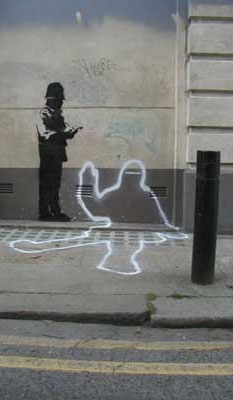 For example, imagine that the PCs are police detectives and they walk into a room that has a corpse lying in the middle of it. The intentions in this scene will most likely take the form of questions they want answered. But how specific do the questions need to be before the GM can make a ruling on whether not they can find an answer?
For most groups simply asking, “Who did it?” is probably too broad. (We could imagine someone asking that question and the GM simply telling them to make a Detective skill check to figure it out, but that’s probably not how it’s going to work 99.99% of the time.) At the other end of the scale, though, “I want to examine the body to determine a time of death.” is almost certainly specific enough. (We could imagine a GM demanding that a player specify that they’re checking the corpse’s lividity before they’ll even consider providing an answer, but that’s similarly unlikely.)
Inbetween these extremes, however, there’s a lot of room for personal preference. Nor is it a purely linear scale. For example, is “I search the room for clues,” specific enough? It’s a concrete action which, in most systems, can be associated to a fairly obvious skill check. But would you rather know exactly what they’re looking for or how they’re looking for it? Alternatively, what if someone says, “I want to figure out how they were killed.”? That’s more specific in intention, but vaguer when it comes to method. Are they examining the body? Searching the room for physical traces? Checking security footage?
FINDING THE SWEET SPOT
There’s no “right” answer here, but what’s right for you will generally be pretty intuitive.
My recommendation is that the GM should set a relatively low threshold of “that’s enough specificity to make a ruling.” If the players want to give you more specificity than that – if there are more detailed choices that they feel are meaningful to the situation or to their character – then they’re free to make those choices.
So if the PCs encounter a chest in the dungeon, their typical response might be, “I search it for traps.” And the GM can say, “Okay, that’s enough specificity. Roll a Search check.” But later on there might be another chest that they’re feeling particularly paranoid about, and so they say, “I’m going to start very carefully checking the floor around and under the chest for pressure plates” or “I’m doing a thorough visual inspection of the chest before I even touch it.” And the GM can respond to that by incorporating those additional details into their ruling. (Player expertise trumps character expertise.)
The reason this works is because the players can be assumed to provide the amount of detail that they’re currently interested in. And as long as that amount of detail is enough for the GM to feel like they can make a ruling, the result is automatically calibrated to whatever the table collectively feels is appropriate in that specific moment. (Later, in some other moment, their preference may be different. But that moment will also auto-calibrate itself without you needing to really think about it.)
INITIATION
Once you have a sufficient understanding of intention and method, it’s time to move on to the actual resolution of the action. That transition is the point of initiation, and past that point the player (and their character) has committed to it. They can’t go back and make a different decision.
This “point of no return” is fairly obvious for a sword swing: You can’t decide to take a different action after you’ve seen that your attack roll has failed. But in other circumstances it can get a little muddled. For example, if you were playing with a battlemap and someone said, “I move to this square. No, wait, I actually want to move to this square,” is that okay? Probably.
But what if they “finish” their move, take their first action, and begin discussing their intention for their second action, only to realize that they should actually have moved to a different square in order for their second action to work to best effect? Or what if, as they move out into the hallway, an ogre takes a readied action to shoot at them, and then they say, “Actually, I think I would have stayed in cover”?
My general rule of thumb is that if
(a) New information has been introduced as a result of the action; or
(b) Someone else has taken an action
then we’ve passed the point of no return.
Your mileage may vary, and in practice there’s probably still going to be a lot of situational fuzziness. Generally, that’s not a problem. But if you’re running into frequent disagreements about this with a particular group, then it may be valuable to call specific attention to the initiation point and set a clear standard.