The Alexandrian

Ex-RPGNet Review: D&D Gazetteer

January 14th, 2026

D&D Gazetteer (2000)

Review Originally Published May 22nd, 2001

Every so often I read an RPG supplement and I just can’t figure out what was going through the head of the editor who green-lighted it. This is one of those books.

The D&D Gazetteer is, essentially, a 32 page excerpt from the Living Greyhawk Gazetteer which was released several weeks prior to the Living Greyhawk Gazetteer.. And I mean that literally: Every last scrap of information to be found in the D&D Gazetteer is to be found in the Living Greyhawk Gazetteer. Every last bit. Honest. Scout’s honor. (Would I lie to you?)

So the question which ran through my mind as I sat down to review this product was simple: Why would you release two products with the exact same information in them?

To get an answer I went to Ryan Dancey (a VP at WotC who was previously in charge of the D&D product line), and his answer was simple: There is a segment of the D&D market which doesn’t want fully developed campaign worlds: They want a gazetteer-style product which just briefly covers the highlight of a campaign world – something which gives them a common gaming environment, but also lets them fill in the details.

Okay, I can buy that. Sort of. It still leaves questions in my mind as to why the confusingly similar names were used for the two products (especially since the Living Greyhawk Gazetteer isn’t, strictly speaking, a gazetteer), not to mention the release schedule which seemed to scream “we’re trying to rip people off who aren’t following our upcoming release schedule like a hawk” (since the unwary consumer would most likely pick up the D&D Gazetteer without realizing that the much more complete Living Greyhawk Gazetteer was coming).

But I can buy it. So, if you’re one of those people who prefer a less-developed campaign world, this is the book you want – not the Living Greyhawk Gazetteer.

So what is this, anyway?

Well, as most of you probably already know, Greyhawk is – arguably – the original D&D campaign setting; designed and developed by Gary Gygax himself and originally released in a product with a very similar format to the D&D Gazetteer itself. During the last years of TSR, however, Greyhawk – which had been steadily losing ground to the extremely popular Forgotten Realms setting – was canceled. When WotC bought out TSR, however, one of the first things they did was announce the return of “the original campaign” and, with the release of Third Edition, Greyhawk was made the de facto standard of the D&D game once more.

The D&D Gazetteer is a 32 page pamphlet which, basically, serves as a broad introduction to Greyhawk – a campaign world with nearly three decades of development behind it: The history of the world is covered in broad strokes; the significant stats of the major kingdoms are given and they are briefly described (an average of three paragraphs or so is devoted to each); major geographical forms are detailed; and major power groups are given a similarly distilled treatment. A full-color map of the world is also included. All of this is done extremely well.

In other words, the D&D Gazetteer does exactly what it’s supposed to do. I just don’t have that much confidence that a large segment of the market really has a desire for what it’s doing. I, personally, would be happier with the Living Greyhawk Gazetteer – but your mileage may vary.

One thing I have considered doing with the Gazetteer, however, is using it as a player resource. My read-through of the material here didn’t turn up any deep, dark secrets of the world which I wouldn’t be comfortable with my players knowing – and the low price point would make it comparatively easy for me to pick a copy up for all my players (or for them to pick one up for themselves). As a result, the D&D Gazetteer could, essentially, serve as  “player’s guide” to Greyhawk – although you might want to preview the material yourself before okaying it for your own campaign.

Writers: Gary Hollan, Erik Mona, Sean Reynolds, Frederick Weining, Skip Williams, Ed Stark
Publisher: Wizards of the Coast
Price: $9.95
Page Count: 32
ISBN: 0-7869-1742-3
Product Code: TSR11742

I remain confused about the decision to publish both a D&D Gazetteer and D&D Living Greyhawk Gazetteer just a few weeks apart. It actually kind of echoes my confusion with Wizards’ release schedule at the tail end of 2025, when they released two different starter sets a few weeks apart, followed by two different campaign settings in back-to-back months.

I remember even in response to this review there were people saying stuff like, “Wait… this ISN’T the Living Greyhawk Gazetteer?” and, “There’s two of them?!”

I also found the decision to make Greyhawk the “official” setting of D&D 3rd Edition, but then only releasing a single setting supplement (or, I guess two setting supplements) to be a weird one. The official explanation, if I recall correctly, alternated between “this way the DM can feel like it’s a setting they can do anything they want with” and “we’re leaving it for organized play to use,” which were basically diametrically opposed. Ultimately, I’m guessing there was just some weird internal politicking going on as a result of Dancey’s decision to ruthlessly (albeit necessarily) slash the number of D&D settings that were being published, and these weird product decisions were the result.

For an explanation of where these reviews came from and why you can no longer find them at RPGNet, click here.

Astronaut Watching the Sunset - Creade

In discussing the design of the Tempest Cluster a couple days ago, I mentioned that using Prospero’s Dream — a mega-station with a population of 5 million sophonts — ended up forcing me to confront some fundamental issues with Mothership sooner rather than later and used shore leave as example. A patron of the Alexandrian asked me what I meant by that, so let’s dive in a bit.

ORIENTATION

During a Mothership adventure, PCs will accumulate Stress. (Which is bad.) Between adventures they can take shore leave, which allows them to relieve the Stress and also potentially convert some or all of it into improved Saves.

Shore leaves are classified, in terms of cost and effectiveness, by port class:

  • X-Class Ports cost 1d100 x 10,000 credits, can convert 2d10[+] Stress.
  • C-Class Ports cost 2d10 x 100 credits, can convert 1d5 Stress.
  • B-Class Ports cost 2d10 x 1,000 credits, can convert 1d10 Stress.
  • A-Class Ports cost 2d10 x 10,000 credits, can convert 2d10 Stress.
  • S-Class Ports cost 2d10 x 100,000 credits, can convert all Stress.

To take shore leave, you head to an appropriate port, pay the cost, and make a Sanity Save. If you succeed, you can convert Stress. If not, you don’t. But, either way, your Stress is reduced to you Minimum Stress value.

Heading into a Mothership campaign, therefore, I knew that I would need to have one or more ports of each class, and that this could also be used to motivate the PCs to travel to various locations.

ORIGINAL INTENTION

My original plan was to design custom shore leave experiences and assign them to different ports. There would be three different shore leave experiences:

  • Vignette: Play the shore leave as a short scene, evoking the experience in a brief back-and-forth with the players.
  • Excursion: The shore leave is played out as a full scenario, similar to the beach episode from an anime series. (If you’re wondering what this might look like, check out Numenera Tavern.)
  • Slaughterhouse: Similar to an excursion (in that experience is being played out in full), but in a shore leave slaughterhouse something goes horribly wrong. (Think things like Jurassic Park, the Star Trek episode “Shore Leave”, or “there’s an android serial killer loose on the cruise ship.”)

The occasional excursion would be a fun tension relief from the horror scenarios of Mothership, but also set the players up for a future twist where an excursion suddenly turns into a slaughterhouse. The slaughterhouse experience, in turn, would color all future excursions with a patina of paranoia.

PROBLEMS

I pretty quickly realized there were a few key problems with my scheme.

First, while I remain pretty confident that the vignette/excursion/slaughterhouse setup could be awesome in a lot of Mothership campaigns, it turns out that — particularly in an open table — the PCs don’t go on shore leave together. Partly because it’s expensive, and so a player will skip shore leave if their PC hasn’t racked up enough stress to make it worthwhile. Having differing levels of Stress is even more likely at an open table, and the PCs also aren’t a cohesive, long-term group that would do downtime activities together.

Note: What if I added a benefit for going on shore leave as a group vacation? If that could motivate a group to take shore leave together, then I could use it to trigger excursions and slaughterhouses.

Second, the Mothership port-based classification of shore leaves works when you’re imagining a universe of strictly small ports floating in the vasty deeps of space. But what happens in large population centers?

Prospero’s Dream, for example, is an X-class station, so shore leave should cost an average of 500,000 credits there. But the Dream is also home to 5 million people. Does it really make sense that the only leisure activities there are only affordable to multi-millionaires? Not really.

So what was I going to do about shore leave in major population centers (including Prospero’s Dream)? And how was I going to incorporate shore leave into the structure of an open table?

The problem of shore leave was also tangled up with a wider issue of money in Mothership. I also wanted to develop a more robust system for downtime in general, which created its own knot of problems around time-keeping and travel times. (I’ll talk more about downtime in the future.)

STOPGAP SHORE LEAVE

During all of this I was continuing to run sessions. (I’m a strong proponent of prepping enough to start playing and then getting to it. Waiting until everything is perfect is a great way to never start playing at all. Plus, in my experience, there’s nothing better for motivating prep than a really great session; and practical feedback from play and players is really the only way to achieve perfection in any case.)

Shore leave, however, is an essential part of the Mothership gameplay loop, so I couldn’t just skip past it. So I implemented a stopgap system.

First, I decided that all major population centers could be assumed to have a variety of C-class shore leave options. Prospero’s Dream would also have X-class shore leave options.

Second, I didn’t want to prep a specific list of shore leave options until I’d figured out what the actual structure for shore leave was going to be. Without a specific list of options, when a PC wants to take shore leave, I just ask them what their PCs would do for relaxation and then riff off it.  I’ve used this as an opportunity to establish other elements of the setting. (And also create and expand those elements.) For example:

  • “I’d just go on a bender for two weeks.” There’s a club on Prospero’s Dream called the Stellar Burn. This is a great opportunity to set it up. (Several sessions later, the PC ended up taking a bodyguard job in the club.)
  • “Drugs.” Roll on the random drug table on page 23 of Prospero’s Dream, giving a result of, “Liquid Sword. [+] on Combat Checks for 1d5 turns. Take 2d10 DMG after.” Why would they take that drug? Well, obviously because they’re participating in an underground fight club (that I just made up).
  • Slickbay vacations in the VR worlds of the Ice Box.
  • A farming retreat, working in the glass domes of the Solarian’s religious gardening compound.

We started by resolving shore leave at the beginning of each session, but we were playtesting a lot of stuff for the beginning of each session and things were getting bogged down. So, based on some post mortem discussions with the players, we decided to experimented with moving shore leave to the end of each session: You’d go on an adventure, rack up Stress, hopefully get out alive, and then resolve shore leave to know how long you were out of commission for.

It made sense, but it didn’t work: Instead of good, solid conclusions, the ends of sessions were dragging out. Plus, when a session ended, people often wanted to head home and hit the sack, so we’d still end up with some PCs who hadn’t resolved shore leave and would need to do so at the beginning of their next session.

So after two or three sessions of that, I bounced it back to the beginning of the session, where it could also get easily folded into the downtime procedures I was slowly bringing online.

CURRENT INTENTIONS

Shore leave is still in a state of evolution and flux in the Tempest Cluster. There are several things I’m currently planning to do.

Shore Leave Menu. I want to create a specific list of available shore leaves, while also leaving open the option for the players to improvise novel experiences their character would want to pursue. This will include multiple options at Prospero’s Dream, but also options scattered around the cluster that would require travel.

Scatter Shore Leave Classes. Prospero’s Dream will have variety of C-Class and X-Class shore leaves, but I want to reserve B-, A-, and S-Class shore leaves for other locations in the cluster. Combined with the downtime travel guidelines, I think this will make them feel like more significant “destination vacations.”

Adventures in Paradise. While it looks like I can’t use “you take a shore leave and it goes wrong” as an effective scenario hook, I could still do stuff like a raid on Pandora Station or “all communication has been lost with the Cretaceous Resort.”

Shore Leave Special Effects. I’m thinking about having additional special effects/benefits that will distinguish shore leave options. Options might include removing conditions, recovery from addiction, speeding up skill training, etc. In combination with variable pricing (“there’s an A-class resort in the next system over, but if you head all the way to Katerineta you can pay half as much for an A-class experience”), this will help motivate the players to seek out specific resort experiences.

Designing the Tempest Cluster

December 30th, 2025

Astronaut staring into space from the entrance of a cave.

The Tempest Cluster was created to be the setting for my Mothership open table. This is a peek behind the curtain for my setting prep.

When I first sat down to design the cluster, I knew a few things:

  • As an open table, the PCs would have a home base — a point from which essentially every session would begin.
  • I’d read several Mothership adventures, and had a short list of scenarios that I already knew I wanted to use. (This gave me some guidance what the cluster would need so that I could place those adventures.)
  • Mothership requires a setting to have some specific infrastructure to work (e.g., ports for shore leave).

I got started with a short brainstorming session, just listing some cool ideas and broad concepts for star systems and planets that I thought would be interesting (or were dictated by the things I already knew the cluster would need). Then I laid that sheet of paper to one side and grabbed two more blank sheets. On one of these I began sketching jump node maps and on the other I started naming and listing features for specific systems.

I knew I wanted to keep the scale of the cluster relatively small. First, if travel time became too large, it would cause problems with keeping the PCs in sync. More importantly, I know that layering material is more effective than dispersing it: It’s more interesting to put three adventures on the same moon and see what happens when their concepts start bumping into each other than it is to, for example, create a whole new system for every adventure.

On the other hand, I wanted the cluster to be large enough that some stuff would be near to the PCs’ home base and other stuff would feel far away. It helped when I realized that, since the nature of the cluster would naturally constrain the open table, I could place the PCs’ home base at one end of the cluster (in what would end up being the Ariel system) and immediately create a “far end” (in the Verstern system). This is also the origin for the Long Road, the series of dark systems between Verstern and Hajar:

Jump map. The star system Verstern is connected to Hajar by a series of jumps through five dark systems.

There were originally several more dark systems in the Long Road, but they ended up making travel from Ariel to Verstern to lengthy and I needed to adjust it. (In much the same way that I often let players make adjustments to their characters after the first couple sessions of a campaign, I also won’t hesitate to do some quick setting retcons if we discover something isn’t working in actual play.)

HERE THERE BE DRAGONS

I also deliberately DIDN’T fully flesh out every detail of the setting. For example, I could’ve gone through and said things like, “Hajar has exactly nine planets. Hajar-I is a super-Jupiter. Hajar-2 is a small terrestrial planet. Hajar-3 is an all-water planet, and between Hajar-2 and Hajar-3 there’s a binary pair of dwarf planets.”

Filling in concrete details like this can lead you to discover interesting stuff about your setting, but at this early stage I generally prefer to sketch in enough detail to give everything a unique character — Hajar has multiple asteroid belts; the Ternary is filled with lots of Earth-like planets; Mrachni is a black hole — but leave a lot of blank spaces where I can plug stuff in later.

For example, I’ve recently been reading Joel Hines’ Tide World of Mani and Desert Moon of Karth, a pair of linked planet supplements. If I’d already detailed every planet in every star system of the cluster, I’d either be unable to use these supplements or I’d need to open up a new jump point and expand the cluster. Instead, looking around, I can see that there’s plenty of room in the Laxmi system. (I’d previously placed a different adventure in that system, which established that the two major terraforming megacorps are engaged in a large campaign of espionage and sabotage there. So it’ll be really interesting to weave the politics of Mani and Karth into that conflict.)

Similarly, I also left the precise history of the Tempest Cluster rather nebulous. This is somewhat unusual for me, as I often enjoy exploring and developing a setting through its history, but in this case I wanted to let things cook a little longer before nailing down dates to things. (Part of this was also that I wasn’t entirely sure how I wanted to handle the calendar yet.) After about a dozen sessions of play, however, I ended up with some tangles of continuity — between character backgrounds, scenario setup, and player questions — that needed specificity to work out. My current timeline, therefore, looks like this:

  • 90 Years Ago: The Long Road discovered between Verstern and Hajar.
  • 80 Years Ago: KAS operations in the cluster abruptly come to an end.
  • 25 Years Ago: Golyanova Bratva takes over Prospero’s Dream.
  • 15 Years Ago: Ternary discovered.
  • 10 Years Ago: Jadis discovered.
  • 2 Years Ago: Cloudbank pulls out of the Tempest Cluster.

As you can see, this is still pretty barebones, but it’s enough to make sure that historical cause-and-effect stays consistent. (KAS can’t shut down before they discover the Long Road; the Bratva needs to take over Prospero’s Dream before the Ternary is discovered. And so forth.)

A key question for me in setting these dates was how long the “land rush” in the Ternary had been going on. I wanted it to be recent enough that I could justify having whole new worlds which had been barely been touched, but also long enough that if I had a “colonists have been here awhile and then things went to shit” scenario, then I could slot that in.

Note that leaving room for the adventures you haven’t dreamt of yet means (a) leaving undefined space, but also (b) making sure you’ve got the broad conceptual scaffolding. For example:

  • An adventure set on an asteroid? I’ve given myself both the debris fields of Mrachni and the multiple asteroid belts of Hajar.
  • Urban adventures? Katerineta is an older colony world with established cities, etc.
  • Colony worlds? Gave myself a lot of conceptual space for this.

In many cases, I’ll try to give myself a couple different options. As continuity begins accumulating around one option, it may box other stuff out, so it’s nice to have a fallback.

My inclusion of dark systems also plays a part here: If I ever need more space… well, I guess one of those undefined dark systems actually has some interesting stuff in it!

Of course, not everything needs to be (or should be!) left a cipher. Where you need or want detail, don’t hesitate to lock it down. For example, I knew that I wanted the Ariel system, where the PCs’ homebase would be located, to be fairly barren (as a contrast to all the exciting places they’d travel to). So in this case I did describe and define all the extant planets in the system.

MEGACORPS

Having multiple megacorps in the cluster similarly gives me options: If a particular mission, project, colony, or facility doesn’t feel right for one megacorp, I can assign it to another. Plus, with multiple megacorps in play, I can have them in conflict with each other, and all kinds of adventure scenarios can spill out of that conflict.

From the beginning, I knew that I wanted two megacorps fighting over colonization and terraforming in the cluster. I’d created the name Salem-Watts when I wrote up the description of pseudomilk predators last year: They ran the Kikkomari V colony. I briefly played with the idea of including the Kikkomari system in the Tempest Cluster, but ultimately decided it would instead exist “offstage” in the Oberon Cluster.

Meanwhile, I’d used Behind the Name to generate some names, and that pushed me into Arabic influences for the Hajar and Jadis systems. (I can’t actually reproduce the steps that led me to Tasm and Jadis, but that’s the fun part of going down the research rabbit hole.) The Alshaahin megacorp, with its operations based out of Imliq Station (named after a king of Jadis), flowed pretty smoothly from this.

I added Namir-Radi as a sort of catch-all megacorp for any projects that didn’t fit Salem-Watts or Alshaahin. This has inadvertently, and largely through coincidence, caused it to become the most prominent megacorp in the campaign so far.

The last megacorp, Cloudback, is taken from the Gradient Descent adventure, which I’m planning to incorporate into the open table. My original plan had been to swap out the name “Cloudbank” for one of the other megacorps, but I wasn’t sure which one, so I decided to put a pin in it. Before I had a chance to circle back to that, however, one of my players rolled up an android character and, in exploring their background, I ended up invoking the name Cloudbank.

This turned out to be fortuitous, however, because it led me to develop the “Cloudbank mysteriously pulled out of the cluster two years ago” concept, which has created some low-level intrigue for the players who are paying attention and is also beginning to spin off a lot of ancillary developments that are really interesting, too. (For example, what happens when the megacorp who was providing hospital services to new colony worlds suddenly shuts down all the hospitals?)

CHARACTER BACKGROUNDS

This touches on something else I think about when developing a new setting: I want enough context that we can hang PC backstories off it. Furthermore, I’ve learned the power of being able to give players a couple different choices.

Player; I’m playing a Marine.

GM (Me): Okay, there are a couple military outfits in the cluster. First, there’s the Tempest Mercenary Company. There’s also the Novikov Naval Eskadre based  out of the Verstern system.

For an open table like this, what I’m usually doing is asking for an initial concept pitch (“Tell us about your character”) and then following up by either (a) taking a general idea (“I think I came here to do scientific research”) and making it specific (“you could’ve been working for Namir-Radi”) or (b) prompting them with a question (“if you came out here to research terraformed biomes, how did you end up bumming jobs on Prospero’s Dream?”).

Even with this limited background development, it’s remarkable how much it can end up driving the development of the settings (like the example of Cloudbank spinning off in a completely unexpected direction because someone happened to roll up an android).

PROSPERO’S DREAM

Using Prospero’s Dream as the home base for the open table was a gut instinct. Reading A Pound of Flesh, the supplement where the station was first detailed, I was really intrigued by the three phased fronts and how they’d been cleverly integrated throughout the book to create a palpable sense of passing time and escalating stakes. I saw the contours of how I could bootstrap that structure into an open table to potentially create something really cool, but I knew it would only work if the PCs were based out of the station.

We haven’t played enough to be sure how all that will turn out, but the initial results have been really promising.

On the other hand, having a space station with a population of 5 million as a home base for the campaign also forced me to confront a lot of issues with Mothership (like shore leave being classified by port type, which bizarrely means Prospero’s Dream has no dive joints) sooner rather than later.

The layout issues with A Pound of Flesh (pink text on a pink background?!) also make it incredibly unfriendly to use at the table. I have “completely reorganize all this information so that it’s not a headache to use it” on my To Do list.

TO DO

Speaking of my To Do list, this write-up of the Tempest Cluster is very much a beginning, not an end. My own version of the document has already expanded quite a bit as I add emergent details from character backgrounds (“kinfolk mines? interesting…”) and cross-reference scenario notes (Nirvana is one of the moons of Apsaras; Ypsilon-14 is located in the Hajar system; etc.).

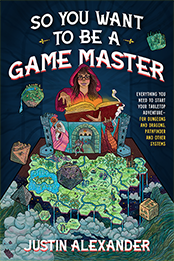
But, as I talk about in So You Want to Be a Game Master, one of the great things about this initial setting write-up is that it also doubles — with little or no change — as a setting briefing for the players that I could post to our Discord.

(In practice, at an open table, many players nevertheless won’t have the opportunity/time to read it. So I have a five-minute spiel for new players sketching in the broad outlines of the cluster, which I can then flesh out with additional details as they roll up their characters.)

Some of the stuff on my lengthy To Do list dates back to when I originally wrote the setting up (stuff that I knew I would need to add at some point), while other needs and opportunities have been discovered through play. Examples of stuff I need/want include:

  • A menu of shore leave options that the PCs can choose during downtime.
  • Exotic shopping options, where the PCs can seek out non-standard equipment.
  • Alphanumeric codes for the dark systems (KU-2B, KU-17, etc.) for easier referencing and keying.
  • Name lists for the major cultural groups in the cluster.
  • Name the spurs of Prospero’s Dream for easier referencing/keying. (Possibly add urbancrawl layers.)
  • Figure out exactly how the NNE Volk 79 security patrols along the Long Road work.
  • Where is the Stratemeyer Syndicate?

At the moment, pure worldbuilding stuff — no matter how interesting — is largely backlogged behind finetuning my open table procedures (downtime, life events, job board, journeys, etc.) and scenario prep. So my setting notes are largely only getting expanded as those needs dictate.

Honestly, this is how I do most of my worldbuilding. Every so often inspiration will strike and I’ll start exploring the setting out of pure curiosity, but for the most part I’m designing stuff for play and letting the setting slowly accrete over time.

Which also means that I have only the slightest inkling of what the Tempest Cluster will look like a year from now. Particularly since, if all goes well, the players will begin having larger and larger effects on the state of the world.

And given that this is Mothership, the whole place might have been eaten by an Elder God or invaded by time-traveling aliens unwittingly released by the PCs.

MORE MOTHERSHIP
Mothership Review: Adventure Sphere
Mothership Review: Trifold Adventures
Mothership: Thinking About Money
Mothership: Thinking About Combat
Untested Mothership: Astronavigation
Untested Mothership: Ablative AP
Mothership Monsters: Pseudomilk Parasites & Predators
Unboxing Mothership!

Tempest Cluster

December 29th, 2025

Tempest Cluster Map On one side of the map the Verstern system is connected to the Oberon Cluster by a Jump-2 point. A series of fix unnamed Jump-1 systems leads from Verstern to Hajar, with a spur midway leading to the Mrachni system. Jump points from Hajar lead to both Jadis and Ariel. Ariel connects to the Banquo Cluster via a Jump-4 point, but also has a Jump-1 connection to Parvati, which then connects to Laxmi and Vani. Parvati, Laxmi, and Vani are collectively labeled the Ternary.

The Tempest Cluster was designed as the setting for my Mothership open table.

The Tempest Cluster is located in the Shakespeare Sector, its systems rimspin of the shattered, balkanized remnants of Terran Hegemony. It was previously two unconnected micro-clusters:

  • Verstern, connected by a Jump-2 gate to the Oberson cluster
  • Ariel and Hajar, connected by a Jump-4 gate to the Banquo cluster

Verstern lay on the edge of the Russo-Germanic Novikov Confederation. The isolated, low-value Ariel and Hajar systems were squabbled over by a variety of megacorp subsidiaries.

The lengthy Jump-1 route between Verstern and Hajar was accidentally discovered by a xenoarchaeology expedition, creating the unified Tempest Cluster. This created a minor trade route between the Oberon and Banquo clusters (albeit inhibited by the Jump-4 link to Banquo), but more importantly, the resources of the Hajar and Ariel systems were suddenly in demand on Katerineta, the old Verstern colony world.

The Tempest Cluster, however, remained an ill-visited backwater.

Everything changed, however, with the discovery of the Ternary – three systems directly linked via Jump-1 points, each with multiple worlds in the habitable zone. It was a massive colonization target – people and megacorp money began flowing into the cluster at an unprecedented rate.

This is the Tempest Cluster today: The fate of a dozen newborn worlds being written among the stars.

Because Jump-1 drives are more common, cheaper, and less prone to time dilation, space naturally becomes divided into clusters of systems connected by Jump-1 points. Galactic directions are divided into rim vs. core and trail vs. spin. Thus, “rimspin” is towards the edge of the galaxy and in the direction the galaxy is spinning.

TEMPEST STAR SYSTEMS

The Tempest Cluster has eight major systems and, of course, numerous dark systems, six of which lie along major trade routes.

Dark Systems: These intermediary systems along the cluster’s jump routes contain little of interest (or, at least, little that has yet been discovered). Ships mostly just pass through these systems on their way from one jump point to another, although there is a risk of pirates and the other horrors of rimspace.

ARIEL

The gateway to the Banquo Cluster, the Ariel system is a barren system. It has numerous dwarf planets in the outer system, but only two planets of note:

  • Ariel I is a hot Jupiter which has gotten too close to the star. Its atmosphere is currently being ripped away. A deuterium plasma mining station operated by Salem-Watts called Hephaestus can be found within the “Roche river.”
  • Ariel II is a gas dwarf. It also orbits relatively close to the star and has been stripped of its moons.

Prospero’s Dream, a station whose population has recently swelled to 5 million sophonts, orbits Ariel II. The station was dying before the Ternary was discovered, allowing the station to be taken over by the Golyanovo Bratva, a mafia with origins in the Oberon Cluster. The bratva has held onto control with the muscle of the Tempest Mercenary Company, although the rapid expansion of Prospero’s Dream is now taxing the station’s existence in different ways.

THE TERNARY

These recently discovered star systems are filled with colonization and terraforming targets. The resulting colony rush has only been accelerating as more terraforming projects come online.

  • Parvati
  • Vani
  • Laxmi

The systems are named for the Tridevi — the three principle Hindi goddesses.

Pandora Station: Located in the Parvati system, Pandora Station is an infamous X-class “pleasure city” – the perfect place for the best shore leave of your life… if you can afford it.

Moons of Apsaras: Apsaras, a dark gas giant in the Vani system with an abnormally small magnetosphere, is orbited by multiple planet-class moons with terraforming potential.

HAJAR

The Hajar system recently (in astronomical time scales) had multiple terrestrial planets destroyed. (The current theory is that a rogue planet passed through the system. In addition to destabilizing some planets in its own right, it also caused the orbit of Hajar II, a super-Jupiter, to move inward, wreaking havoc in its wake.) This has resulted in multiple asteroid belts, several of which currently orbit at strange inclines to the planetary disk.

Generations of asteroid miners who have made Hajar their home are now having to contend with increased hypercorp interest in the system’s riches. There’s also been a significant uptick in piracy.

JADIS

On the far side of the Hajar system, Jadis is another newly discovered system with multiple terraforming targets. With so much focus already placed on the Ternary, development has been slow here.

The system is currently governed by the Jadis Terraforming Conglomerate (JTC), which is effectively controlled by the Alshaahin megacorp.

Imliq Station: The JTC is based out of Imliq Station, in orbit around a planet named Tasm.

Jadis is named after the “lost” Arabian tribes of Tasm and Jadis.

MRACHNI

Mrachni is a black hole orbited by numerous dead worlds, many of them ten or twenty times the size of Earth. A scattering of isolationists and scientific stations can be found throughout the system.

There are spacer tales of a fabled Eden — a habitable, Earth-like world hidden somewhere within the glare of Mrachni’s accretion disc, warmed by the blueshifted light of the cosmic background radiation. But no reliable evidence of such a place has ever been found.

VERSTERN

Verstern is a border system of the Novikov Confederation.

Katerineta is an old colony world with a population just over 1 billion. The equatorial region is too hot for human habitation, but both polar regions have been settled. The south lacks a continental mass and is referred to as the Archipelago.

LX-510 is a Class-B military port that has expanded to also support trade between the Oberon and Tempest clusters. It’s home to the Novikov Naval Eskadre (NNE) Volk 79, which is spread thin ostensibly providing anti-piracy patrols in the Verstern-Hajar corridor.

MEGACORPS

ALSHAASHIN (Royal Falcon): A terraforming megacorp based out of the Banquo Cluster. The clan-guilds of Alshaahin control the Jadis Terraforming Conglomerate (JTC), which governs the Jadis system.

SALEM-WATTS: A competing terraforming megacorp based out of the Oberon Cluster.

NAMIR-RADI: A hydra-headed hypercorp with multiple subsidiaries active in the Tempest Cluster.

CLOUDBANK: Cloudbank specializes in medicine, biotech, cyberware, androids, and artificial intelligence. They had a growing presence in the Tempest Cluster, but recently pulled out of the cluster entirely for reasons which remain largely unexplained.

Next: Designing the Tempest Cluster

Woman in Cybergear

There’s been Discourse™ of late about the use of GenAI/LLMs in creating RPGs. Not the artwork in an RPG book (that’s a whole ‘nother kettle of fish), but the actual design and development of the game itself: Feeding game text into ChatGPT, Claude, or similar chatbots and asking it to critique, analyze, revise, or otherwise provide feedback.

If you know anything about how LLMs work, it will likely be immediately obvious why this is a terrible idea. But the truth is that a lot of people DON’T know how LLMs work, and that’s increasingly dangerous in a world where we’re drowning in their output.

Michael Crichton described the Gell-Mann amnesia effect: “You open the newspaper to an article on some subject you know well. In Murray’s case, physics. In mine, show business. You read an article and see the journalist has absolutely no understanding of either the facts or the issues. Often the article is so wrong it actually presents the story backwards—reversing cause and effect. (…) In any case, you read with exasperation or amusement the multiple errors in a story—and then turn the page to national or international affairs, and read with renewed interest as if the rest of the newspaper was somehow more accurate about far-off Palestine than it was about the story you just read. You turn the page… and forget what you know.”

Flipping that around, I think analyzing stuff like LLMs in arenas we’re familiar with is valuable because we can more easily see the failures and absurdities. My particular arena of expertise and familiarity — and one I think is likely shared by most of you reading this — is RPGs. So let’s use that familiarity as a lens for looking at LLMs.

Before we start, let’s set a couple baselines.

First, I don’t think AI is completely worthless. I also don’t think it’s the devil. Whether we’re talking about LLMs or some of the other recent technology that’s all getting lumped together as “AI” or “GenAI,” there’s clearly specific ways of using those tools (and also building those tools) which can be ethical and valuable. I don’t think pretending otherwise is particularly useful in trying to prevent the abuse, theft, propaganda, systemic incompetence, and other misuse that’s currently happening.

Second, I am not an expert in LLMs. If you want a truly deep dive into how they work, check out the videos from Welch Labs. (For example, The Moment We Stopped Understanding AI.)

I think the key thing to understand about LLMs, however, is that they are, at their core, word-guessers: They are trained on massive amounts of data to learn, based on a particular pattern of words, what the next most likely word would be. When presented with new input, they can then use the patterns they’ve “learned” to “guess” what the next word or set of words will be.

This is why, for example, LLMs were quite bad at solving math problems: Unless they’d “seen” a specific equation many times in their training data (2 + 2 = 4), the only pattern they could really pick out was X + Y = [some random number].

LLMs are actually still incredibly bad at math, but the “models” we interact with have been tuned to detect when a math problem is being asked (directly or indirectly) and use a separate calculator program to provide the answer. So they look significantly more competent than they used to.

DESIGNING WITH CHATGPT

It’s truly remarkable how far what are fundamentally babble generators can take us. With nothing more than word-guessing, LLMs can create incredible simulacrums of thought. Every generation interprets human intelligence through the lens of modern technology — our brains were full of gears and then they were (steam) engines of thought before becoming computers — but it’s hard not to stare into the abyss of the LLM and wonder how much of our own daily discourse (and even our internal monologue?) is driven by nothing more than pattern-guessing and autonomic response. We see it in the simple stuff:

Ticket Taker: Enjoy the show!

Bob: Thanks! You, too!

But does that sort of thing go deeper than we’ve suspected?

Regardless, there’s one thing missing from LLMs: The ability to form mental models. They can’t read a text, form a mental model of what that text means, and then use that mental model. They can’t observe the world, think about it abstractly, and then describe their conclusions. All they can do is produce a stream of babbled text.

This is why the term “hallucinate” is deceptive when used to describe LLMs’ propensity for spreading misinformation. A “hallucination” would imply that the LLM has formed a false mental model of the world and is now describing that false understanding. But this is not, in fact, what’s happening. What’s happened is that it guessed a word and that word, while matching the patterns found in the model’s training data, did not conform to reality. It’s just words. There is no underlying mental model behind them.

It’s also why asking LLMs to critique anything more complex than the grammar of individual sentences is a waste of time. In order to meaningfully critique something, you have to be able to form a mental model of that thing, have deep and original thoughts about it, and then figure out how to express the conclusions you’ve drawn. An LLM can’t do any of that. At best, it can produce a simulacrum of criticism — a babble that you could perhaps use like a Rorschach blot to free associate your way to a useful insight.

Which brings us to the current movement convinced that they can meaningfully “collaborate” with ChatGPT when designing RPGs. They want to feed in the text of a rulebook and ask the LLM things like:

  • Can you build an encounter for 7th level characters?
  • Is this new class I’ve designed balanced with existing classes?
  • Are there any problems with the probability of my core mechanic?
  • What attribute scores and skills should I have?

In light of what we know, of course, we can immediately see the problem: ChatGPT can’t reliably do basic arithmetic, but it can definitely do complex analysis of mathematical game balance in a system of rules it fundamentally can’t understand?

Someone recently challenged me to “see for myself”: Take an existing RPG, feed the rules into ChatGPT, and ask it to playtest the rules.

This was an interesting challenge, and I’m certainly always open to being proven wrong.

Let’s take a peek at what happened.

CHATGPT DOES A PLAYTEST

I pointed ChatGPT to a copy of Lasers & Feelings, a one-page space opera RPG by John Harper. Then I asked it to generate a playtest transcript of the game.

The choice of game was deliberate: Using a one-page RPG should make it much easier for ChatGPT to analyze and use the entire text. The game is also limited to two mechanics: The action roll and Helping (which adds +1d6 to another character’s action roll). This was the challenge in its easiest form possible.

ChatGPT begins by saying this:

Lasers & Feelings — Playtest Session Transcript

GM: You’re the crew of the interstellar scout ship Raptor, alone while Captain Darcy recovers in a medical pod.

ChatGPT is combining two different sentences from the PDF. Then:

Your mission: find the source of a distress signal coming from an uncharted system.

This is incorrect. In Lasers & Feelings, the GM is supposed to roll on a mission generator. ChatGPT’s mission cannot be generated by the game. But let’s give it a pass here, because there are plenty of human GMs who would also ignore the mission generator and just riff.

ChatGPT now moves on to character creation. It does a decent job of identifying the four steps of character creation, but almost immediately screws up basic math:

Number: 3 (balanced but slightly leaning Lasers)

In Lasers & Feelings, the player picks a number for their character from 2-5. “A high number means you’re better at LASERS (technology; science; cold rationality; calm, precise action). A low number means you’re better at FEELINGS (intuition; diplomacy; seduction; wild, passionate action).”

The number 3, you’ll note, does not “lean Lasers.” It does the exact opposite.

Furthermore, there’s no such thing as “balanced” in Lasers & Feelings. The game specifically doesn’t give you the choice of a midpoint. The whole point is that there’s a tradeoff between Lasers & Feelings. ChatGPT has fundamentally misunderstood the core design principles and theme of the game.

After character creation, ChatGPT proceeds with a transcript of play, and it almost immediately makes a skill check:

Lee: I want to pilot us carefully in. That’s Lasers because it’s technical precision.

Lee rolls 1d6 + 1d6 (prepared) since they have experience navigating rock fields.

This is incorrect. Lee is a Pilot, which means he’s an expert in piloting. If he’s also prepared (as ChatGPT asserts), he should be rolling 1d6 + 1d6 (expert) + 1d6 (prepared).

GM: Your target number is 3 (your stat). Under 3 counts as a success for Lasers.

This is incorrect. A 3 would also count as a success (in addition to generating a Laser Feeling).

ChatGPT cites this blog post as a source for this, but the blog post summarizes the mechanic correctly. ChatGPT just screwed up.

Lee rolls: 2, 5. ✔️ One die under 3 — Success!

GM: You thread us through the asteroids. The distress beacon pings again. What do you do?

According to the rulebooks: “If one die succeeds, you barely manage it. The GM inflicts a complication, harm or cost.”

The GM did not inflict a complication, harm, or cost. ChatGPT has screwed up again.

The “transcript” continues in this vein. Sometimes ChatGPT gets the rules right. It frequently doesn’t, in a wide variety of ways.

You can see the pattern and understand the root cause: ChatGPT can’t actually understand the rules of Lasers & Feelings (in the sense of having the words of the rulebook create a mental model that it can then use independent of the words) and, therefore, cannot truly use them. It can only generate a sophisticated pattern of babble, guessing what the next word of a transcript of Lasers & Feeling game session would look like based on the predictive patterns generated from its training data.

And if it can’t understand the rules well enough to accurately call for a simple action roll, what possible insight could it have into the actual design of the game?

None, of course. Which is why, when I asked it what changes it would make to the game to reinforce the themes, it replied with stuff like:

  • The GM should only be allowed to inflict consequences that affect relationships. (Making the game functionally unplayable.)
  • Encourage players to switch modes between Feelings and Lasers by inflicting a -1d penalty to the next Feelings roll each time a characters uses Lasers. (This rule would obviously have the exact opposite Plus, it doesn’t recognize that many rolls only use 1d, so how would this rule even work?)

Maybe one of these nonsense ideas it generated will spark an idea for you, but it’s inspiration from babble. Mistaking it for actual critical insight would be a disastrous mistake.

AI GAME MASTERS

Reading ChatGPT’s “transcript” of play, however, it’s nevertheless impressive that it can produce these elements and distinct moments: The distress call isn’t from the rulebook. It’s plucked that out of the ether of its training data. When I mentioned earlier that it’s remarkable how much can be achieved with an ultra-sophisticated babble engine, this is the type of thing I was talking about.

Examples like this have led many to speculate that in the not-too-distant future we’ll see AI game masters redefine what it means to play an RPG. It’s easy to understand the allure: When you want to play your favorite game, you wouldn’t have to find a group or try to get everyone’s schedules to line up. You’d just boot up your virtual GM and start playing instantly. It’s the same appeal that playing a board game solo has.

Plus, most publishers know that the biggest hurdle for a new RPG is that, before anyone can play it, you first have to convince someone to GM it — a role which almost invariably requires greater investment of time, effort, and expertise. If there was a virtual alternative, then more people would be able to start playing. (And that might even end up creating more human GMs for your game.)

There will almost certainly come a day when this dream becomes a reality.

But it’s not likely going to come from simply improving LLM models.

This Lasers & Feelings “transcript” is a good example of why:

  • The PCs are following a distress signal.
  • It turns out that the distress signal is actually a trap set by bloodythirsty pirates. Two ships attack!
  • ChatGPT momentarily forgets that everyone is onboard ships.
  • We’re back in ships, but now there’s only one pirate ship.
  • And now they’re no longer pirates. They’re lost travelers who are hoping the PCs can help them chart a course home.

It turns out that the GM’s primary responsibility is to create and hold a mental model of the game world in their mind’s eye, which they then describe to the players. This mental model is the canonical reality of the game, and it’s continuously updated — and redescribed by the GM — as a result of the players’ actions.

And what is ChatGPT incapable of doing?

Creating/updating a mental model and using language to describe it.

LLMs can’t handle the fictional continuity of an RPG adventure for the same reason they “hallucinate.” They are not describing their perception of reality. They are guessing words.

The individual moments — maneuvering through an asteroid belt to find the distress signal; performing evasive maneuvers to buy time for negotiations; helping lost travelers find their way home — are all pretty good simulacra. But they are, in fact, an illusion, and the totality of the experience is nothing more than random babble.

And this is fundamental to LLMs as a technology.

Some day this problem will be solved. There are a lot of reasons to believe it will likely happen within our lifetimes. It may even incorporate LLMs as part of a large AI meta-model. But it won’t be the result of throwing ever greater amounts of computer at LLM models. It will require a fundamentally different — and, as yet, unknown — approach to AI.

Archives

Recent Posts

Recent Comments

Copyright © The Alexandrian. All rights reserved.