The Alexandrian

I just wrapped up my current thoughts on using cities in RPGs, so let’s take a moment and go back in time by a decade or so. In May 2002, I sent Bob Bledsaw a query letter for writing an updated version of the City-State of the Invincible Overlord. He sent me a polite, but somewhat vague, rejection. The reason for the vagueness became apparent a couple of months later when Necromancer Games announced their license to do exactly that thing. So I repackaged my proposal and shipped it over to Necromancer Games. I knew that was a longshot and wasn’t surprised when I got another polite rejection from Clark Peterson because they had their own plans for how to approach the material and a team already in place. I then filed it in a digital bin.

My goal was to be very faithful to the original, very minimalist key. But I also wanted to expand the material to make it more detailed and more useful. In order to demonstrate the approach I wanted to take, I adapted the entirety of Temple Street. (I would have supplied stat blocks for all the characters.) Perhaps you’ll find it of interest.

TEMPLE STREET
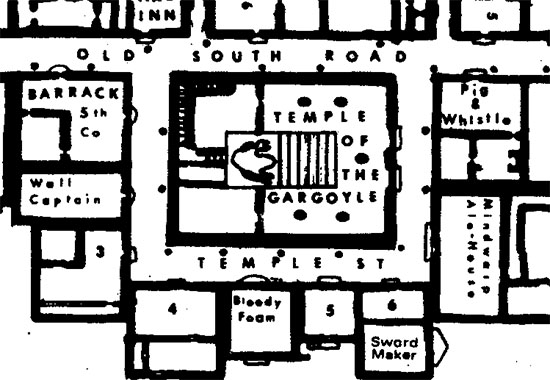
Temple Street - City State of the Invincible Overlord

The broad cobbles of Temple Street were first laid down roughly five centuries ago as part of the broad, sweeping stone plaza which was set around the newly constructed Temple of the Flesh. Founded by a sect of Atlani cult worshippers, the Temple of the Flesh had been driven from their original site near the Square of the Gods by religious persecution. At the time the future site of Temple Street was an abandoned dirt track laying between the Wall and the South Road (which was, at the time, the southernmost boundary of the City State).

Over the course of the next three hundred years the Temple of the Flesh slowly waned, and as they did they were forced to give up more and more of their lands. Finally the Temple of the Flesh died out entirely, and the remnants of their once mighty stone plaza were refurnished into the modern Temple Street.

Despite the fact that it was abandoned, the former temple continued to dominate Temple Street. Various businesses and religions attempted to use the site, but mishaps and strange deaths seemed to plague anyone who came into possession of the property. A legend of a curse sprang up, and the property became totally dormant.

Then, roughly fifty years ago, it became apparent that the Temple had become occupied once again. Strange noises were heard emanating from the building, and shadowy figures were seen coming and going during the dark hours of the night. It is rumored that, although many brave souls entered the Temple to investigate, none ever returned.

Three years after this began, the Temple suddenly fell silent. Then, a few weeks later, a screed appeared on the Temple doors. Those who dared approach to read the parchment discovered that the long-deserted building had finally been claimed… by the Temple of the Gargoyle.


LOCATION: THE BLOODY FOAM

The Bloody Foam lies in the shadow of both the Temple and the Wall, drawing its primary custom from the militiamen of the 5th Company (whose barracks lie just up the street) and the heartier variety of wanderers passing through the City State – the type of wanderers who look for their drinking holes in the backwaters of whatever community they happen to be passing through. The Foam is owned and operated by Hangharid Goldenhand, a former adventurer himself.

The Foam’s dark interior is decorated in black oak, and typically lit by only a handful of murky lanterns and the bright flames which are perpetually kept stoked in the Foam’s massive fireplace. The resulting atmosphere is often foreboding to the newcomer, but welcoming to the regulars.

Upstairs, in addition to the quarters kept by Hangharid and his barkeep, are a number of rooms which are rented out (usually to one adventuring party or another). A back room is devoted to various games of chance.

CHARACTER: HANGHARID GOLDENHAND

Hangharid was once a hired fighter who travelled up and down the coast in the service of many different masters. Those days came to an end, however, when he lost his right hand (stories of how this happened, exactly, vary greatly – see sidebar text). Taking the small stash of wealth he had accumulated over the years, Hangharid bought a golden facsimile to replace his missing appendage, and spent the rest on the Bloody Foam.

The Foam’s previous owner had allowed the establishment to decay precipitously, but Hangharid performed a serious renovation, and when the Bloody Foam opened again he offered free drinks for a week to the militiamen of the 5th Company (whose barracks are only a block away, on Old South Road). By the time that week came to an end, Hangharid had earned himself a core of loyal customers who have come back, year after year.

Since opening the Bloody Foam, Hangharid has established himself as something of a community leader, and he seems to have a wide-ranging set of connections throughout the City State and beyond. Recently, regular patrons at the Foam have noticed that Hangharid has been visited regularly by strangers wearing finely embroidered green cloaks.

CHARACTER: COCKROACH BENGURD

Bengurd is the barkeep at the Bloody Foam. Rumor has it that he was once Hangharid’s torchbearer. Years later, when Hangharid heard that he had fallen down on his luck, he tracked him down and offered him a job. Bengurd gratefully accepted. Since then, Cockroach (apparently a nickname – but the only given name anyone seems to know him by) has become a fixture of the Bloody Foam.

CHARACTER: SEYLASHAHL

Seylashahl has been working at the Bloody Foam for a little over a year, and has quickly become the favorite barmaid of all the regulars – largely on the back of the amazing, and suggestively bawdy, juggling acts she works into her daily routines. Although she has strangely beautiful and alien features, no one is sure where she comes from.

Rumor: The Golden Hand

Hangharid never speaks of how he lost his hand, and this cavernous silence has been filled by a wide variety of tales, ranging from the mundane to the exotic. Some speak of a bet with a dark god which went awry; of torture at the hands of the Purple Claw; of strange traps buried beneath the surface of the earth. A few claim that the hand was lost in a drunken brawl. At the moment, however, the most popular tale tells of an audience with the Overlord and a secret mission to the catacombs beneath the city.

Perhaps the strangest rumors of all, though, are those that suggest that the hand itself has mystical powers – or is, in fact, a sentient creature in its own right. Although none claim to have ever seen any evidence of this, there are many who cast long and questioning stares at Hangharid’s golden fingers.

Rumor: Escape!

A group of militiamen who have just come off duty claim that a sabretooth tiger which escaped from the Overlord’s Zoo may be in the area. They warn that it is treason to harm a Zoo animal, but there may be a reward for anyone who can return the creature unharmed…


LOCATION: SEITERGUD’S SWORDS

Seitergud’s Swords is a small place, pretending to an opulence it does not possess: Pine has been painted to look like oak; faux-blue marble is inlaid upon the countertops. The proportions of the entire design are those of the dwarves – and although this makes the store somewhat uncomfortable to other customers, Seitergud seems to consider this a feature of sorts.

The store has earned a reputation within the underworld of the City State: Seitergud asks few questions, and his customers fewer.

CHARACTER: STEN SEITERGUD

Sten Seitergud was once a Royal Craftsman, in the service of Nordre Ironhelm, King of Thunderhold. Although a minor member of the royal guild, Seitergud labored faithfully for the better part of a century. Eighty years ago, however, he found himself on the wrong end of a political falling out within the royal court and was forced to flee for his life. He came to the City State, and quietly set up his own small business just within the city walls.

DWARVEN CRAFTSMEN

Over the years, Seitergud – still bitter over his own status as an outcast from his homeland – has served as a conduit for dwarves seeking to escape Thunderhold. Many of these political refugees only stay a few weeks before moving on, but some of those who have passed through his doors stay. At the moment four of his former kinsmen – Talen Mathalik, Yulthorn Wik, Veseb Dogin, and Baidan Suthok – serve as junior craftsmen in his shop.

Price List: Swords

Short Sword10 gp
Longsword30 gp
Rapier10 gp
Falchion25 gp
Scimitar10 gp
Custom Made+10-60 gp, 4-24 days

Price List: Scabbards

Leather1 gp
Iron3 gp
Silver5 gp
Gold50 gp

Go to Part 2: Mindwarp Alehouse

 

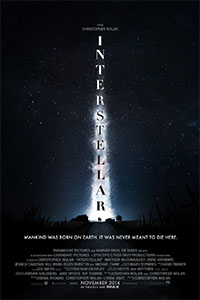
Interstellar - Christopher NolanI saw Blade II in the theaters with a large group of people. One of my enduring memories from that film is from the drive home, when a member of the group insisted on criticizing the film because its vampires failed to honor the rules of Vampire: The Masquerade. I thought it was bizarre that someone felt that one piece of speculative fiction should be bound by the rules of another.

I mention this because I’ve noticed that fiction featuring time travel seems to bring this behavior out in people who would otherwise find it ridiculous to, say, hold Short Circuit to the Three Laws of Robotics (or whatever). It seems that a lot of people have very firm ideas about how time travel is “supposed” to work and they’re very unhappy whenever a film violates those “rules”.

SPOILERS AHEAD

This is something I’ve mentioned previously while talking about the handling of causality in Looper. That made sense to me because the Looper’s version of time travel was so unorthodox and unique. But I was really kind of taken aback when Christopher Nolan’s Interstellar prompted similar outrage for its use of a pretty bog-standard bootstrap paradox.

For those unfamiliar with bootstrap paradoxes, they involve any situation where an event appears to cause itself. This most often occurs with information. For example, you send a message back in time to yourself and then, when the time comes, you know what message you have to send because you already received it. But… who wrote the original message?

It hurts your brain because you’ve spent your entire life living a temporally linear life, but it’s widely used in time travel stories. (In fact, sometimes it can seem as if it’s almost impossible to find a time travel story that doesn’t feature a bootstrap paradox.)

RESOLVING THE BOOTSTRAP

How can the 5-dimensional creatures in Interstellar create a wormhole that’s required for their own existence?

There are a couple of ways to resolve (or, perhaps, understand) bootstrap paradoxes and maybe relieve your headache.

First, assume that the linearity of time is an illusion. Interstellar talks about this in the form of time being a “canyon” that the 5-dimensional beings can climb into and out of: All of time exists simultaneously. This radically changes the concept of causality (possibly eliminating it entirely.) In this scenario the question, “How can they create a wormhole if they need the wormhole to create wormhole?” is like asking, “How can you drop a rock into the canyon if the rock will land at the bottom?”

Second, and perhaps slightly easier to grok, is the “hidden iterations” theory of establishing stable timelines with time travel. Take the scenario in Terminator, for example. We can imagine a first iteration of events in which causality proceeded normally: Sarah Connor had sex with some random dude from the 20th century and gave birth to a son who later led a rebellion. Then SkyNet tries to use time travel to kill her son, so her son sends Kyle Reese back in time. This creates a second iteration in which Sarah Connor has sex with Kyle Reese and gives birth to a different son who also grows up to lead a rebellion. The timeline is now a stable loop and no longer changes (until James Cameron gets a really cool idea for a sequel).

Similarly, one can imagine an “original” version of history where humanity’s space program never found a wormhole and decided to do something like colonize Mars instead: Most of the human race dies off, but our civilization survives and eventually evolves into the 5-dimensional beings. And then the 5-dimensional beings look back and say, “It still sucks that billions of people died on the planet of our birth. I think we can fix it, though.” And then they send the wormhole back through time and rewrite the history of their own creation (but this time without the mass extinction event).

Third, in the specific case of Interstellar, you can assume that there is no bootstrap paradox: Cooper is simply wrong about the 5-dimensional aliens being a future version of humanity. (One of the really great things about the film, actually, is that it features a lot of people being wrong about a lot of things…. or maybe being right about them, but in ways that the film is not interested in proving one way or the other.)

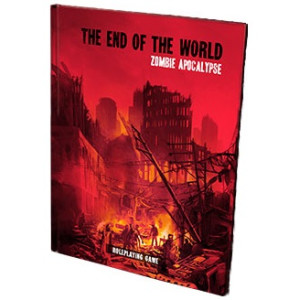
End of the World: Zombie Apocalypse is End of the World: Zombie Apocalypse - Fantasy Flight Gamesthe first in a series of RPGs from Fantasy Flight Games, each featuring a different apocalyptic scenario: Zombies, Gods, Alien Invasion, Robot Revolt.

The primary conceit of End of the World is that you’re playing as yourself. The game’s default modus operandi is that you and your friends are sitting down to play an RPG when the apocalypse starts. At that point reality kind of bifurcates: The version of you playing the game stays at the table while the version of you in the game presumably leaves the table to go deal with the apocalypse.

If you’re an experienced gamer, the odds are pretty high that this concept immediately fills you with skepticism: There have been quite a few games that have tried the “play as yourself!” thing. It mostly doesn’t work very well, with the primary problem being people either painting themselves as paragons of virtue, becoming insulted when their fellow players dispute their self-assessments, or both.

End of the World, however, has a very clever method of steering around these problems.

Characters in the game are defined around three categories: Physical, Mental, and Social. Each category has two associated characteristics (Dexterity and Vitality in the Physical category, for example), features (either positive or negative) that affect task resolution, a stress track, and associated traumas.

Character creation basically consists of two steps: First, you get a pool of 16 points that you can use to model yourself on a scale of 1 to 5 in each of the six characteristics.

Second, the rest of the group secretly votes on each of your character’s categories: They can either agree with your assessment, vote that one of the characteristics should be higher, or vote that one of the characteristics should be lower.

The combination of the point buy system (which makes it clear that you’re just modeling a version of yourself, not trying to objectively measure some sort of fundamental truth) and the secret vote (which allows for anonymous tweaking while still giving you final control over exactly which characteristic in the category is adjusted) go a long way towards mitigating the common problems of playing yourself. But the clever twist is that the outcome of the vote also impacts your character’s positive and negative features: If the group decides one of your characteristics should be higher, then you gain a negative feature in that category. If they decide one of your characteristics should be lower, then you gain a positive feature in that category. This incentivizes you to be honest in your self-assessment and also rewards you if the group passes the harsh verdict that you’ve over-estimated your abilities. (It also lets you play the system a bit by, say, deliberately ranking yourself higher than you think you deserve in a category: Either you get a nice ego boost when people agree with you or you get the positive feature you were fishing for.)

The other nice thing about this system is that you can easily use it to create a character other than yourself. So the game pushes you in an interesting direction, but is flexible enough to really let you do whatever you want to with it.

Character creation is easily the game’s best feature.

SYSTEM

Task resolution in End of the World revolves around pools of positive and negative dice. (All the dice are six-sided.) You start with one positive die and you add additional dice for positive features, equipment, assistance, and situational benefits. Then you add negative dice based on the difficulty of the task, your negative features, the traumas you’re currently suffering from, and any situational hindrances.

Then you roll the pool. Each negative die result cancels out a matching positive die result. If you have any surviving positive dice that are equal to or less than the characteristic being tested, you succeed at the task. If you have any surviving negative dice, however, they inflict stress in the matching category.

For example, let’s say you’re trying to run away from a horde of zombies. You have Dexterity 3 and the positive feature of long-distance runner. You also have a twisted ankle from when you jumped out of a hayloft yesterday (that’s a trauma). The GM rules that the number of zombies involved in the pursuit makes escape more difficult, so he adds a negative die to the test. That gives you a pool of two positive dice (one base and one for long-distance runner) and two negative dice (one for your twisted ankle and one from the situation).

Let’s say you roll 3 and 2 on your positive dice. You also roll 5 and 2 on your negative dice. The negative 2 cancels out your positive 2, but you still have a positive 3 (which is equal to your Dexterity score) so you succeed. Because the negative 5 also survived, however, you suffer a point of stress even though you succeeded.

There are a couple of wrinkles to this: If you sustain a certain amount of stress, you suffer a trauma. The more stress you’re suffering from, on the other hand, the more difficult it is to sustain additional stress (as you become hardened to your circumstances). In combat, weapons will grant you additional dice and/or modify the amount of stress you inflict on a successful attack. Suffer enough stress in any category and you are either dead, insane, or catatonic.

But that’s basically it. Ultimately, this system is vapor-thin. It’s not bad, but it’s not particularly robust and it doesn’t really have anything unique to say. (It does have a weak focus on the concept of stress and trauma, but it’s less of a spotlight and more of a 20-watt bulb.)

The couple of places where it does occasionally try to offer more than the most basic support are, unfortunately, kind of laughable. For example, there’s a table of “common gear” which consists of thirteen items featuring descriptions like, “Water Bottle: Storing and transporting water.” Thank god they included that table; I never could have figured out what a water bottle might be used for without it.

(I’m not cherry-picking there, either. They’re all like that. “Flashlight: Spotting things in the dark.”)

The system will get the job done, but it’s not really a selling point for the game. Which means, at the end of the day, that End of the World is going to live or die on its scenarios.

SCENARIOS

Unfortunately, the scenarios are the biggest disappointment in the game.

End of the World: Zombie Apocalypse includes five different versions of the zombie apocalypse: In one version the zombies are the result of a meteor. In another they’re the result of disease. In another they’re purely supernatural. And so forth. The game covers the gamut of possibilities.

Elsewhere in the book, the designers recognize (although not in quite so many words) that any apocalyptic tale basically breaks down into five parts:

  • Discovery that the world is coming to an end.
  • Acquiring weapons and the means to defend yourself from immediate threats.
  • Gather food and medicine and the other supplies necessary for mid-term survival.
  • Establish a safe house to provide stability and defense for long-term survival.
  • Find long-term safety by figuring out what permanent survival looks like in the new world order.

Where the game truly flirts with genius is in realizing that the specific manifestation of this five act structure depends heavily on the circumstances the players find themselves in and the decisions that they choose to make. So rather than trying to pre-bake a particular package of events, the scenarios in End of the World feature flexible, generic locations.

For example, the first scenario includes a Farm. It describes some of the useful features of the Farm and how those features are likely to be tied into the five part structure of apocalyptic survival (although once again, unfortunately, not in so many words or with so clear an understanding). It lists a half dozen or so events and encounters that could occur on the Farm.

What makes this potentially brilliant is that the GM can take this richly developed generic material and instantly contextualize it in response to the players. If one of the players says, “We need to get out of the city! My Aunt Patty has a farm north of the cities.” Then the GM can flip to the Farm and immediately figure out what happens there. If the players are later driving cross-country when their car breaks down and the GM says, “You can see a little farmhouse off on the horizon.” Alternatively, if the players decided to go to the Mall to gather supplies, then the GM can readily reach for a different location while contextualizing it to whatever local mall the players are familiar with.

I say this is potentially brilliant, however, because End of the World face-plants pretty hard on the actual execution.

The first problem is that it’s not clear that the designers fully understand the potential of the structure they’ve adopted. This leads to a lot of the material shying away from strong choices and instead coming across as mushy and less useful than it could be.

The bigger problem, however, is that there simply isn’t enough material. The first scenario, for example, contains just six locations (and one of them isn’t actually a location): Farm, Horde of Ghoul Rats, House, Mall, Hospital, and Sewers.

What End of the World needed was for each scenario to be fully developed so that, no matter where your players decide to head in your local community or surrounding countryside, you’d be able to flip open the book and find material for it. Instead, the material presented is so thin on the ground that I’m not really sure what the point of it is.

Where the approach becomes particularly ridiculous are the post-apocalyptic scenarios. End of the World also features five scenarios describing what the world is like after the apocalypse (with each of these being paired to one of the apocalypses). But these post-apocalypse scenarios only include three of the generic locations.

You can kinda get away with pointlessly describing six locations in the modern world because, well, it’s the modern world: We presumably already know our own communities. But these post-apocalyptic settings completely transform reality as we know it and then the designers pretend that giving you three unconnected locations qualifies as meaningful guidance for running a scenario there.

CONCLUSION

End of the World features a character creation system with a couple of clever ideas. It features a rule system that gets the job done.

But where it falls apart are the scenarios: In the decision to cover five apocalypses and five post-apocalypses (or possibly in the decision to limit the book to 144 pages), it’s really clear that End of the World has simply spread itself too thin to do any of its scenarios justice.

What makes this bitterly disappointing is that if any one of these scenarios had gotten the attention and the depth of support that it deserved, it would have almost certainly pushed End of the World into being a brilliant game.

Instead, it’s just kind of pointless.

Because the scenarios aren’t developed, they all boil down to, “There are zombies and they wreck shit.” If you’ve ever watched a single zombie movie, you’re not going to gain a single piece of useful information from this book. Meanwhile, the rule system is so simplistic that it, too, isn’t really adding anything to the experience.

What you have, basically, is a book that doesn’t actually do anything. There’s no value being added. Once you’ve read the title, you basically have everything the game is going to offer you.

Skip it.

Style: 4
Substance: 2

Author: Andrew Fischer
Publisher: Fantasy Flight Games
Cost: $39.95
Page Count: 144
ISBN: 978-1-63344-055-5

The First Folio of 1623 is our only original source for Cymbeline, and so naturally the ASR script for the play is based upon it.

CYMBELINE – FULL SCRIPT

CYMBELINE – CONFLATED SCRIPT

In working with the script, it quickly became apparent that a heavier hand than usual would need to be employed with emending the punctuation of the text: At some point there was either a scribe or a typesetter who was passionately enamored with commas, and Cymbeline became dedicated to their love. In addition to a wide practice of what can only be described as random commatization, one can be ensured upon finding an “and” or a “but” in the original text that a comma will be strategically inserted immediately before it (even if it renders the sentence into utter nonsense).

This love affair with the comma is strewn everywhere, and their use is so frequently contrary to any sense that even when they can be hammered into some semblance of sense, I feel there is good cause to doubt them.

NOT-SO-LOOSE VERSE

Another aspect of the Cymbeline text to note is the ease with which a great quantity of seemingly irregular verse in the play can be trivially regularized. For example, the text beginning on page 2 reads, in the original Folio text:

By her election may be truly read, what kind of man he is.
2 I honor him, euen out of your report.
But pray you tell me, is she sole childe to’th’King?
1 His onely childe:

Which virtually all modern editions (including the ASR script), regularize to:

By her election may be truly read
What kind of man he is.

2 GENTLEMAN I honor him
Even out of your report. But pray you tell me,
Is she sole child to the king?

1 GENTLEMAN His only child:

But there are longer passages as well. For example, his passage from Act 3, Scene 7 (pg. 41):

In our script you can read the corrected scansion as:

IMOGEN To Milford-Haven.

BELARIUS What’s your name?

IMOGEN Fidele, sir:
I have a kinsman who is bound for Italy;
He embark’d at Milford, to whom being going,
Almost spent with hunger, I am fall’n in this offense.

BELARIUS Prithee (fair youth) think us no churls,
Nor measure our good minds by this rude place
We live in. Well encounter’d, ’tis almost night;
You shall have better cheer ere you depart,
And thanks to stay and eat it: Boys, bid him welcome.

GUIDERIUS Were you a woman, youth, I should woo hard,
But be your groom in honesty: I bid for you,
As I do buy.

ARVIRAGUS I’ll [make it] my comfort,

Most modern editions will leave the first line as “To Milford Haven. / What’s your name?” (which is short at just 8 syllables). This also leaves the next line (“Fidele, sir, I have a kinsman who”) short at 9 syllables. These editions will attempt to correct the further error at the end of this passage (which in the Folio reads long at 13 syllables as: “I bid for you, as I do buy.” / “I’ll make’t my comfort”) by emending “I bid for you, as I do buy” to read “Aye, bid for you as I’d buy”.

But if we identify the colon after “Fidele Sir:” in the Folio as the indication of a line break, the rest of the passage quickly falls into remarkably regular verse.

TEXTUAL PRACTICES

Source Text: First Folio (1623)

1. Original emendations in [square brackets].
2. Speech headings silently regularized.
3. Names which appear in ALL CAPITALS in stage directions have also been regularized.
4. Spelling has been modernized.
5. Punctuations has been silently emended (in minimalist fashion).

SCENE NUMBERS: Modern tradition has conflated several of the Folio’s shorter scenes into longer scenes, frequently altering the dramatic structure of the play to achieve this. This script adheres to the original Folio scene breaks, which means that its scene numbers will not always correspond to modern texts.

Special thanks to Emma J. Mayer who worked with me in editing this text. Emma has recently moved away from the Twin Cities and her work on the project will be sorely missed.

Originally posted on October 25th, 2010.

BELARIUSWhither bound?

IMOGENTo Milford-Haven.

BELARIUSWhat’s your name?

IMOGENFidele, sir:

I have a kinsman who is bound for Italy;

He embark’d at Milford, to whom being going,

Almost spent with hunger, I am fall’n in this offense.

BELARIUSPrithee (fair youth) think us no churls,

Nor measure our good minds by this rude place

We live in. Well encounter’d, ’tis almost night;

You shall have better cheer ere you depart,

And thanks to stay and eat it: Boys, bid him welcome.

GUIDERIUSWere you a woman, youth, I should woo hard,

But be your groom in honesty: I bid for you,

As I do buy.

ARVIRAGUSI’ll [make it] my comfort,

Tagline: The best character sheets done for any game, ever. Period.

WHAT IS THIS?

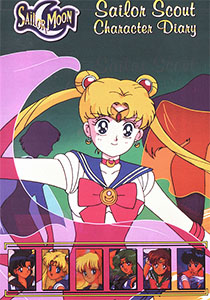
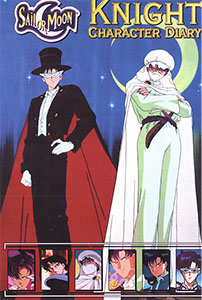
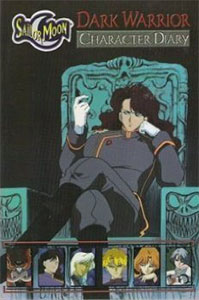
Sailor Moon - Sailor Scout Character DiaryThis is a review of three associated products for Guardians of Order’s Sailor Moon Role-Playing Game (which I’ve reviewed elsewhere): The Knight Character Diary, the Dark Warrior Character Diary, and Sailor Scout Character Diary.

Essentially these are character sheets from a company that dreams really big (each 56 page pamphlet is for use with a single character). Each diary contains a 14-page character sheet, forty diary pages, a title page which you can personalize, and a dozen or so pictures (appropriate for each type of character) which you can use for your character portrait.

HOW GOOD IS IT?

Very, very good – surprisingly enough.

Personally, I don’t buy character sheets. The last time I bought a packet of character sheets was back in 6th grade, when I was an avid AD&D player and those of us in the group who could afford to splurge on store-bought character sheets (instead of writing it out on notebook paper) became possessed of a certain prestige.

In point of fact, I didn’t buy these – they came in the form of reviewer comp copies from GoO. But if I was playing in a Sailor Moon campaign I’d be sorely tempted to break my habit now that I’ve seen these.

For starters, the 14-page character sheet is absolutely wonderful. Often when you see extended character sheets like this all that’s really contained on them are lots of lines which are supposedly dedicated to “character history”. There are certain elements of that here (a page dedicated to it, but laid out rather nicely in segmented portions of your history – “Silver Millenium” and “Earth Childhood” in the Sailor Scout diary, for example), but by-and-large the extended sheet consists largely of closely targeted questions meant not only to spur your creativity, but also to facilitate ease of reference.

What this reminds me most of is another memory from my avid AD&D days (it’s nostalgia time). Back then I participated heavily on the FidoNet AD&D echo (like a Usenet newsgroup, but propagated at a much slower speed between individual BBS message boards). While there I happened to pick up something called the “Personal Code”, which was designed by a wonderful young woman named Alesia Chamness. It was a Sailor Moon - Knight Character Diaryreplacement for AD&D’s alignment system which encouraged the individual player to develop his character through a series of targeted questions. It was useful for defining your character in writing, for spurring creativity, and for developing your existing ideas. Really great stuff, and highly reminiscent of what you’re getting in this diaries.

The diary itself is done really nicely. The left-hand pages are plain white with a border which is evocative of the character type in question (a rose is in each corner of the border in the Knight Character Diary, for example). The facing pages, on the right side, takes advantage of the rich wealth of artwork which is available to GoO for this game line (in the form of animation stills) – the entire page is taken up by a grey-muted image (again, appropriate to the character type). Because they’re muted images you can easily write over these, and they end up providing a fantastic feel to the entire product. You’re not just buying a book of blank pages, you’re buying something that really ends up enhancing the recording of your character’s life and exploits.

Finally, the stock pictures at the end (which are designed to be xeroxed, cut out, colored, and pasted onto the title page which leads the book) are useful for the artistically-disinclined.

WHAT WOULD I CHANGE?

Sailor Moon - Dark Warrior Character DiaryNot much. I’d probably drop the price down to $4.95, rather than $5.95. Crossing the $5 barrier to $6 makes these books seem just a little too pricey to me. On the other hand, I’m sure that GoO has priced these where they have because that’s where they can make a profit.

As for the actual content of the pieces, the only I’d change – or rather, expand – are the stock photos. I feel rather limited by the fact that the only picture they have are of the characters from the animated series itself. It’s really bad in the Knight Character Diary, because all you’re basically getting are a variety of pictures of Tuxedo Mask. Again, though, I don’t see any way for GoO to have done anything differently – they’re constrained by the artwork which is available to them.

IS IT WORTH IT?

If you’re the type who buys character sheets as a matter of course, then I would say definitely yes. The price may seem a little steep at first – but, trust me, you’re getting your money’s worth.

If you don’t typically buy character sheets, then there’s a goodly chance you aren’t going to break the habit with these. On the other hand, I’d suggest taking a peek at them next time you’re in the store. They just might surprise you.

Style: 5
Substance: 4

Author: Karen McLarney
Company/Publisher: Guardians of Order
Cost: $5.95
Page Count: 56
ISBN: n/a

Originally Posted: 2000/03/12

What I said about not buying character sheets was nothing but truth: When I first started roleplaying, I photocopied the sample sheet off the back of the BECMI basic manual (which produced the double-sided 8.5 x 11 character sheet 2-up on a single sheet) and got so used to using it that when I bought a pack of the official sheets they seemed weird to me. I don’t think I’ve ever actually paid for an official character sheet ever again.

Of course, in the digital era that doesn’t mean as much as it used to: Although I don’t buy them, I have used a variety of official sheets over the years. And a really great character sheet — like the Sailor Moon Character Diaries — really can transform a game. Most recently, the character sheets for Numenera and The Strange are like that: The former through sheer beauty and utility; the latter through the excessively clever method it uses for handling characters shifting between alternate realities.

For an explanation of where these reviews came from and why you can no longer find them at RPGNet, click here.

Archives

Recent Posts

Recent Comments

Copyright © The Alexandrian. All rights reserved.