IN THE SHADOW OF THE SPIRE
Session 10D: Clan of the Torn Ear
I suspect that there will be a number of posts in this series that end up being basically variations on, “Look how cool prepping situations instead of plots is!”
But that’s because it’s really frickin’ cool.
Let’s talk a little about how this scenario came into existence, because it’s a confluence of several different factors that went into building the In the Shadow of the Spire campaign.
First, of course, was a desire to run a campaign in Ptolus, which I’ve discussed before. Among the raw material Monte Cook designed for Ptolus were a half dozen scenarios in the Ptolus supplement designed to kick-off a Ptolus campaign.
One of these was “The Trouble With Goblins”, which you can more or less see play out in Session 5 of the campaign: Goblins emerge from the catacombs beneath the city and take up residence in an abandoned house in the Rivergate District. In the scenario as written, the players can trace the goblins back to Ghul’s Labyrinth, but there’s nothing to find down there: “The passages literally go as far as you want them to – and as far as the adventurers are willing to take them. They wind through ancient chambers empty except for more and more zombie encounters. There is no treasure to find.” The intention is that the zombies will eventually drive the PCs back to the surface (through boredom if nothing else).
I’ve never been comfortable with “there’s an endless array of empty corridors down there, so eventually you turn back” set-ups because, basically, I’ve never figured out how to run them successfully (by which I mean, in a way which is satisfying for both me and the players). So I decided to take a different approach: The goblins came from somewhere, and they could be tracked back there.
I decided that the “somewhere” in this case would be an impassable bluesteel door. (This would allow me to introduce one of the major features of Ghul’s Labyrinth.) Rather than just placing a bluesteel door, though, I created the mini-scenario The Complex of Zombies: The idea was that the PCs would be “rewarded” for tracking the goblins with a little horror scenario, find the bluesteel door, and be able to satisfactorily conclude this line of investigation.
As previously discussed, however, things didn’t quite work out like that: The PCs managed to do something incredibly clever and get the bluesteel door open.
Although I ended up adding a whole new scenario on the opposite side of the bluesteel door, I now had a situation where the PCs would logically be able to track the goblins back to their “home”… wherever and whatever that was.
The goblin shook his head. “He was not of our clan. He was traitor. Come. Look.” Holding the runty goblin’s corpse by the head like a rag doll, he bent it forward to present the neck.
Puzzled, Tee came closer. On the back of the goblin’s neck she saw four small tendrils of greenish ooze – they were still wriggling and writhing.
The other major factor was that, before the campaign began, I had done a survey of about 40-50 issues of Dungeon Magazine looking for interesting scenarios that would be appropriate for Ptolus. One of the scenarios I had really liked but ultimately ended up not finding a place for was “Caverns of the Ooze Lord” by Campbell Pentney in Dungeon #132. Now I pulled it back out.
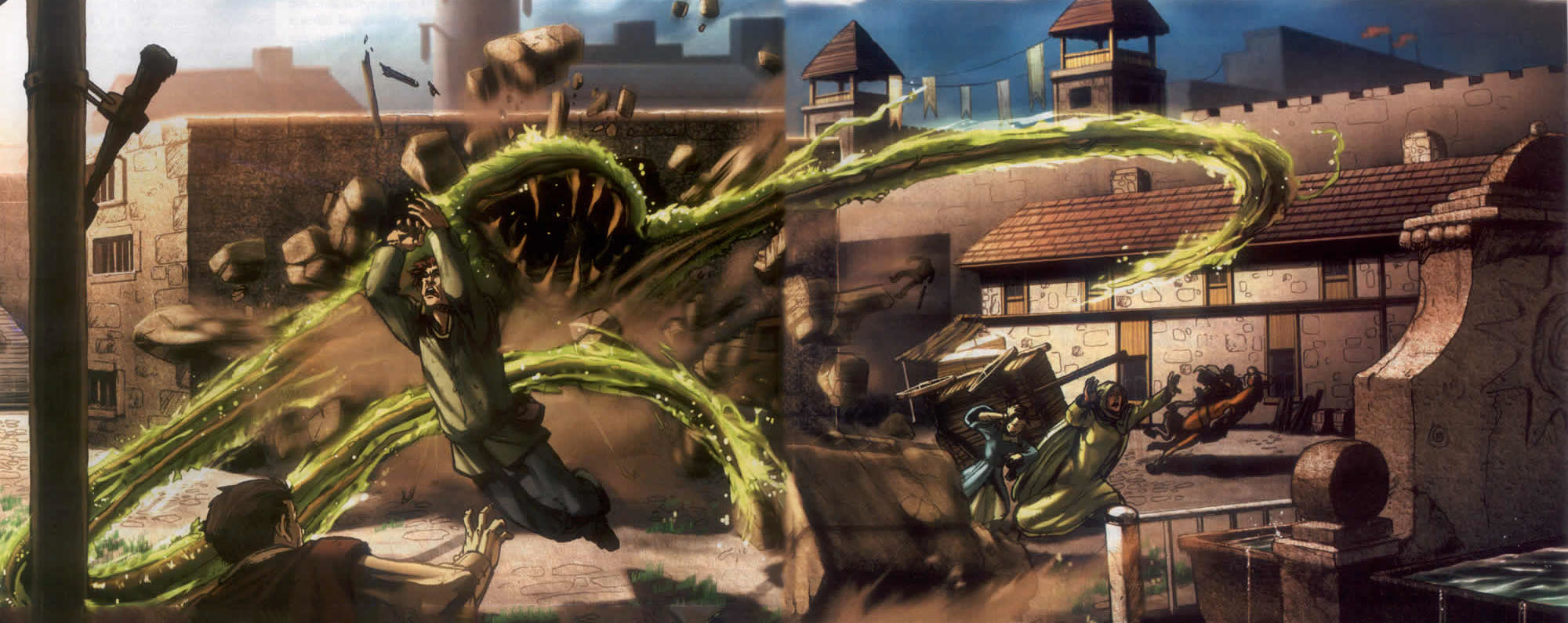
The original module features a small village that’s been infested by mind-controlling ooze parasites, and the PCs are able to track the problem back to a local cave complex. I said to myself: What if the infested “village” is actually a clan of goblins? And the goblins had come to Greyson House because they were fleeing the ooze?
THE SITUATION
So I basically ripped out the entire front half of Pentney’s module, heavily modified the caverns in the back half to fit the new back story, and inserted a freshly designed set of goblin caverns. I summarized the situation and background like this:
- 40 years ago an earthquake struck this area. It opened the fissure leading to the Laboratory of the Beast (Adventure 003B); collapsed the tunnels which once led in that direction; and also opened the fissure leading to the Temple of Juiblex.
- Juiblex the Shapeless is one of the Galchutt.
- The connection to the Temple of Juiblex contaminated the caverns and disrupted the local balance, leading to the emergence of sickstone. The goblins were eventually forced to abandon the sickstone caverns.
- An expedition was mounted to the Laboratory of the Beast, but it ran into the adamantium guulvorg skeleton, suffered heavy casualties, and retreated. The complex, along with the legendary “surface world”, was forbidden to the tribe by their leaders.
- 2 years ago the warcaster Morbion journeyed into the sickstone caverns. He found the Temple of Juiblex and was corrupted.
- 3 months ago, the goblins became aware that something was wrong: Goblins were disappearing. Eventually they figured out the “oozed ones” were controlling some of them and kidnapping or killing others. Their efforts to combat this threat have failed.
- 2 months ago, a small group of goblins fled through the Laboratory of the Beast and reached Greyson House.
- Currently Ursaal and the duskblades, along with 8 of the lesser warriors and one of the greater warriors, have been corrupted by Morbion.
(Tangentially, I knew that the Galchutt referenced here would play a major role in Act II of the campaign. I find that when designing unanticipated interstitial material in a campaign it’s useful – and also logical! – to find opportunity to reincorporate and foreshadow other elements from the campaign. You can see a similar methodology in the Obelisk of Axum and Severn Valley scenarios that I added to the Eternal Lies campaign as a result of actual play.)
EMERGENT EVENTS
In designing this scenario, my assumption was that the PCs would actually fight their way through the goblins – slowly gathering environmental clues about the presence of the “oozed ones” – and then fight their way through the ooze caverns. Kind of a standard “kill all the goblins” dungeoncrawl that would slowly morph into a horror scenario.
But as you can see in this week’s journal entry, that’s not what happened: The PCs ended up negotiating with the goblins and the entire scenario literally turned on a dime and became something completely different. And that’s what makes prepping situations so cool: Not only do you have the joy of being constantly surprised by what happens at the gaming table, but something like two hundred words of situational prep can suddenly blossom into entire sessions of compelling play.
The character of Itarek is one example of this: Found nowhere in my prep notes, he emerged logically out of the adversary roster I had created for the scenario, and (as you’ll see) quickly became one of the most unforgettable supporting cast members in the campaign.
“I will take you to our Queen. She will decide.”
Tee laughed. “You expect us to just walk into the middle of your caves?”
“You were going there anyway. And I give oath of safety.”
The “oath of safety” is a key emergent moment: If Tee hadn’t laughed off Itarek’s initial offer to take them to the queen, he never would have given them an oath of safety (and the subsequent scene would have played out completely differently).
Note, too, the roleplaying with Tor that emerges out of this completely unanticipated sequence of events. In the Shadow of the Spire benefits tremendously from players who are willing to make bold, strong choices.
I’ve said in the past that I think a lot of games suffer because of two unexamined paradigms or meta-rules:
- The PCs are not allowed to fight each other.
- PCs are not allowed to split up or leave the group.
The belief is that this prevents friction and disruptive play, but in my experience it actually creates those things. The moments between Tee and Tor that emerged during this session are an example of what can happen when you remove these artificial limitations: Tor being willing to leave the party because of his principles forced the group to resolve the situation in a way which created an even greater bond going forward.
And I firmly believe that interaction was only possible because it was, in fact, a real possibility that Tor would leave forever. (At which point we would have figured out a new character for Tor’s player.)
In much the same way that the enduring relationship between the party and Crashekka and Itarek only exists because it was equally possible that the party could have just stabbed them without ever learning their names.
Prepping situations is so frickin’ cool.

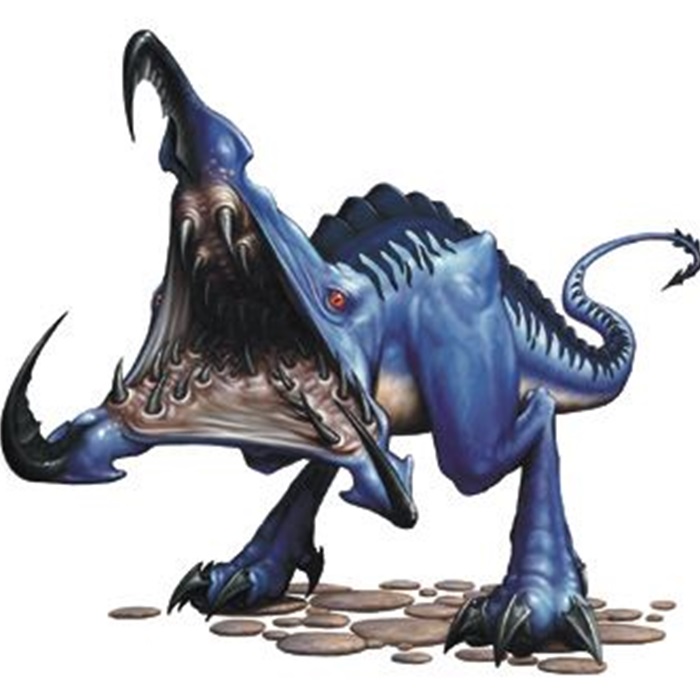 dangerous ability to shift at will between the material and ethereal planes – striking out at their prey from a universal hiding place of which few are aware, and fewer still can hope to detect. Their dangerous, ephemeral attacks can prove the bane of any who are not prepared for their assault.
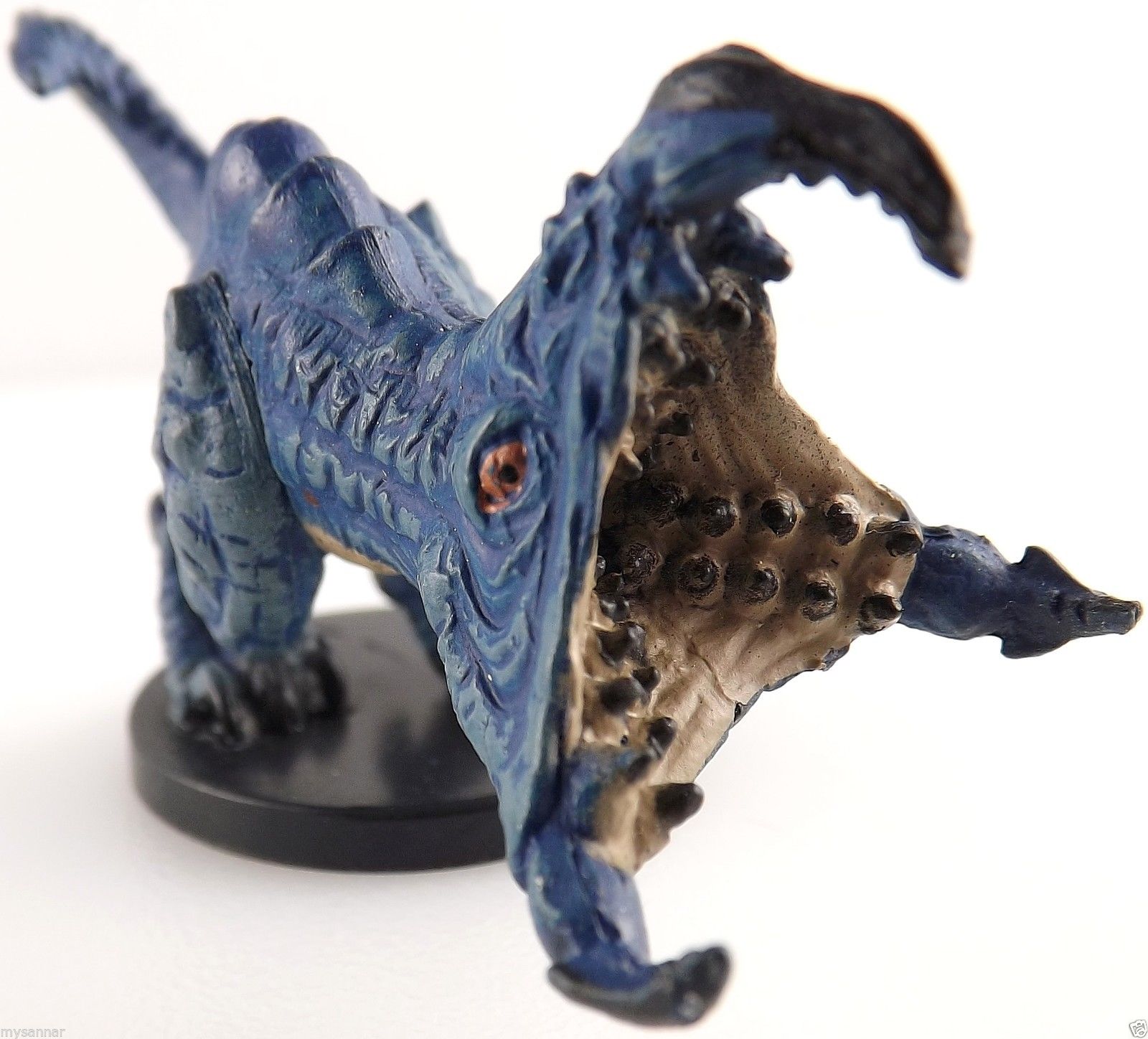 particularly against neophyte players or characters who lack the experience to figure out where the lumbering blue behemoth which attacked them appeared from, and where it disappeared to again. In fact, you can use an encounter such as this to introduce your players to the concept of planar travel – perhaps paving the way for future adventures.