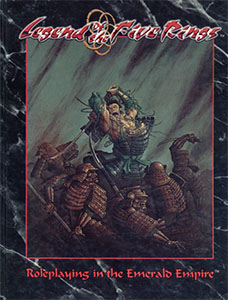
Tagline: If you haven’t seen Legend of the Five Rings material on the shelf of your game store, you need to get yourself a better game store. Let’s take a closer look at its merits and flaws.
 To over-simplify reality, there are basically three types of games out there:
1. Games that suck and never go anywhere.
2. Games that are truly excellent, but never supported.
3. Games that are really well supported – and may, or may not, be excellent.
To put it more precisely: There are sucky, mediocre/good, and excellent games. Depending on how they’re supported they can be classified into one of these three, broad, categories.
Most games that suck are never supported – they suck, people don’t buy supplements for sucky games, and the game line dies. Occasionally a sucky game will end up getting supported – usually because it’s either being published by a company which can “afford” to throw good money after bad, or because it’s basically a vanity press by the clueless. (Think World of Synnibar and SenZar.)
Mediocre/good games which are never supported usually get downgraded to “sucky”, simply because a mediocre game really needs strong support to be worthwhile. (Very rarely, however, a merely good game will slip it’s way into excellence – usually through a combination of cult appeal, quirkiness, and nostalgia). Many mediocre games with strong support remain merely mediocre. Once in awhile a mediocre game will raise itself to excellence on the strength of the support material which is produced for it (there are many who would argue that GURPS is like this).
Excellent games don’t need support to survive. For example, even if Atlas Games had not picked up Feng Shui, Feng Shui would still be a game worth tracking down and playing. In some cases the support material for an excellent game will dilute the positive impression of the game in general. In most cases an excellent game will remain excellent, along with its support base. In extremely rare cases, though, the strength of its support material will take an excellent game and turn it into a sublime one (Dream Pod 9’s games spring to mind here).
One thing which is often overlooked in all of this is the way in which a game’s support material is structured. I consider this to be a very important point – every bit as important as the amount and quality of the support material. I’ve drawn the example of my experience with Shadowrun material before: Faced with a shelf full of Shadowrun supplements, I have no idea where to begin or where to go from there.
On the other hand, I know exactly what I need to buy when I look at a shelf full of Heavy Gear supplements – because the Heavy Gear line of products is structured in a very deliberate and transparent manner.
Gary Gygax understood this – it’s why the old TSR modules have numbers and letters in the corner of their covers. You never have to wonder which modules go with which series, or what order the series should be played in. It’s all right there on the cover. Companies who, like Gygax, understand this – and structure their product lines appropriately – will see the benefits. There’s a reason why I own a ton of Heavy Gear material and nothing more than the core manual for Shadowrun.
One of the more pervasive trends in this arena arose at TSR with the advent of the second edition of AD&D — the class (and later race) handbooks. This basic concept was picked up by White Wolf and transformed into the central core of their product lines. The structure of the White Wolf product line is so blatantly obvious and intuitive that is has even earned it’s own nickname – “splat books”. (Splat referring to the wildcard figure “*”.)
Where am I going with all this? Where else? Legend of the Five Rings, a roleplaying game first published by Alderac Entertainment Group (AEG) way back in 1996, based off of the popular collectible card game which is now owned by Wizards of the Coast.
AEG, along with Pinnacle Entertainment Group (publishers of Deadlands and Hell on Earth), has been the most blatant in “ripping off” the product line methodology of the highly successful White Wolf. The fact that both AEG and PEG have been highly successful with this formula (produce a new supplement every month; have a series of supplements, each focusing on one specific character type; etc.) proves my basic point: Explicitly let your customer know what to buy, and then make sure there’s always something new for them to buy, and you will build a reliable customer base. Fail to do this, and your customer base will be far more fickle.
What’s the advantage of all this? Well, all of these games – including Legend of the Five Rings — are good game lines to get involved with if you like to have a game with strong support. There’s a wealth of material at your fingertips, just waiting for your wallet.
But is Legend of the Five Rings worth getting involved with at all? Is the system any good? Is the setting rich and worth exploring? Is the rulebook really worth $30? Most importantly of all, is the game worth playing? And these questions, despite this rather massive digression I have indulged in, are what this review is all about.
SETTING
Legend of the Five Rings (L5R) is set in the fictional fantasy realm of Rokugan – a blend of Eastern history and myth. It is definitely influenced heavily by feudal Japan, but a gestalt mix of Eastern culture in general pervades the whole. Perhaps the best way to think of it is like this: Your typical “generic fantasy” world is to feudal England, what Rokugan is to feudal Japan. The Forgotten Realms or Middle Earth are no more the England of old, than Rokugan is Japan. Rather, the former gathers together a wide array of European cultural concepts and beliefs from across a broad span of time; while the latter gathers together a wide array of Asian cultural concepts and beliefs from across a broad span of time.
Rokugan society is broken down into three tiers: The Nobility, the Peasants, and the Clergy. Those who fall outside this structure, the hinin, are “non-people”. They are less than nothing. Who you are and what you can be are largely determined by your birth. The Emperor rules over everything. The society beneath him is broken into seven major clans (along with many minor clans). Each clan is then broken into families, who are ruled by daimyos (lesser nobles).
Life in Rokugan is highly structured, and predicated upon a central concept of Honor, governed by the Bushido Code – involving primarily Courage, Loyalty, Sincerity, Excellence, and On (“respectability” or “face”). Life in Rokugan without Honor is like life without breath.
The setting material for L5R, without a doubt, is the finest stuff available in the book. The book proper begins with the Rokugan creation myth (which, like most fantasy, is the way it really happened). This myth evolves into a general history of Rokugan, taking you up to the present day. What I found remarkably effective throughout this section of the book was the smooth transition from the very mythical descriptions of the earliest parts of Rokugan’s history into the more common, prosaic prose of your typical gaming manual as it describes the present day. The subtle blending which slowly replaces the language of high myth with the more common tones of the rest of the book really serves as an excellent gateway into this fantasy realm.
What really distinguishes the setting material, in my mind, though, is the plentiful amount of day-to-day detail which is given for the world. It is a common mistake in your typical gaming manual to spend a great deal of time at a very high, abstracted level (who are the major movers and shakers? how is society structured? what are the foreign policies of various countries? etc.) – while never really detailing what it’s like to live in the setting. Thus when it comes time to actually create a character, to make a character come to life, you find that you have no foundation to build from. What is it like to grow up in this world? How do people talk to one another? L5R glows when it comes to answering these questions, and getting across both the general sense and the specific nature of Rokugan culture. Not only are the fantasy elements explained and put in their place, but the alien subtlety of traditional Eastern cultures is communicated to the Western reader.
All of this is backed up by some rock solid illustration work: Although none of the art in this book, in my opinion, truly rises to the level of excellence (most of it resides around the level of mediocre in terms of pure quality) – it is, nonetheless, highly effective. First, the artists (Brian Snoddy and KC Lancaster) have consciously chosen to emulate Eastern styles of art. This reinforces the general feel and quality of the culture in which the players of L5R will find themselves steeped.
Second, they have provided a wealth of very specific detail. Like the day-to-day details of the written descriptions, the artwork enriches an understanding of what it’s like to live and work and play in the world of Rokugan by illustrating a plentiful number of specific items, daily life scenes, etc.
All in all, despite the fact that the art isn’t of earth-shattering quality in and of itself, it is brilliantly successful at bringing the world of Rokugan to life.
SYSTEM
Action resolution in L5R is handled through a standard Trait + Skill dice pool, with additive results from the dice, compared to a Target Number – with a slight twist. You roll a number of dice equal to the combined ratings of the appropriate Trait and Skill for the action in question, but you only keep a number of dice equal to your Trait. This is referenced in the rules with the notation XkY – where X is the number of dice you roll, Y is the number you keep, and k stands for “keep”.
One of the more bizarre bits in these rules is the “Raise” mechanic – which is basically a formalized way of raising your TN when you want to try something a little more difficult, or (as the rulebook puts it) “achieve something spectacular”. You do this by, literally, raising the TN by multiples of 5. The only bizarre bit is that the only example they can come up with for this in normal resolution situations, in the entire rulebook (and it’s repeated at least twice), is that of the “called shot”.
This reaches it’s pinnacle in the combat chapter, however: An entire section in this chapter is given over to Raises, opening with the words: “Raises are one of the most exciting aspects of playing L5R. It allows the players and the GM to manipulate their own Target Numbers to gain the effect they are looking for. Here are a few examples of what you can do with Raises in combat.” The rest of this section is a three paragraph long subsection on Called Shots. And I always thought the rule was “two is a couple, three is a few”.
But I digress.
CHARACTER CREATION: The section on character creation in the L5R manual immediately follows the introductory setting material and a “Quick and Dirty” version of the basic resolution mechanic. It is also, regrettably, where my opinion of the book began to rapidly deteriorate.
The first thing I took note of in this section was a prominent sidebar on the first page: The Three Steps of Character Creation. Personally, I love these sidebars when they crop up in gaming manuals. They provide a quick reference that lets you easily understand the lay-out of the material which is coming up ahead – basically letting you know what the overall picture is before you start trudging through it paragraph-by-paragraph.
So what are the three steps of character creation? Concept, Character Sheet, and Outfit. In this sidebar the Character Sheet step has three, unnumbered subsections: Choose a Clan, Choose a Family, and Choose a Profession.
I’m a little bit nervous at this point because I’ve already noted that the “three steps of character creation” don’t have any steps involving traits or skills. But it gets worse.
Before it gets worse, though, let’s discuss the section on “Character Concept”, which leads off the chapter itself. There are two main components to this five page section: The Game of 20 Questions and some suggested character types. Overall, I loved this section. The Game of 20 Questions is pretty much self-explanatory – twenty leading questions which get you thinking about some of the details which make up a Rokugan character. The Character Types (such as Brash, Courtier, and Scholar) were just little conceptual sketches of some archetypal characters from the myths and stories L5R was drawn from. The emphasis on getting players to think about their characters as individuals with personalities and lives was really great to see, particularly since L5R served as a natural first RPG for many who had played the CCG.
Now back to the worse: You hit the “Character Sheet” section. But instead of having three subsections, there are eight. These are all numbered (although the “Three Steps of Character Creation” are not numbered in the main text). Step three here is “Clan, Family, and School” (which, you’ll note, incorporates two of the three subsections in the sidebar). “Choose a Profession” (the third subsection of the sidebar) doesn’t appear at all.
But we aren’t done yet. Each clan (in a style similar to that used by White Wolf) gets a two page, full color spread. On these pages the character creation process is summarized again — this time into three unnamed steps. Step One consists of “Choose a Family” and “Choose a Profession”; Step Two consists of “Customize Your Character”, “Character Point Costs”, “Determining Wounds”, and “Outfit”; Step Three consists of “Determining Insight”.
Yes, that’s right. Three different character creation procedures – none of which actually contains all the steps of character creation.
In other words, the lay-out is a mess and trying to reference anything in this morass is just plain confusing. (Not to mention the fact that you’re supposed to come up with and develop a concept (to the point of answering questions regarding your character’s personality and family history) and then choose a clan, family, school, and (at some point) a profession?)
On the other hand, once you’ve sorted through the confusion of the presentation, the stuff you’re being asked to do is a pretty solid set of concepts. Basically it breaks down like this (with my personal order imposed upon the chaos):
1. Character Concept. Come up with a concept for your character. This should include:
2. Clan, Family, and School. There are seven clans to choose from (although you can also be a clanless Ronin), each of which gets (as I mentioned) two pages of full-color explanation. Families exist within clans, and have particular emphases and areas of interest. For example, the Crab Clan as a whole “performs the duty of guarding the Emerald Empire against the horrors of the Shadowlands”. The Kuni family “are the only shugenja [mage] family in the Crab Clan, led by the sinister Kuni Yori”.
You can either choose to attend the Bushi school (which trains its students in the ways of war) or the Shugenja school (which trains its students in the mystic arts).
3. Outfit. Figure out what your character is going to wear. This is based on what school you attended and which clan you belong to. (More generally, there is a Basic, Advanced, and Rich outfit for each school. The clan you belong to determines which of these three types of outfit you get.)
4. Rings and Traits. Quite a few people over the years have told me that the first thing they do when considering the purchase of a new roleplaying system is to look at the character sheet in the back of the book. This single sheet can often tell you what type of system the game is using, what combat will like in the system, what type of characters you’re expected to create, and where the primary focus of the game lies.
I have to admit that my first stop is the Table of Contents, but in the case of L5R (which, coincidentally, has a very detailed and useful Table of Contents) a quick glance at the character sheet will tell you a great deal (and I suggest it to anyone thinking about picking the book up).
The reason I bring it up here is that the first thing you’ll note on this page is a funky graphic depicting the nine Traits, which are broken into five Rings: Fire (Agility, Intelligence); Air (Reflexes, Awareness); Earth (Stamina, Willpower); Water (Strength, Perception); and Void (Void). Those of you with even a passing familiarity with Eastern philosophy will quickly realize that the Five Rings, and the concepts associated with them, are drawn from Miyamoto Musashi’s Book of Five Rings. (For those of you really slow on the uptake, I will also point out that this is the source of the game’s name.)
The names of the Traits are fairly self-explanatory, with the exception of Void – which I’ll allow John Wick to describe himself: “In essence, all Rings are the same Ring: Excellence. The five elements are like five facets of the same gem. […] Void (“ku”) is unlike any of the other Rings, for it represents the character’s ability to use all Rings as a single Ring. The higher a character’s Void, the more he understands that all elements are the same element. […] Accordingly, Void has no traits.” In game terms, your Void stat gives you Void Points, which you can spend to raise your Trait for a single die roll.
Traits are rated, and the Rings are rated according to the lowest Trait in that Ring. In other words if you had a Strength of 3 and a Perception of 1, you’re Water Ring would be rated 1. (The exception to this, of course, is Void.)
5. Skills. Pick and rate your skills.
6. Advantages and Disadvantages. Standard mechanic – advantages cost points and give you benefits; disadvantages give you more points to spend and have negative effects.
7. Determining Wounds. On the character sheet there are eight wound boxes – listed 0 through -4, then “Down”, “Out”, and “Dead”. Multiply your Earth rating by two and enter this number into each of these boxes.
8. Honor, Glory, Insight, and School Rank. These are simple and effective mechanics for keeping track of your character’s place and regard in Rokugan society. They are fairly key to roleplaying in the setting, but the specific mechanics don’t really merit much discussion in this review. Suffice it to say this: Honor measures your character’s integrity (and can often be sensed mystically); Glory measures how great your character’s influence is within the Empire; Insight is an estimate of how well known your character is in Rokugan; and School Rank is a measure of how advanced in your school your character is.
9. Equipment. Finally, set yourself up with some equipment. Although this isn’t a given step in any of the character creation sections, it does get its own section in the character creation chapter – so I thought I’d throw it into my summary.
A brief digression: Although the character creation text is broken up into numbered “steps” you can’t actually do anything in the “Rings and Traits” section (Step One) or the “Skills” section (Step Two), because Character Points aren’t discussed until the “Clan, Family, and School” section (Step Three). This is yet another example of the bad lay-out which, by now, you’ve probably already realized plagues the entire book. Step Three is “Clan, Family, and School” – but it contains four sub-sections: “First: Choose a Clan”; “Second: Choose a Family”; “Third: Choose a School”; and “Fourth: Character Points”. I felt like chanting, “One of these things is not like the others…” when I hit this.
Long story short: You get 25 character points. You spend one point to get a skill rank; eight for each Trait rank; twelve to raise your Void rating; three to raise your Honor rank (you get 2 points back for lowering it a rank); and five for each rank of Glory. Advantages and Disadvantages are priced individually. (You’ll note that they wait until after the Rings, Traits, and Skills to tell you how to raise them – but they give you info on Honor and Glory before you know what they are.)
COMBAT: As in most systems designed since the ‘80s, combat relies on the same basic resolution mechanic as the rest of the engine, with the standard additions: First, you determine initiative by having all the characters roll 1d10 and then compare it to their Reflexes ranking. (This is actually a little weird because it’s a completely different system of comparing skill and talent than that used in Contested rolls.)
Next you declare your actions for the turn. Hand-to-hand combat is accomplished through three maneuvers: Normal Attack, Full Attack, or Full Defense. (“Hand-to-hand combat” seems to include melee weapons, but not ranged weapons. This is sloppy writing, and is made worse by more sloppy lay-out.)
Finally you resolve actions through the standard mechanism. A successful attack, of course, causes damage. Every weapon has a Damage Rating which is expressed like this: 3k2. You add your Strength to the first number, and then roll. Why use Strength for weapons with which Strength plays a minor or nonexistent role? I don’t know. How do you resolve damage from unarmed attacks? I don’t know. Those rules don’t exist.
As you take damage you subtract it from your wound boxes, starting with the first one. So, for example, if you have an Earth score of 2 you would have written a “4” in each wound box (see above). If you then took five points of damage you would lose all the points in the first box (labeled “0”) and one point from the second box (labeled “-1”). At that point all your subsequent actions would have a -1 penalty to them. This would continue until you reached “Down”, at which point you are largely incapacitated. At “Out” you are unconscious. At “Dead” you are, well… dead.
IAIJUTSU DUELS: As the rulebook points out, “one of the most exciting elements of samurai fiction is the iaijutsu duel. Two samurai stand only a few feet apart, each beginning to focus his chi for a dramatic and powerful strike. One will win and the other will die.” L5R presents a special system for playing through these duels, completely separate from the normal combat system. It works like this:
First, both samurai make an Awareness + Iaijutsu roll with a TN of 15. This allows them to determine one of three facts: The Agility, Iaijutsu, or Void of their opponent. After the Awareness roll, but before any other action takes place, either duelist may declare the duel over and his opponent the victor.
At this point the duel itself begins: The TN to strike your opponent is 5. The opponent with the highest Reflexes announces “Strike” or “Focus”. If you choose focus the TN is automatically raised by 5. Then the other duelist goes (and if he selects Focus, then his TN will be raised). This goes on until someone declares “Strike”, or until someone has raised the TN a number of times equal to their Void (at which point they must declare “Strike”).
When you declare “Strike” your opponent rolls his Agility + Iaijutsu against the last TN he Raised to. If he misses, or if the attack is not fatal, then you roll Agility + Iaijutsu against the last TN you Raised to (which should be five less than his TN). Damage is determined using standard damage rules.
Conceptually this is fantastic, but I’ve basically got three problems with these rules: First, there is no way to make a quick, substandard strike in the interest of getting in the first blow – which I would consider a valid tactical choice.
Second, the rules state that (if one of the duelists is not dead at the end of the first round) “they will continue their fight using Kenjutsu instead of Iaijutsu” (Kenjutsu is the general sword skill for the game). I, personally, have interpreted this as meaning that the duel stops using the Iaijutsu Duel rules and reverts to a normal combat. But this isn’t clear – it could just as easily mean that you continue using the duel rules, but use roll Kenjutsu + Agility rather than Iaijutsu + Agility.
Third, these rules are a subsection in the section entitled “Raises, Damage, and Iaijutsu”. I cannot, for the life of me, figure out why these three concepts were grouped together. Particularly since…
BATTLES: …since there is another special set of combat rules, for managing large-scale battles, that get their own section. I’m not going to delve into much detail on the Battle system, but I will note that this is not a full scale tactical system – it is a way of managing larger battles in a dramatic fashion during a roleplaying session. I like it a lot, but I suspect that there will be many people who don’t (so your mileage may vary).
MAGIC: I haven’t had a chance to extensively playtest the magic system (my players all promptly followed the trail of the bushido, and ignored the shugenjas all together), but from what I’ve seen I like it. Basically spells are associated with various Elements (the same Rings that define your character), and when a spell is cast the shugenja rolls the appropriate Ring + his School Rank (keeping a number of dice equal to his Ring) and compares it to the spell’s TN.
GOOD STUFF
I’ve mentioned a lot of the stuff I like about L5R in the general course of the review, but a few minor notes escaped my attention, starting with what I found to be one of the coolest system design elements I’ve encountered: The unusual trait associations.
A digression: At the root of much of Western philosophy is a concept known as “dualism”, which originated most notably with the Greeks. Essentially this refers to the concept that a person is made up of two distinct components – the physical body and the immaterial soul. This underlying belief continues to be prominent in modern thinking, in which the physical and the mental are sharply delineated.
In roleplaying games this dualistic thinking quite often manifests itself: With physical traits and mental traits being grouped together in separate categories. (The one common exception to this is your typical “social” or “charisma” stats or stats, in which a whole slew of things — including physical beauty, leadership qualities, personal charm, etc. – get grouped together under a single heading.)
But Eastern philosophy does not follow the patterns of dualism – they (typically) don’t draw the immutable line that Western thinking (typically) does between body and mind. Instead you get breakdowns of human nature such as that found in the Book of Five Rings, on which the Trait system for L5R is based. For example, you don’t group Dexterity and Strength together because they are both physical attributes – you group physical durability (Stamina) with mental durability (willpower); quickness of body (Reflexes) with quickness of mind (Awareness); etc.
When I first encountered this my typical roleplaying habits promptly rebelled: “How am I supposed to create a physically-oriented character when all the physical Traits have been broken up like this?” I was, of course, missing the point.
What this system does (and does very well) is to reinforce a different philosophical understanding of humanity. This is really, really cool when you stop to think about it. Or, at least, it was when I stopped to think about it. It really forced home to me the fact that such a fundamental assumption as to how the particular traits in a character creation system are organized can change the way you think about the characters you create.
Other stuff I liked: The wound system worked really well during play. I’ve seen similar systems, but this one seemed to balance very well and create just the right blend of serious threat and potential heroics in combat.
I gave the magic system short shrift, above, but it is really quite impressive in its overall scope. Besides being based on the same philosophical underpinnings I was discussing (and thus reinforcing, rather than conflicting, with the basic nature of the world of Rokugan), it is also multi-layered – presenting a variety of options to the shugenja character in how to cast their spells and how specific spells will take effect.
Finally, there are a couple dozen adventure hooks presented at the end of the book. These are general enough that they are easily customized to a specificity that will generally make them useful even with players who own the manual themselves. But they are also specific enough so that they are genuinely useful.
BAD STUFF
In contrast to the “good stuff” section, I’ve skipped over much of the “bad stuff” in the main body of the review – so this is going to be a longer section.
Unfortunately, the bad stuff starts on the very first paragraph of the very first page: “If you’re already familiar with how role-playing games work, you can skip right on to The Book of Earth. If you’ve never played an RPG before, you may want to read the following section.” Good advice, and I began skimming through the section as I usually do, because every so often someone comes up with a really nifty new way of answering the question “What is an RPG?” and I don’t want to miss it.
And if I had just skipped the next section I would have been fine – because it was all about that exact question. But between that section and The Book of Earth I had been instructed to go to, there were two other sections: “The Language of Rokugan” and a “Glossary of Rokugani Words and Phrases”.
It was more than a little annoying to have been instructed to skip some rather important information.
Speaking of the Book of Earth, I should note that the book is split into five major “books” – each named after one of the five rings. This was a fairly interesting device, but it didn’t have any meaningful connection to the contents of those books. I felt this was unfortunate.
I’ve already mentioned the major problems with the lay-out in this book, but you should understand that these are consistent throughout the book. Information is organized in a completely unintuitive fashion, with a lay-out that confuses matter even further. The worst trick in the book is the habit of making certain subjects a sub-section of another subject with which it has little, if any, connection.
This would be less of a problem if there was a decent Index for the book, but there isn’t. The Index is a single, sparse page – and, in some cases, has misleading or simply inaccurate page references.
The worst fault of the lay-out, however, is the wasted page space. The top and bottom borders are an inch and a quarter; while the outer edge has a border of two and a half inches. Or, to put it another way, 45% of the page is wasted space.
On some pages a small portion of this space is taken up with sidebar text. Even taking these sidebars into account, however, we discover that a more economic use of this empty space (for example, a lay-out similar to that found in your average roleplaying book) would have made the book a whopping 35 pages shorter (and probably more; I erred in its favor). In other words, if you bought a book of this same size from pretty much any other game company in the world you would actually have gotten 35 pages of material which you won’t find in this one.
And I thought 1992 AD&D manuals had large borders. Sheesh!
Moving on: There are no rules for making non-Samurais. This wouldn’t be a major problem for the PCs (I have no objection to focusing a game in one particular direction), but it does leave the GM hanging when it comes to designing NPCs.
On page 105 there is a brief discussion of the comparative advantages of Traits and Skills: “It’s natural for new players to take a look at the system […] and figure it is much more important to have high Traits than high Skills. After all, Traits allow you to keep dice while Skills just add more dice. This is true, but it can be misleading. Players will want to raise their Traits as high as possible, but they will not want to ignore their Skills. Skills give you more dice to roll, giving you more choices when it comes time to decide which ones to keep and drop.”
That’s all well and good – but it’s better to roll 5, 4, 3 and keep all three than it is to roll 5, 4, 3 and drop the 3.
The analysis betrays a fundamental lack of understanding of the statistical principles they’ve based their system on: Specifically, purchasing a new rank in a Skill raises the average total of your roll two points (roughly speaking). On the other hand, purchasing a new rank in a Trait raises the average total of your roll six points (roughly speaking).
So, in other words, raising your trait is worth approximately three times as much – but it only costs eight times as much to do so in points. Conclusion? If you’ve got more than three skills addressing a specific Trait, you’d be better off raising that Trait – particularly since raising Traits raises your Ring rankings. (This is particularly crucial for shugenja.)
Of course there are advantages to raising Skills instead of Traits (since Skills can be paired with many different Traits), but these are never mentioned.
Another character creation oversight: There is no way to get new advantages and disadvantages after character creation. In some systems this isn’t a problem, because ads and disads refer only to things which you’re born with – but that is not the case here.
If I had to pick one flaw above all others with L5R, however, it is the fact that they cross the line between creating a game you want to buy supplements for to a game where you have to buy supplements. The key example of this is their rationale for not including rules for Ninja PCs: They feel that having Ninja as PCs is not a good idea, since it removes the mystery surrounding the Ninja.
Well, that’s believable and acceptable… except that they tell you in that same section that they are planning to release a sourcebook called Way of the Shadows which will describe (what else?) playing Ninjas as PCs.
Okay, either you think playing Ninjas is a bad idea or you don’t. If you do, then the rules for playing them should be here If you don’t, then you shouldn’t be selling a $20 sourcebook for them.
CONCLUSION
So what’s my conclusion to this long-winded discussion of L5R?
Well, there are games which are strong enough that even if you aren’t impassioned about their source material, they’re still worth playing. (There are even games good enough, like Feng Shui, to make you impassioned about source material you never were impassioned about before.)
Then there are games so bad that you wouldn’t want to play them even if you loved the source material.
And then there are games which aren’t worth going out of your way to track down, but if you’re interested in the subject matter you’d have a good time playing. L5R is one of these. If you like magical samurai epics, or are looking for some spicy alteration of traditional fantasy, then you’ll probably find L5R worth your while. Although I’d probably recommend it most strongly for those wanting to play in Rokugan, and not for those who merely want to find a system for playing an Eastern fantasy game.
RATING
I feel I need to put down a brief note explaining why I rate the game the way I do (4 for Style; 3 for Substance). First off, how I interpret those titles: Style refers to the presentation of the book – including lay-out, organization, visual appeal, and quality of prose. Substance refers to the amount of actual information in the book, and the usefulness of that information.
In rating L5R I started, as I often do, with a perfect rating in mind as I sat down with the book. As I went these ratings were modified into their current forms.
Style took a hit entirely because of the sloppy lay-out. As I noted above, the artwork and visual appeal of the book is very strong. The prose is very professional, and (at times) truly fantastic.
Substance, on the other hand, takes some major lumps. It takes a hit because of the wasted space. It takes a significant hit due to the design oversights. And then it takes a major hit because of the self-hyping, deliberately self-serving “design with holes” mentality which plagues the entire work.
ACKNOWLEDGMENTS
Thanks to the rec.games.frp.misc community for engaging me in a discussion of L5R’s dice mechanics. In particular, Bob Ellison, Rick Cordes, Klaus AE Mogensen, Zavel, Chris Camfield, Nikolaj Lemche, Bill McHale, Mike Fairbarn and Mike Aetherson. Special thanks to Nis Haller Baggesen who provided me with some source code which allowed me to take a very detailed look at how Trait and Skill relationships worked with one another.
Style: 4
Substance: 3
Author: John Wick (Rule System by John Wick and David Williams)
Company/Publisher: Alderac Entertainment Group
Cost: $30.00
Page Count: 250
ISBN: 1-88795300-0
Originally Posted: 2000/04/07
If my review of the Darkness Revealed trilogy from White Wolf earned me a reputation as one of the premiere reviewers at RPGNet during its early days, then this review was the one that solidified that reputation. Ryan Dancey praised it as a “highly professional review” that provided a model for what other reviews should aspire to be. John Wick made a point of calling it a “great review” and also singled it out as worthy of emulation. (Which was particularly notable because of the “John Wick’s Official Review Policy” brouhaha a couple months earlier.) I don’t consider this my best review, but it was almost certainly my best reviewed review.
It also contributed heavily to my reputation for length and thoroughness. (This particular review clocked in at 6,300 words, which I believe makes it my second or third longest review.) Building on what I had started with my reviews of Immortal and Sovereign Stone, I was committing to a technique that combined comprehensive system summaries with detailed criticism to justify my opinions.
Unfortunately, I also believe that this review initiated what eventually became a destructive trend in RPG industry reviews: A fetish cult that became obsessed with the physical properties of their RPG manuals while believing that “cost per page” or “cost per word” were the only factors that determined value. (This is a trend that I parody in “If Book Reviews Were Written Like RPG Reviews“.) I had discussed the page count and margin space of L5R to emphasize that core material had been artificially pushed into supplements. Within a couple of years, reviews on RPGNet had become obsessed with these technical details as an end in themselves. The tail was wagging the dog.
For an explanation of where these reviews came from and why you can no longer find them at RPGNet, click here.

 Of course, it never works out the way you planned it. IF didn’t sell as well as we’d hoped, the trademark-owner pulled the rights on Bugtown, and we got screwed by a distributor and were almost bankrupt four months after launching.
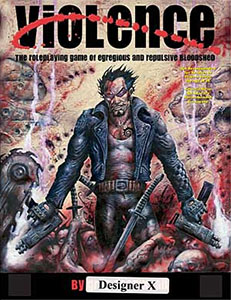
 Violence isn’t a great leap forward in game design, but… well… the best analogy I can think of is Memoires, the Situationist book that was bound in coarse sandpaper. You’d put it on your bookshelf, and the sandpaper would rip into the other books – it was a book that destroyed books. Violence is an RPG that destroys RPGs. Read it and you’ll never be able to look at a dungeon-bash the same way again.
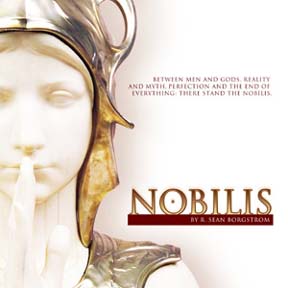 sincerely believe will change the way that a lot of people think about RPGs. It’s going to be astonishing. Right now I can’t think of any RPGs that I’d call “literary” or “beautiful”, and very few I’d call “intelligent” or “well-written”. Nobilis is all those.
 The Complete Book of Yoma: Volume 1