To read a spoiler-free review of Pushing Ice, click here.
For some spoiler-filled thoughts about the very end of the book, go ahead and read more…
To read a spoiler-free review of Pushing Ice, click here.
For some spoiler-filled thoughts about the very end of the book, go ahead and read more…
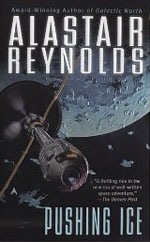 Pushing Ice is basically Alastair Reynolds’ attempt to take the sequels to Rendezvous with Rama, scratch off the serial numbers, and rewrite them so that they don’t suck as much.
In this, he succeeds. Although, honestly, that’s a pretty low bar to clear.
Warning: The spoilers in this reaction will contain deeper spoilers than most of my reactions. In general, I follow a policy of not spoiling content beyond the first 50 pages of the book. That will not be the case with Pushing Ice.
Isolating the strengths and weaknesses of the book is actually rather challenging. Reynolds lacks consistency throughout his narrative, often soaring to compelling heights only to crash back to mediocre depths.
For example, as a re-imagining of the Rama milieu, the first challenge for Pushing Ice is the creation of the Big Dumb Object (BDO). The initial conceptual strokes of the BDO are absolutely riveting: Without any warning, Janus — one of the icy moons of Saturn — suddenly starts accelerating out of the solar system. Unbeknownst to any of us, an alien spaceship had been masquerading as the entire moon for countless eons.
But when the main characters actually reach the BDO, the details are shoddy and underdeveloped. Reynolds paints with a broad and unfocused brush: We’re told repeatedly how “strange” and “enigmatical” Janus is, but we’re never shown any of the details necessary to really bring the place to life.
But then Reynolds turns it around again: The first BDO leads them to an even bigger BDO, and that BDO — and the larger mechanism it’s part of — is really fascinating. And the revelations of its true nature are not only continued until the end of the book, but beyond it (as I believe Reynolds is subtly hinting at something that even his own characters don’t realize).
One of the areas where Pushing Ice dramatically improves on the Rama sequels are the interpersonal dramas of the main characters. To put it succinctly: Instead of being derived from cheesy soap operas, they’re truthful and meaningful.
Even here, however, Reynolds has consistency problems. For example, the central drama of the novel revolves around the schisming friendship of Bella and Svetlana. Reynolds is attempting to create a dynamic in which two people can both vehemently disagree with each other and both be right from their own point of view.
And if he had actually pulled it off (as he comes tantalizingly close to doing), the result would be absolutely breathtaking.
Unfortunately, it doesn’t work. Largely because he resorts to both protagonists being inexplicably idiotic.
Sittuation #1:
SVETLANA: I think the company is hacking into our computer systems and altering the data. But I found a backup that they forgot to change. Here it is.
BELLA: Okay, I have my doubts. So what I’m going to do is tell the corporation exactly where the backup data is that you’re claiming they forgot to change is. Then I’ll wait awhile. Then I’ll go and check it to see if it says what you claim it says.
SVETLANA: Wait… what?
BELLA: My god! It no longer says what you claim it said! You’re lying to me!
Okay. That’s pretty bad. But it gets worse.
Situation #2:
BELLA: I’ve decided that you were right all along. Now that I believe you, I’m using the true version of the data that you brought to me to conclude that our only possible course of action is X.
SVETLANA: Well, I hate you. And so I think we should do not-X!
BELLA: You mean the course of action which, if you weren’t lying to me before, would mean our inevitable death?
SVETLANA: Yup.
And silliness ensues.
I mean, I’m obviously supposed to take it all seriously. But when you set up this Titanic Clash of Wills(TM) in which both characters are mentally deficient… well, it’s a little hard to take them seriously.
The end result of all this is a book which I found both compelling and frustrating in almost equal measures. It was a book that could both keep me up into the wee hours of the morning frantically turning pages, and simultaneously a book that would leave me slamming the covers shut in disgust.
In the final analysis, Pushing Ice is a thoroughly mediocre book that could have been (and should have been) great. This puts it one step up the rung from the dreadful Rama sequels (which are thoroughly awful books that could have been great), but there’s still too much dross to dig through to find the good bits (which are, at times, very, very good).
GRADE: C-
Alastair Reynolds
Published: 2006
Publisher: Ace
Cover Price: $8.99
ISBN: 0441015026
Buy Now!
For additional comments on Pushing Ice, which include SPOILERS, click here.
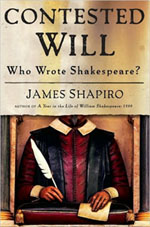 Not so long ago I wrote some essays in response to Ron Rosenbaum’s The Shakespeare Wars, leading off with one entitled “Thus Diest Common Sense“. Now I find myself writing a reaction to another recent book about Shakespeare, and once again common sense has found its way into the title.
In this case I’ve been reading Contested Will: Who Wrote Shakespeare? This is a rather excellent piece of work by James Shapiro which explores the totality of the “authorship question” (the conspiracy theory which claims that Shakespeare didn’t write Shakespeare) from a refreshing angle: Instead of merely exploring the idea itself, Shapiro explores the history of that idea — the ways in which literary criticism, Shakespeare studies, and the “anti-Stratfordians” have evolved over the past four centuries. The result is a compelling and intriguing narrative in which Shapiro aptly makes the case that the “authorship question” is the natural reaction to the excesses of Shakespearean scholarship: If you raise Shakespeare to the level of a deity, it’s little wonder that people will have difficulty seeing the mortal man of William Shakespeare as being a suitable candidate for godhood. And if you insist on trying to patch the holes in Shakespeare’s biography by forcefully extracting autobiography from his plays and poems, then you open the doors for people to say, “Shakespeare can’t have written these plays because somebody else has a biography which has more in common with Romeo or Prospero or Hamlet.” (Or whoever the subjective critic chooses to pick as the “most autobiographical” of Shakespeare’s infinite variety of characters.)
Along the way, Shapiro deftly deflates one “anti-Stratfordian” claim after another with a mixture of rigorous, thorough, and essentially irrefutable scholarship. The result is extremely entertaining, and I recommend the book highly.
Unfortunately, the book is not without flaw. Shapiro occasionally falls into the same traps of fallacy and assumption which plague the pseudo-scholarship of the Oxfordians, Baconians, and Marlovians. For example, on page 177 he writes:
Enough incidents in Oxford’s life uncannily corresponded to events in the plays to support Looney’s claims that the plays were barely veiled autobiography. Like Hamlet, Oxford’s father died young and his mother remarried. Like Lear, he had three daughters — and his first wife was the same age as Juliet when they married. […]
Until now, critics had failed to identify these “cunning disguises” because they had the wrong man. Oxford’s authorship, Looney was convinced, made everything clear. Hamlet offered the best example, and Looney matches its cast of characters with those in Oxford’s courtly circle: Polonius is Lord Burleigh, Laertes is his son Thomas Cecil, Hamlet is Oxford himself, and Ophelia is Oxford’s wife, Anne. But such claims about representing on the public stage some of the most powerful figures in the realm betray a shallow grasp of Elizabethan dramatic censorship. Looney didn’t understand that Edmund Tilney, the Master of the Revels, whose job it was to read and approve all dramatic scripts before they were publicly performed, would have lost his job — and most likely his nose and ears, if not his head — had he approved a play that so transparently ridiculed privy councillors past and present. Looney’s scheme also defies common sense, for Lord Burleigh was dead by the time Hamlet was written, and nothing could have been in poorer taste, or more dangerous, than mocking Elizabeth’s most beloved councillor soon after his death, onstage or in print.
Shapiro’s general point is true: If the play was actually written as allegory in the way that Looney described, then it would be politically dangerous to have written it.
… which would rather neatly explain why Oxford would choose to write it under a pseudonym, right? Rather than “defying common sense”, the scenario makes perfect sense.
Shapiro is also pulling another fast one when he claims that “Lord Burleigh was dead by the time Hamlet was written” because the Oxfordians re-date the composition and performances of all the plays to support earlier dates. (They have to. Oxford died in 1604 and Shakespeare kept writing plays until at least 1613.) Now, it’s absolutely true that the Oxfordian efforts to re-date the plays contradict the existing historical record and, frequently, the texts of the plays themselves. But it’s not fair to simply ignore the totality of the Oxfordian theory while you cherry pick bits of it out of context.
Does that mean that I think Shakespeare didn’t write Shakespeare?
Let’s not be ridiculous. Even if Shapiro, upon rare occasion, fails to provide the best possible rebuttal of the Oxfordian’s claims, it doesn’t change the fact that the theories of the Oxfordians (and Baconians and Marlovians) are complete nonsense.
For example, one of the favorite Oxfordian claims is that there’s no contemporary evidence identifying William Shakespeare as the guy who wrote the plays by William Shakespeare. This is absolutely true… as long as you ignore the dozens of published plays bearing his name on the title page; the contemporary references to Shakespeare writing the plays by critics, fellow authors, and members of the public; Master of the Revels accounts referring to Shakespeare’s authorship; and the effusive memorials and eulogies dedicated to Shakespeare’s memory and his work shortly after his death.
As long as you ignore all of that evidence, it’s true that there’s absolutely no such evidence.
The truth is that we have more historical evidence of William Shakespeare writing the plays bearing his name than we do for virtually any other Elizabethan playwright. (The exception would be Ben Jonson, who had the advantages of being a tireless self-promoter, living an extra twenty years, and becoming England’s first Poet Laureate.)
The truth is, this whole “anti-Stratfordian” nonsense should be dumped into the same bucket of nonsense in which we find flat-earthers, creationists, 9/11 conspiracy nuts, and people who think we faked the moon landings.
DEALING WITH OXFORDIANS
If you happen to find yourself in a discussion or debate with an “anti-Stratfordian”, here’s what you do:
(1) Ask them exactly what sort of objective evidence would convince them that William Shakespeare wrote the plays of William Shakespeare.
Then ask them to provide such evidence for their favored candidate.
Occasionally you might find one of them trying to pull a fast one on you. For example, they might say, “Proof that Shakespeare owned a book.” You might point to the contemporary references to Shakespeare’s literacy. Or you might point out that the entire argument that Shakespeare didn’t own any books is predicated on the fact that his will doesn’t itemize them… but his will doesn’t itemize a lot of stuff. It doesn’t mention tables or chairs, but that doesn’t mean his family ate off the floor. The books would have been either given to his sister Joan (who got the house she was living in and everything in it) or to his daughter (who received another batch sum of property).
But Oxfordians are likely to be impervious to such arguments, so you may need to fall back on Plan B: “Oh? Really? Anyone who can be demonstrated to own a book in Elizabethan or Jacobean England must have been the person who wrote Shakespeare’s plays? That’s going to be a mighty long list!”
(2) This is why most Oxfordians prefer not to deal with objective evidence. Instead, they found their theory on a close reading of the plays: By insisting that the author of the plays must have been basing them on autobiographical details, they can “demonstrate” that Oxford (who had three daughters) is more likely to have written King Lear (who also had three daughters) than Shakespeare (who only had two).
Such a claim is, of course, completely nonsensical.
But let’s run with it: Oxford didn’t have two sons. Ergo, he couldn’t have written the character of Kent in King Lear, so those sections of the play must have been written by somebody else. We have no evidence that Oxford was ever a woman who dressed up like a man and ran away to the forest with her cousin, so obviously he can’t be responsible for Rosalind in As You Like It. I think it safe to say that Oxford never even met a Fairy Queen or a Fairy King, so A Midsummer Night’s Dream is right out.
This isn’t particularly informative, but it sure is a lot of fun!
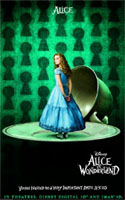
ALICE IN WONDERLAND: I found Burton’s decision to film a sequel while advertising it entirely as an adaptation to be brilliant, disorienting, and surreal — much like the film itself. It also gave Burton the freedom to make Tim Burton’s Alice in Wonderland, which, ultimately, is what I wanted to see. The Alice in Wonderland story has achieved the status of modern myth, in my opinion, and that makes it fair game for creators looking to express their own vision through its form.
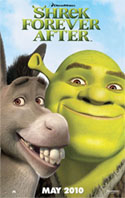
SHREK FOREVER AFTER: I found the original Shrek to be a merely passable film with a charm that was largely negated by its creators scrawling “I HATE DISNEY” over it in large, crude letters. On the other hand, Shrek 2 capitalized on the strengths of the original, resulting in a film that was superior to it in every way and exceedingly enjoyable in its own right. On the third hand, Shrek 3 was so incredibly bad that I literally can’t remember anything about it. And on the increasingly improbable fourth hand, I enjoyed Shrek 4 quite a bit. It was a well made and funny film. Not as good as Shrek 2, but as good as Shrek would have been if it wasn’t for Dreamworks settling personal grudges.
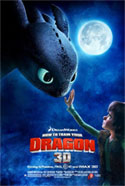
HOW TO TRAIN YOUR DRAGON: On the other hand, this is the movie that makes it clear that Dreamworks Animation is on the right track. It’s tight and it’s fun. You know how awesome you always thought dragonriding would be? How to Train Your Dragon shows it to you.
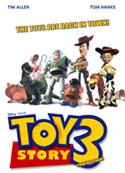
TOY STORY 3: Pixar once again proves that they are masters of subtle, powerful, profound, and joyous storytelling. I think you could make a very strong case that this is now the best trilogy of films ever made.
(The question now isn’t, “Will there be a fourth?” The record-breaking box office assures us that there will be. The question is, “Can they find a new story to tell?” It seems to me that the films have exhausted the potential experiences of a toy, but I’m willing to be pleasantly surprised.)
Successful superhero film franchises have tended to follow the same pattern since Superman 2: The first movie is a tightly-focused origin story with a thematically cohesive script, strong arcs of character development, and a satisfying totality. Then the second movie, bred out of the success and excitement of the first film, throws it all away by trying to cram everything cool about the hero into a single film — you end up with a smorgasboard of villains, a half dozen half-finished character arcs, and a completely unfocused grab-bag of special effects.
The Dark Knight made itself the major exception to this trend by relentlessly paring itself down into a thematically, dramatically, and cinematically cohesive and focused whole. The result is the best superhero movie ever made, and I’m hoping the example it set will improve future superhero franchises (in a genre where copy-cat approaches seem ridiculously popular). (Ironically, Batman Begins is the film that suffered from the “we need to cram everything cool from the comic book into one movie!” problem as it groped its way towards rebooting the franchise.)
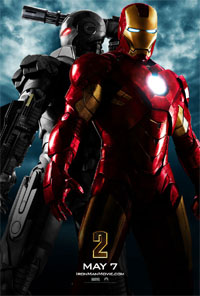
At first glance it seems as if Iron Man 2 doesn’t learn the lesson The Dark Knight has to teach. It seems plagued with all the symptoms of superhero sequel-itis: Lots of villains. Lots of different plot threads. Lots of sound and fury.
But upon reflection, I think this is because Iron Man 2 is pursuing a separate solution to the same problem.
Most superhero movies pursue a conflict structure of Man vs. Man (a natural consequence of the superhero vs. supervillain archetype). This is why the “let’s have eight different super-villains!” sequels generally don’t work: They’re eight different movies all competing for the same screen time.
And if you attempt to analyze Iron Man 2 through that lens, it seems to fall prey to the same problem: In looking for a Man vs. Man conflict, the eye is inexorably drawn towards Whiplash. And the “Whiplash as antagonist” story is deeply flawed: Stark think he’s dead less than halfway through the film and isn’t disllusioned until the final act. Which means that for most of the film, there isn’t a Whiplash vs. Iron Man conflict.
But the movie works because it isn’t Iron Man vs. Whiplash; or Iron Man vs. Justin Hammer; or Iron Man vs. Senator Stern; or Iron Man vs. War Machine; or Iron Man vs. Poisonous Palladium.
Instead, the film’s structure is Tony Stark (Man) vs. World.
The difference in structure is subtle, but it makes all the difference in the world.
Which isn’t to say that the film’s narrative structure is flawless. The movie has particular problems when it’s being saddled with handling exposition for the upcoming Marvel films. And although the novelty of seeing this kind of tight cross-continuity being brought to film is kind of exciting, I suspect the value of this novelty will quickly wear thin (much like it’s worn thin in the comic books themselves).
At the moment, I would say that Iron Man 2 isn’t quite as good as Iron Man. But it’s a pretty close match. And given the high quality of Iron Man, that’s entirely to Iron Man 2‘s credit.