

E. wrote:
My Lost Mine of Phandelver group has decided to go cross-country to find the goblin castle (Castle Cragmaw). They have vague directions from a goblin they spoke to, but I think it’s highly unlikely they could find the base just from the goblin pointing. How should I run this? Or should I just let them find it after a bit of travel? I have some wandering monsters, but I’m concerned that if they go looking and find nothing that it will be frustrating and not-fun.
When dealing with this sort of thing, I find it useful to review the possible outcomes. In this case:
- They find it.
- They don’t find it and nothing interesting happens while they look.
- They don’t find it (at least, not yet), but something interesting happens while they’re looking.
Getting a good, solid grip on the situation like this makes it a lot easier to clearly understand the choices that you’re going to make. (And, by extension, the choices the players are going to make.)
Next, consider — at least in broad terms — what each of these would look like at the table. In each of these, for example, you’d briefly describe the journey and then…
- … describe Cragmaw Castle.
- … tell them they found nothing and ask them what they want to do next.
- … describe the other interesting thing (location, creatures, etc.) that they encounter.
The next thing is figuring out how you’re going to determine which of these things is going to happen. This will depend a lot on the situation, the action being proposed by the players, and the existing structures of play. For example, if you were running a player-facing hexcrawl, you might have the players point to the hex they want to explore and then use all of your existing hexcrawl procedures to resolve the attempt (which would likely result in #1 or a series of #3s).
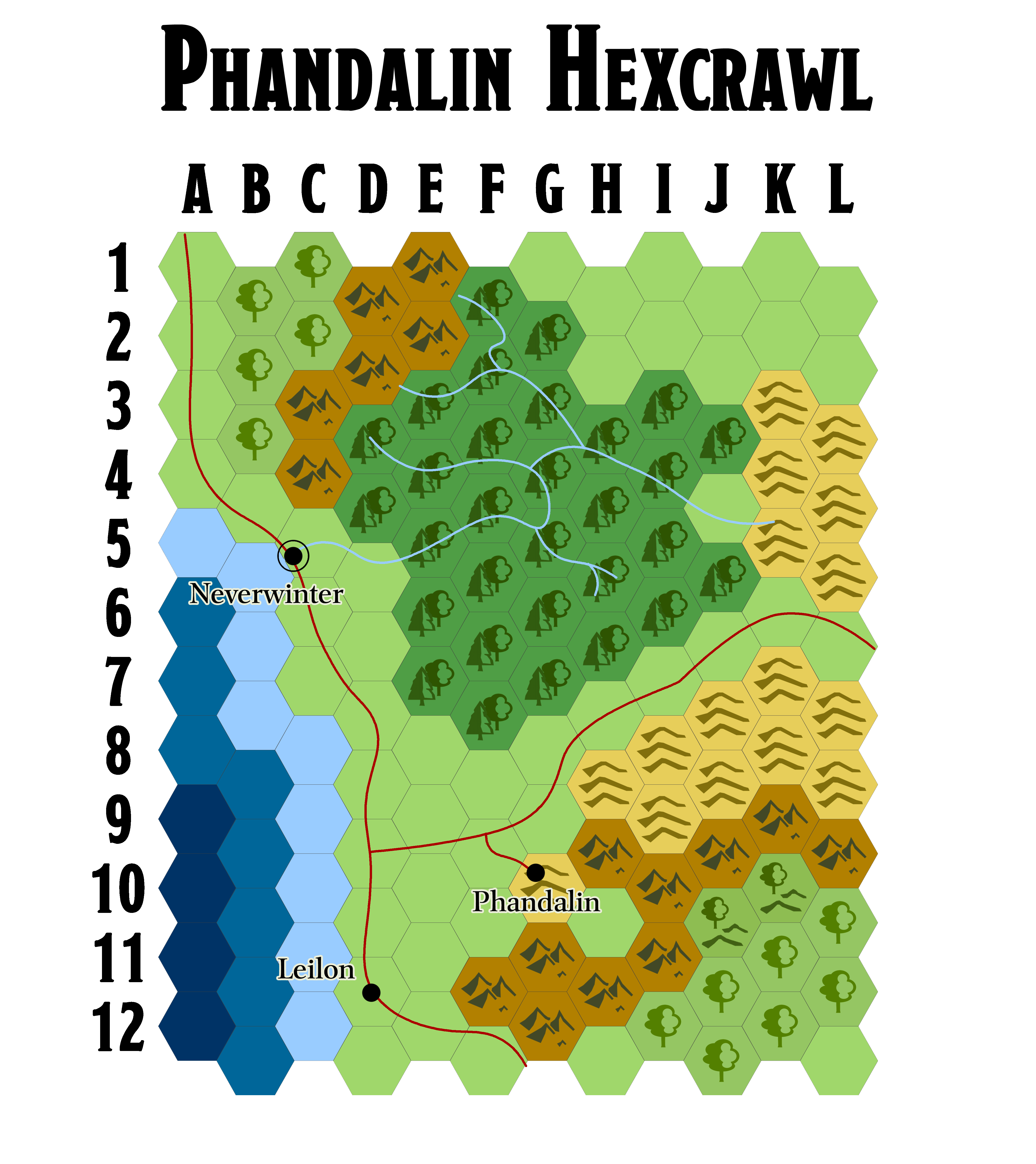
Things get more complicated, of course, if you don’t have any established structure to use (or if it’s unclear which structure you should be using and how you should use it). Figuring out how to handle that will always start with asking, “How are you doing that?” and, essentially, repeating variations of that question until you feel like you have enough information about their method to make a ruling and resolve the outcome.
In this case, the method is “explore the direction the goblin pointed us in.” Is this a sufficiently detailed method to make a ruling? That can be debated, but it’s ultimately up to you. Personally, if I can clearly see the potential outcomes of what the PCs are trying to do, I generally take that to mean the method has been clearly established. (Although I might ask some follow-up questions and clarify the details to make sure the stakes — i.e., the potential costs and rewards of the attempt — of the attempt are clear.)
In this case, I think the method is sufficiently detailed for your group, because you’ve already made the essential assessment:
I think it’s highly unlikely they could find the base just from the goblin pointing
They have enough information that there’s a chance they could find it, but it’s unlikely. All you need to do is quantify that unlikeliness. You might do that directly: “there’s a 1 in 20 chance per day of searching the area” (or 1 in 10 or 1 in 6 of whatever). Or you might do it via a daily (or hourly or weekly) skill check.
Now if the check is successful and the PCs find Cragmaw Castle, that’s inherently interesting and you can obviously just move forward with the material you have prepped.
But what if they don’t find it?
The fail state here is:
GM: You don’t find anything.
Players: We search some more.
GM: You don’t find anything.
Players: We search some more.
GM: You don’t find anything.
Players: We search some more.
GM: You don’t find anything.
Players: We search some more.
This is, obviously, the frustrating “not-fun” that you’re concerned about.
The Art of Rulings states that failure should always be interesting, meaningful, or both. (If not, you should default to success.) To achieve this, you have a few options.
First, reassess and eliminate the failure. In this case, maybe finding Castle Cragmaw with the information they have is inevitable and the only meaningful question is, “How long does it take?” Determine that as quickly as possible, describe it, and get to the next interesting choice (i.e., what do the PCs do when they find the castle?).
Second, shut down the loop: The failure is meaningful because it indicates finding Castle Cragmaw using this method is actually impossible, but it’s not interesting beyond that, so clearly communicate that failure to the players (e.g., “you search for days, but realize you’re searching for a needle in a haystack”) and then ask them what they do next. They’ll either need to try a different method of searching or choose something else to do.
Third, make sure each of those resolution loops ends in something interesting happening instead of nothing happening. You mention having wandering monster tables, for example. I’d also consider looking at other interesting locations in your prep notes, if any, along the vector they’ve chosen. That should give you a lot of fodder for describing interesting stuff while their search continues.
Note that the consistent theme here is describing failure efficiently and getting to the next meaningful choice as quickly as possible.
SUBTLETIES
Beyond these big, broad approaches, there are a lot of different subtleties an advanced game master can deploy here. For example, by blending these various tools together.
- After the players say they’re going to search the wilderness in the direction the goblin pointed them in, you can ask them how long they would continue their search before giving up. (You might ask this directly or via a proxy question like, “How many days worth of supplies are you bringing?”) With that information in hand, you could then determine how long it would take them to find Castle Cragmaw (by any number of possible methods) — if that time is less than the length of their expedition, then they find it; if not, the resolution gets shunted into a simple, “You don’t find it… now what?”
- Or each time you roll a failure in their search, you also make a random encounter check. Resolve these checks rapidly — possibly rolling them behind your screen to speed things up — so that you can summarize the entire sequence efficiently instead of dwelling in tedium.
Of course, player frustration can arise from many different sources. If your resolve their search attempt completely behind the screen, for example, they might feel that you’re railroading them by arbitrarily blocking their actions (even if this isn’t the case). For such players, in addition to working on building meaningful trust with them in the long-term, you may want to bias your rulings towards methods — e.g., skill checks that they roll themselves — where they’ll feel ownership for their failures (instead of laying the blame on you).
In short, there’s not One True Way™ of resolving a search for Castle Cragmaw. Running a roleplaying game, after all, is much more an art than a science. But I do find these general principles help guide me to useful and effective answers. Hopefully they’ll guide you to the same.
FURTHER READING











Thank you for your article.
It’s always good to read a well-thought text instead of listening to Youtube video.
My thought is tie the search into your 3 clue game loop. A failure drops a clue or a piece of evidence that they are in the right area. Goblin tracks, butchered animal carcass, the smell of woodsmoke, goblin stink, dead goblins, booby traps, some other creatures with goblin prisoners, other sentients that can say “I don’t go east. People who head into the foothills don’t come back.