The Alexandrian

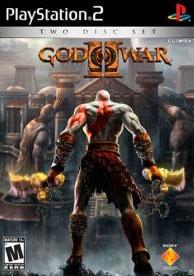
God of War III’ve recently had the pleasure of playing through the God of War games for the first time. There’s a lengthier blog post rattling around in my brain about these games that I may get around to writing one of these days, but at the moment I’m playing through God of War II. I have just picked up the Spear of Destiny, which prompted me to say:

“What the fuck?”

For those of you unfamiliar with the games, God of War is set in a version of Ancient Greece where all the myths were real.

The Spear of Destiny, on the other hand, is the spear used by the Roman centurion Longinus to pierce the side of Jesus Christ as he hung in crucifixion.

I can accept that depiction of the Spear of Destiny as a purple, double-blade monstrosity with a telescoping shaft — I mean, the blood of Christ has been reputed to do all kinds of things. But what I can’t understand is how or why the Spear would have been transported back in time several centuries or millennia and ended up in Ancient Greece.

It would be one thing if this appeared to be some kind of deliberate choice on the part of the game designers, but that doesn’t appear to be the case: Everything else in the game is drawn directly from Greek mythology. As far as I can tell, they just didn’t know what the Spear of Destiny was.

(Pursuing this topic in Google, I discover that there have been some discussions suggesting that the end of the God of War trilogy will reach a conclusion as the Greek myths come to an end and the story of Christ begins. But even if that turns out to be true, the Spear of Destiny still doesn’t exist until after the death of Christ. So it still doesn’t make any sense.)

PROBLEMS WITH GOD OF WAR II

This is actually just the most glaring example of my problem with God of War II: While it’s visually more impressive than the original God of War, the game just isn’t as good. There are two reasons for this:

First, the game is simply not as polished. The game-controlled camera angles are frequently awkward. The pacing is more disjointed. The cut-scenes are cruder. The gameplay is less fluid and more dependent upon arbitrary QTEs. The plot is less focused. The list goes on. None of these are horrible problems, but they generally take the edge off the game.

Second, the underlying mythology of the game is not as well-executed. One of the things that made God of War particularly entertaining was that it truly felt like an “untold Greek myth”. It very cleverly incorporated very specific things from Greek mythology; expanded that mythology in a lot of creative ways; and then wove a completely original story of epic scope. Combined with addictively compelling gameplay, the result is easily one of the best video games I’ve ever played.

But in God of War II this starts to fall apart quite a bit. Instead of a careful and clever use of the Greek myths, you instead get the feeling that they just grabbed the closest copy of Edith Hamilton and picked pages at random whenever they needed to fill another 5 minutes of gameplay. The result is a kind of schizophrenic, dissociated grab bag.

The main plot of the game revolves around Kratos trying to reach the Three Sisters of Fate so that he can re-weave the threads of his fate. This is fairly clever. The problem is that everyone and everything from Greek mythology is apparently on the same quest… at the very same time.

For example, a youthful Perseus shows up. He’s seeking the Three Sisters so that he can save his love from the fires of Hades. This makes no sense: Andromeda survived the Perseus myths, fathered his children, and died of old age before being placed in the sky as a constellation by Athena. I can only assume that they were thinking of Orpheus.

A little while later an old, deranged man wearing wings shows up. He intends to fly to the island of the Three Sisters. And I’m immediately thinking, “Hey, that’s kinda cool. Daedalus, driven mad by the death of his son, is trying to rewrite history in order to save him. Clever.”

Only it’s not clever, because the guy self-identifies as Icarus after a couple of minutes. Since Icarus died as a young and foolish man (and that’s the entire point of his story), this makes no sense. It makes even less sense when you discover that the wings are literally growing out of his back.

And even if these individual uses of particular characters were not so jarringly wrong in so many ways, the collective effect of having the All-Star lineup of Greek mythology all showing up in the same place at the same time doesn’t work. Where God of War takes a few elements and uses them consistently in building a unique narrative, God of War II just takes a bunch of famous names and hopes for the best.

With all that being said, God of War II is still a great game. And there are many ways in which it marginally improves on the original.

But, ultimately, God of War is the better game.

Yesterday I talked about how important it is for Barack Obama to become the next President of the United States. Today I’m beginning of the process of stepping up my own personal efforts to help make that happen, and as part of that I’m asking you to visit my personal fundraising page for Senator Obama’s campaign. Even as little as $10 — pocket change, really — will help play a part in supporting what may be the most important campaign in a generation.

There is a security gap in this country — a gap between the rhetoric of those who claim to be tough on national security, and the reality of growing insecurity caused by their decisions. A gap between Washington experience, and the wisdom of Washington’s judgments. A gap between the rhetoric of those who tout their support for our troops, and the overburdened state of our military.

Barack Obama
March 19th, 2008

So can you take a few seconds out of your day to help Senator Obama?

Everyone — and I mean everyone — needs to take the time to listen to the speech that Barack Obama delivered yesterday:

You can also find a high-res version (in several parts) starting here.

I repeat only what many others have said when I describe it as the finest piece of political oratory, political thought, and political fortitude this nation has seen in at least a quarter century. (It’s important to note that this speech is entirely the product of Obama’s exceptional mind: It was not the product of speechwriters, but a product of his own pen — a trait which is true of many, if not most, of his speeches.)

When this political cycle began, way back in the waning months of 2006, my first choice for the Democratic nomination and the presidency was John Edwards. I had many reasons for that, but even when John Edwards was my horse, Barack Obama was a very close second. When Edwards left the race, it was with very little regret that I came an Obama supporter.

But this speech — coupled with Obama’s extraordinary Audacity of Hope — has transformed me over the course of the past week from being merely a supporter to a completely dedicated zealot. It is my fervent belief that electing Barack Obama is of the utmost importance.

America is standing at a treacherous crossroads. The last eight years have left us gasping as a nation. I have believed for many years now, that the 2008 election would decide whether or not America was going to reverse its decline and right its course.

But Barack Obama gives me hope that this election will be more than just an opportunity to avert disaster. Barack Obama gives me hope that this election can be about making America a better place and a stronger place than it has ever been.

McCain would be a disaster. Clinton would be acceptable.

But Obama?

President Obama would be exceptional.

For we have a choice in this country. We can accept the politics that breeds division and conflict and cynicism. We can tackle race only as spectacle, as we did in the O.J. trial. Or in the wake of tragedy, as we did in the aftermath of Katrina. Or as fodder for the nightly news. You can play Reverend Wright’s sermons on every channel, every day and talk about them from now until the election and make the only question in this campaign whether or not the American people think that I somehow believe or sympathize with his most offensive words. We can pounce on some gaffe by a Hillary supporter as evidence that she’s playing the race card. Or we can speculate on whether white men will all flock to John McCain in the general election regardless of his politics.

We can do that.

But if we do, I can tell you that in our next election we’ll be talking about some other distraction. And then another one. And then another one.

And nothing will change.

Barack Obama
March 18th, 2008

In Memoriam: Gary Gygax

March 4th, 2008

Gary Gygax died today. Gygax, along with Dave Arneson, have had a tremendous impact on my life and on the lives of millions of others. Not only did they single-handedly create an entirely new form of entertainment, but D&D-inspired games were responsible for the dawn of the computer gaming industry, as well.

Rest in peace, Gary. The world is a poorer place without you.

Super Simple Grappling

February 16th, 2008

DM: With a leering grin, the orc turns towards Eldath the Arcane!
Peter: Shit! That axe will kill me quicker than spit!
Bob: I grab him!
Peter: NO!
Bob: What’s wrong? You want to stop the orc, right?
DM: Okay, what page were the grappling rules on, again?

What do you call a rule that people don’t use because it’s too much hassle to use it?

Useless.

Which is the fate of the grappling rules in many, many gaming tables. Action movies are full of heroes and villains grabbing each other, throwing each other around, and generally wrestling of all kinds. When we see Indiana Jones grab a Nazi and throw him off a zeppelin we cheer. But if Bob’s character tries to leap on the back of the dragon and hurl the dragonrider to the ground, we cringe at the thought of looking up all those rules.

What’s the problem here? Why are so many people leery of the grappling rules?

The rules for actually initiating a grapple are relatively simply (being largely similar to the rules for bull rushing, disarming, and the like). The problem is that, once you’re in a grapple, there’s a whole slew of new rules to determine what you can and cannot do in the grapple.

If you look at any one of these rules, you can easily see the logic of why the rule works that way. But the system, as a whole, doesn’t follow any kind of consistent pattern: You can’t just take what you know about Action A in normal combat, apply the “when in grappling” rule, and know what happens when you attempt Action A while grappling.

Sometimes you can’t attempt the action. Sometimes you have to make an opposed grapple check in addition to the normal check. Sometimes you make an opposed grapple check instead of the normal check. Sometimes the scope of the action is limited (attack, but only with a light weapon; cast a spell, but only if the action is no more than 1 standard action). Sometimes the rules aren’t changed at all.

And then, on top of all that, there’s pinning… which introduces a completely different set of conditional rules. These aren’t as complicated as the rules in a non-pinned grapple, but they’re kind of a cherry on top of it all.

The net result of all this is to, effectively, double the complexity of the combat system. It’s essentially a completely new combat system which is just similar enough to the combat system you already know to add a little extra confusion to the mix.

This set of optional rules tries to fix that problem by applying a simple, consistent rule to actions attempted in grappling. You’ll find that, despite the streamlining to make them easy-to-use, they play very similarly to the existing rules for grappling.

GRAPPLING

GRAB: A character can attempt to grab another character by making a successful melee touch attack. This provokes an attack of opportunity from the target. If the attack of opportunity deals damage, the grappling attempt fails.

STARTING A GRAPPLE: Once they have grabbed an opponent, a character can immediately attempt to start a grapple by taking a free action and making an opposed grapple check. If the character fails, their grab is broken and the attempt fails. If the character succeeds, they move into their opponent’s space and begin grappling.

IN A GRAPPLE:

Characters in a grapple do not threaten opponents they are not grappling.

Characters in a grapple lose their Dexterity bonus to AC (if any) against opponents they are not grappling.

When attempting any action, a character in a grapple must first succeed at an opposed grapple check against everyone else in the grapple. This check is a free action. Opposing characters can choose to automatically fail their checks. (Note: When making a full attack you must make an opposed grapple check before each attack.)

ESCAPING A GRAPPLE: Escaping a grapple requires an attack action. As with any action in a grapple, the character must succeed at an opposed grapple check against everyone in the grapple.

MULTIPLE GRAPPLERS: Up to five combatants of the same size can grapple each other at the same time. Creatures smaller than the largest creature involved in the grapple count for half.

PINNING

A character in a grapple can attempt to pin their opponent for 1 round by making an opposed grapple check as an attack action. If the check is successful, the opponent cannot take any action except trying to escape the pin (by making an opposed grapple check as an attack action).

A character performing a pin can take additional actions normally (although they are considered to be in a grapple and must succeed at an opposed grapple check).

The character performing a pin can release it as a free action.

GRABBING WITHOUT HOLDING

When initiating a grapple, a character can attempt to grab an opponent without holding them. They (but not the opponent they are grabbing) are considered to be grappled: They do not threaten other opponents, gain no Dexterity bonus to AC against opponents they are not grabbing, and can’t move normally.

Each round, the character performing the grab must either release the grab (as a free action), use an attack action and make an opposed grapple check to maintain the grab, or use an attack action and an opposed grapple check to initiate a grapple.

Characters being grabbed can attempt to break the grab by making an opposed grapple check as an attack action. If the character being grabbed moves, they must carry the character grabbing them.

Archives

Recent Posts

Recent Comments

Copyright © The Alexandrian. All rights reserved.