The Alexandrian

Posts tagged ‘d&d’

Go to Part 1

KORA MARWOOD

(Created by Chris Malone)

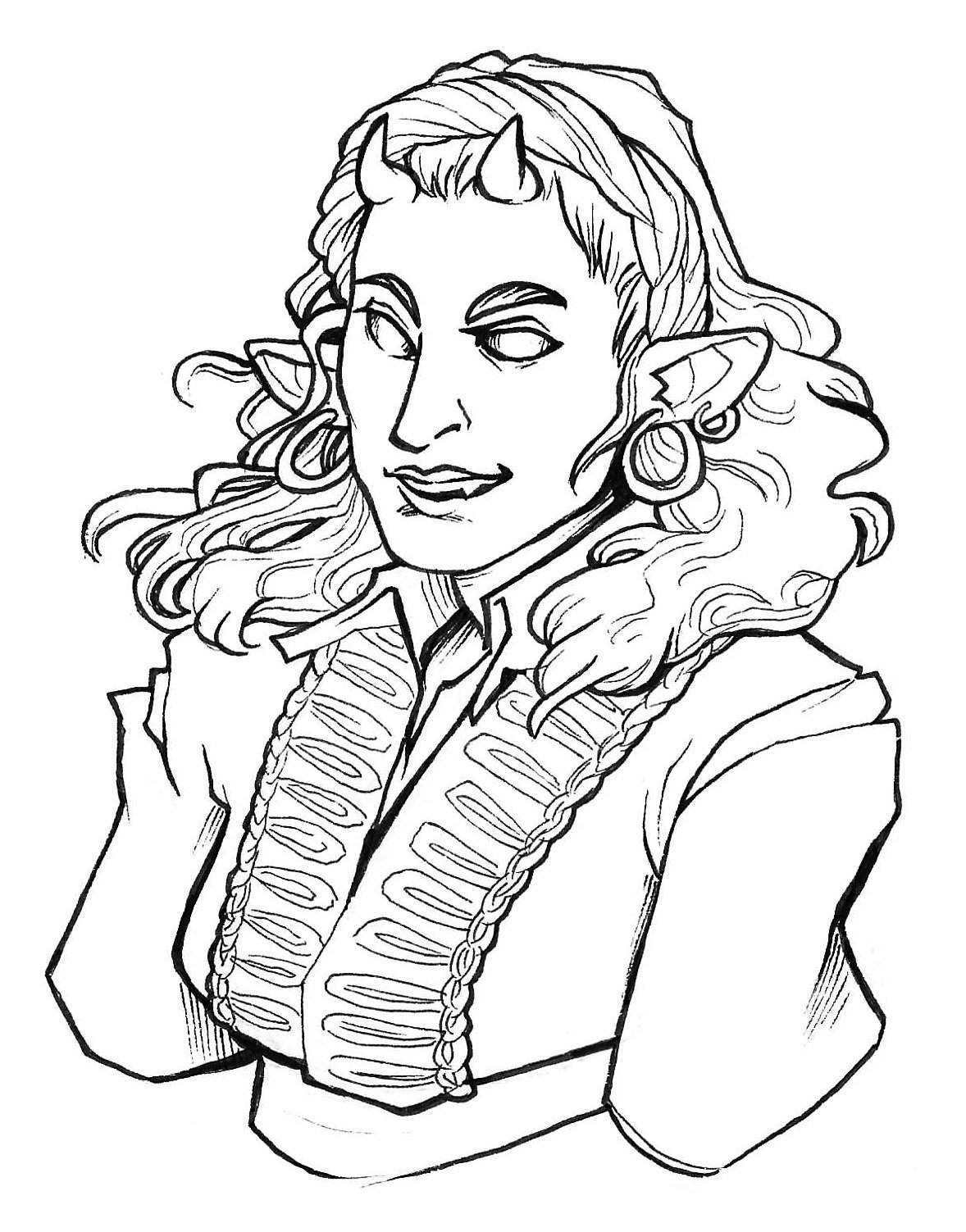
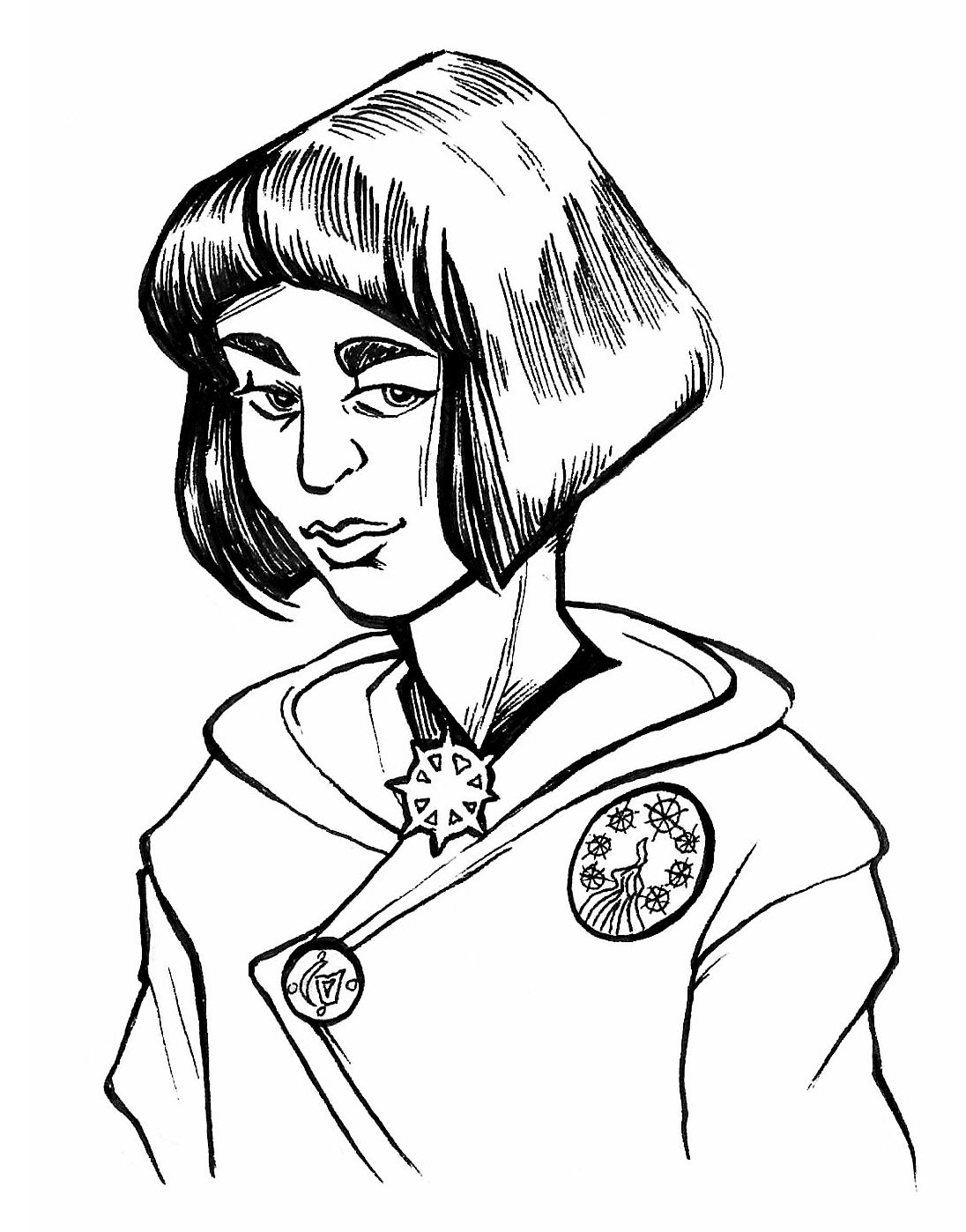
Kora Marwood was born the youngest to an impoverished family living in Waterdeep. Her father, Hogar, was a member of the guard and occasional longshoreman, and her mother cared for her four siblings and kept house in a shabby apartment in the Dock Ward. In the autumn of 1471, Kora’s mother, Samira, took a short-term field job with the Snobeedle Orchard and Meadery. In the Kora Marwood (by @BroadfootLenny)midst of a work day, she unexpectedly gave birth to Kora in the middle of the field.
Life continued to be difficult for the Marwoods, and things finally fell apart for the family when Hogar died while working on a job on the docks, killed by a faulty bit of cargo netting and crushed to death by lumber imports from Chult. Samira, fearing for her inability to care for Kora and her siblings, brought them to the Temples for adoption.

Kora, only three years old at the time, remembers little of her mother and her family. While her siblings went to temples of Lathander and Ilmater, Kora was taken by the acolytes of Mystra. She was raised in the mysteries and teachings of Mystra, learning the histories of civilization, magic, and religion.  While life was safe and predictable, it was also boring. Kora began sneaking out at night to spend time in the city, and soon found herself enamored with a young man named Aseir Kalid, from Calimshan.

Aseir was an artist, working during the day in his father’s shop weaving and dyeing, and then working on his own projects when he had time. When he presented her with a small wooden painting of her one night, she decided that she was done with life in the temple and left shortly thereafter. She lived with him for six months, exploring the city with new eyes. It was in the Spring of 1486 that Aseir fell ill with the Weeping Plague, an illness that began with sores around the eyes and nose that wept a clear fluid, then quickly spread throughout the body, followed by a fever and, for many, death. Brought to Waterdeep from ports far away, the city respond quickly with quarantine. It was then that Kora was reunited with her brother Randal, who had become a priest of Ilmater. Despite his training and magical prowess, he was unable to save Aseir, and left Kora in quarantine to care for him until he passed.

Heartbroken, Kora returned to the temple, throwing herself at the feet of the Head Priest. She begged him to take her back, so that she could serve the temple as a lay healer. While Mystra is not inclined towards life and healing, magic serves all, and they taught her the healing arts. She took to it quickly, showing prowess and aptitude.

She was asked to accompany a pilgrimage to Myth Drannor as a healer and acolyte, and she attended to this. Along the way, she made the acquaintance of a dwarven ranger named Dain Balderk. Dain was initially standoffish with Kora, but after she had several opportunities to demonstrate her knowledge, diplomacy, and skill, he showed a grudging respect. Unfortunately, the arrival of the pilgrimage was preceded by destruction, as the city of the Netherese fell upon Myth Drannor, destroying it. Again.

The pilgrimage stayed at the Ruins of Myth Drannor for several months, caring for the wounded and exploring the wild magic of the disaster. It was during this time that Kora discovered that Balasha Asorio, one of the guides and foragers with the party, was actually an agent of the Zhentarim. Exposing the traitor forced a hasty ambush that had been in the making for some time. The Zhent were repelled, but Balasha escaped and Dain received a grievous wound to his back that would never heal completely. On the return trip to Waterdeep, Dain revealed himself as a Harper, and indoctrinated Kora into the faction.

When the pilgrimage at last returned to the city, Kora swore herself to the service of Mystra and began her life as a cleric in full. She now lives at the House of Wonder as a healer, acolyte, and doing odd jobs when asked. She serves mostly as an informational asset for the Harpers, looking to find those who look to destroy personal freedom and otherwise act out of evil. She still meets with Dain regularly, who acts as a mentor (and handler).

DESCRIPTION: Kora stands about 5’6”, tending towards a leaner frame; not scrawny, but more svelte. She has darker skin, that of a deep tan or of a more Mediterranean ethnicity, not quite brown, but not pale. Her hair is dark brown, to the point of appearing black unless under direct sunlight. Her face is more narrow than broad, with a rounded chin, high cheekbones, and green eyes.

When at home and not expecting trouble or a call to action, she wears a robe or a tunic with a simple shirt underneath and blue or black leggings. When out and about, she wears her armor with a tabbard or tunic over it, leather leggings/britches, a cloak, and her shield, mace, pack, and healer’s kit at her side. She dresses in white, silver, and blue, with red elements in linings and trim to reflect Mystra’s holy colors. Mystra’s holy symbol is emblazoned on her shield.

WHAT KORA KNOWS – THE ZHENTARIM:

  • Zhentarim is a shadow organization of thieves, spies, assassins, and wizards that trades mercenaries and goods (including weapons) for profit.
  • Their original base of power was among the Zhent people in the Moonsea region, primarily a place called Zhentil Keep.
  • Long sought to gain political influence in Waterdeep, but the strength of the city’s Masked Lords, nobility, and professional guilds makes that difficult.
  • In the late 14th century (about 100 years ago), the founder of the Zhentarim (Manshoon) was killed and Zhentil Keep was razed. Zhentarim power was shattered, with the organization breaking down into many internecine factions.
  • You’ve been trying to figure out details about the local Zhentarim for awhile, as their power and influence seems to be growing. Recently, however, there appears to have been a schism within the group.
  • This schism is not widely known, because the Zhentarim are simultaneously fighting a gang war with the Xanathar Crime League, and that violence is capturing everyone’s attention. You know that that this gang war is the result of some provocative action taken by the new splinter group of the Zhentarim.

CREATING KORA

I’ve run games for and played games with Chris for a number of years now. His approach to character creation tends to be a quiet one: He likes to thoughtfully develop them in great detail, often working ahead of the group even in unfamiliar systems. In this case he was quite familiar with 5th Edition and the Forgotten Realms, and so by the time we were getting some of the new players up on their feet, Kora was already a fully fledged character rich with details. In fact, virtually everything you see above was already basically in place by the time I tuned in on Kora for the first time.

PUBLIC INTEGRATION: There’s an anecdote that’s somewhere between gospel truth and urban legend that goes around both the movie and video game production circles. You have either a developer or a writer or a director or maybe an SFX house who’s giving a presentation to their producer or editor or investor. And so they very deliberately add one element to their presentation or edit or final render that they know is dumb: Like, maybe it’s a noir drama but there’s a shot of a guy holding a goose for no reason.

So their boss says, “Looks great, but I think you should lose the shot with the goose.” And our creator-hero takes the note and deletes the goose… because, of course, they never actually wanted the goose in the first place. The point of the story is that everybody in a decision process feels a need to give notes; either because they psychologically want to feel that they’ve “contributed” to the final product or because they need to justify their paycheck. If they just say “that’s good,” it’s not like they’ve actually done anything, right? The point of the dumb goose was to provide a lighting rod for the irrelevant-but-necessary comment they pathologically need to provide.

This is my long-winded way of saying: As a GM, don’t be the executive in this story.

If you’ve got a value-add, go for it! That’s the whole point of the “public integration” phase. In this case, Chris’ expertise and clear vision meant that Kora was already fully integrated into the setting.

No need to look the gift horse in the mouth. Ride on.

PRIVATE INTEGRATION: Chris had chosen for Kora to be a fledgling Harper and had also set up a violent history with the Zhentarim, so that bit of integration with two of the major factions of the campaign was also more-or-less automatically done for me. I simply swapped out the scripted Harper contact (Mirt) for the character that Chris had created (although I eventually brought Mirt back in as Dain’s boss; thus Kora’s background gave additional depth to the Harpers rather than vice versa).

(I guess maybe it is worth pointing out that swapping out elements you had planned and replacing them with what the players created is not only just as valid as adding relevant stuff to the PCs’ background, it’s probably MORE valid.)

You’ll note that, like Sarah, Chris got a “What You Know” handout for the Zhentarim. Some of the bullet points are duplicated (there’s no reason to rewrite or reword stuff you don’t have to), but others have unique information, slightly different information, or information with a different interpretation. The goal, of course, is for the two players to be able to actually swap information in-character. (If their handouts were perfect duplicates, the interaction is more likely to be one of them regurgitating everything know and the other player not getting any pay-off from their character’s knowledge. The unique information solves that problem. The information that slightly overlaps – or even contradicts! – provokes actual discussion between the players.)

The Snobeedle Orchard appears on the map of Waterdeep:
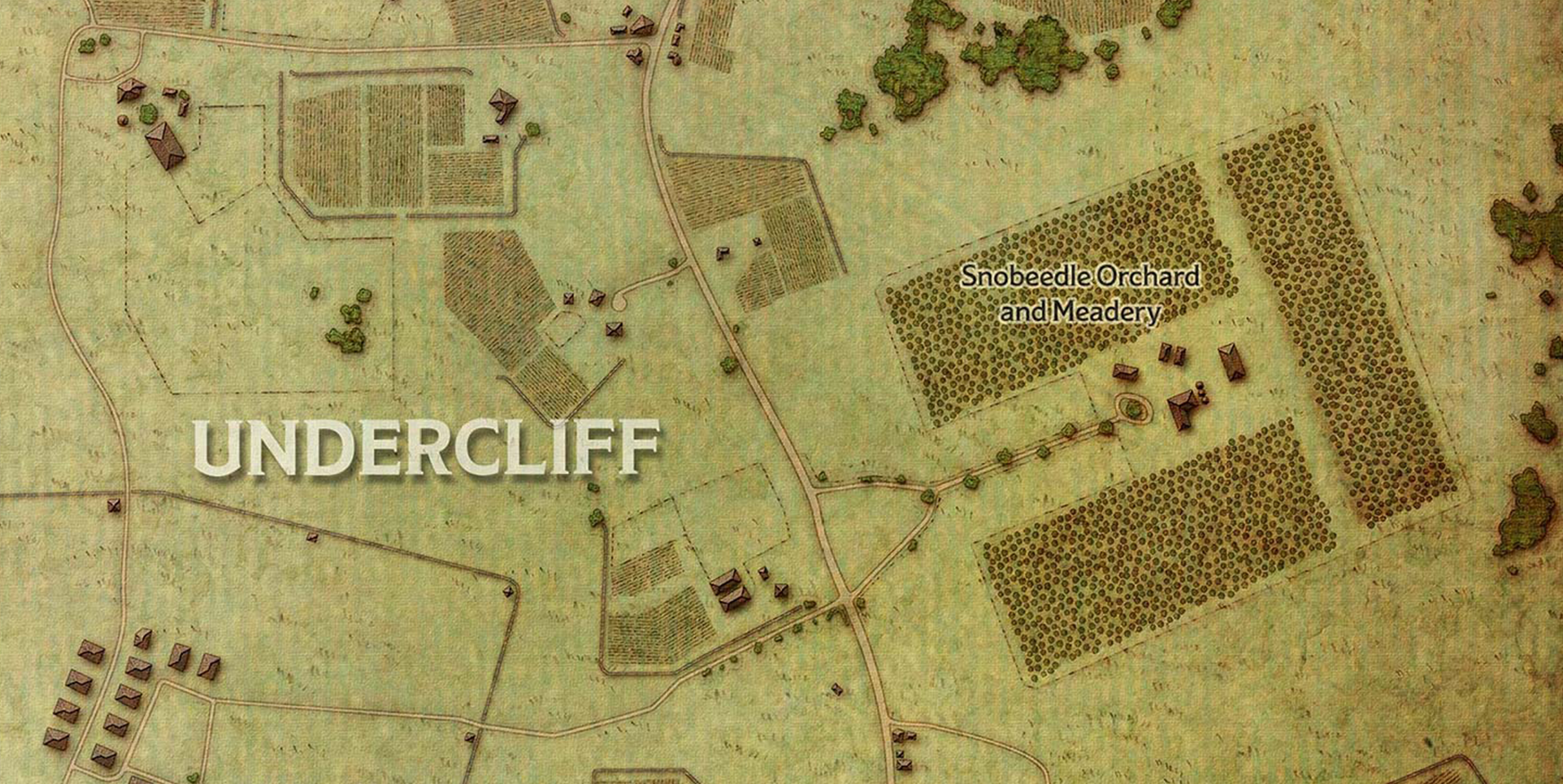
Waterdeep: Undercliff - Snobeedle Orchard (Map)

I had a huge version of this map hanging on the wall and Chris simply grabbed it off the map when fleshing out the story of Kora’s mother. This was a really cool opportunity, but I blew it: I completely missed the fact that Dasher Snobeedle, a member of the Snobeedle family, had become one of the wererats sent to harass the new owners of Trollskull Manor (i.e., the PCs).  I eventually noticed my oversight towards the end of the campaign when I started doing some meaningful development on Kora’s missing mother and was able to work it in. (You can read about that in more detail over here.)

BRINGING THE PARTY TOGETHER: As I mentioned in Part 1, Edana’s position as a fixer made her a natural fit for being the character who would connect the rest of the party with their contact at the Yawning Portal. Kora’s role as a Harper agent, however, also made sense for this role.

There were a few options we collectively considered, including:

  • Kora somehow being undercover and investigating Edana. (Chris wasn’t really interested in playing Kora with a false identity, and this also suggested that Edana was currently involved in criminality, whereas Sarah was more interested in having her at the tail end of one of her respites.)
  • Edana introducing half of the party to their contact and Kora introducing the other half. (The problem was that Kitti, Pashar, and Theren were already grouped up, so there was no “other half” for Kora to introduce.)

The final solution ended up being a somewhat convoluted web of connections: Upon arriving in Waterdeep, Kitti decided the best way she could help Pashar raise money was by joining the underground fight circuit. (I made a note to connect this to the underground fights that figure later in the campaign.) Asking around, they got pointed in the direction of Edana. When Edana realized how much money they really needed, told them to skip the fights and decided to take them to Kora, who had been putting the word around that she needed a crew.

“Mystra’s got money,” was Edana’s rationale. But it turned out the job wasn’t for the Temple of Mystra. Kora was freelancing. But the offer was better than nothing, so Kitti, Theren, and Pashar accepted. Edana decided to tag along for a little bit just to make sure everything was copacetic. (It seemed to her that young Kora was flying by the seat of her pants… She wasn’t wrong.)

And that’s when Kora took them all to the Yawning Portal to meet her contact.
Go to Part 1

THEREN

(Created by Erik Malm)

I spent my youth exploring the forests of Evermeet and learning to hunt from my father.

Theren (by @BroadfootLenny)Shortly after coming of age, word reached the wood elves of Evermeet that not only had the ruins of our old home in the Ardeep Forest been overrun by kobolds and other monsters, but a group of humans, led by Lord Nandar of Waterdeep, had begun invading and trying to lay claim to the forest.

When Rond Arrowhome set sail with an army of wood elves to take back and protect the forest, I volunteered to join them. I was trained as a ranger and soon became an expert at hunting both humans and kobolds.

Now that the forest is once again safe, I prefer to spend my days alone with nature – exploring, observing, and experiencing the constant change and unpredictable events of the natural world. I especially love the power, beauty, and unpredictability of thunderstorms and have developed a connection to Aerdrie Faenya, though I am one of the few non-avariel who worship her.

I am always happy to help out lost travelers (who mean the forest no harm) or anyone else in need, though I remain distrustful of the wealthy elite like the Nandars of Waterdeep.

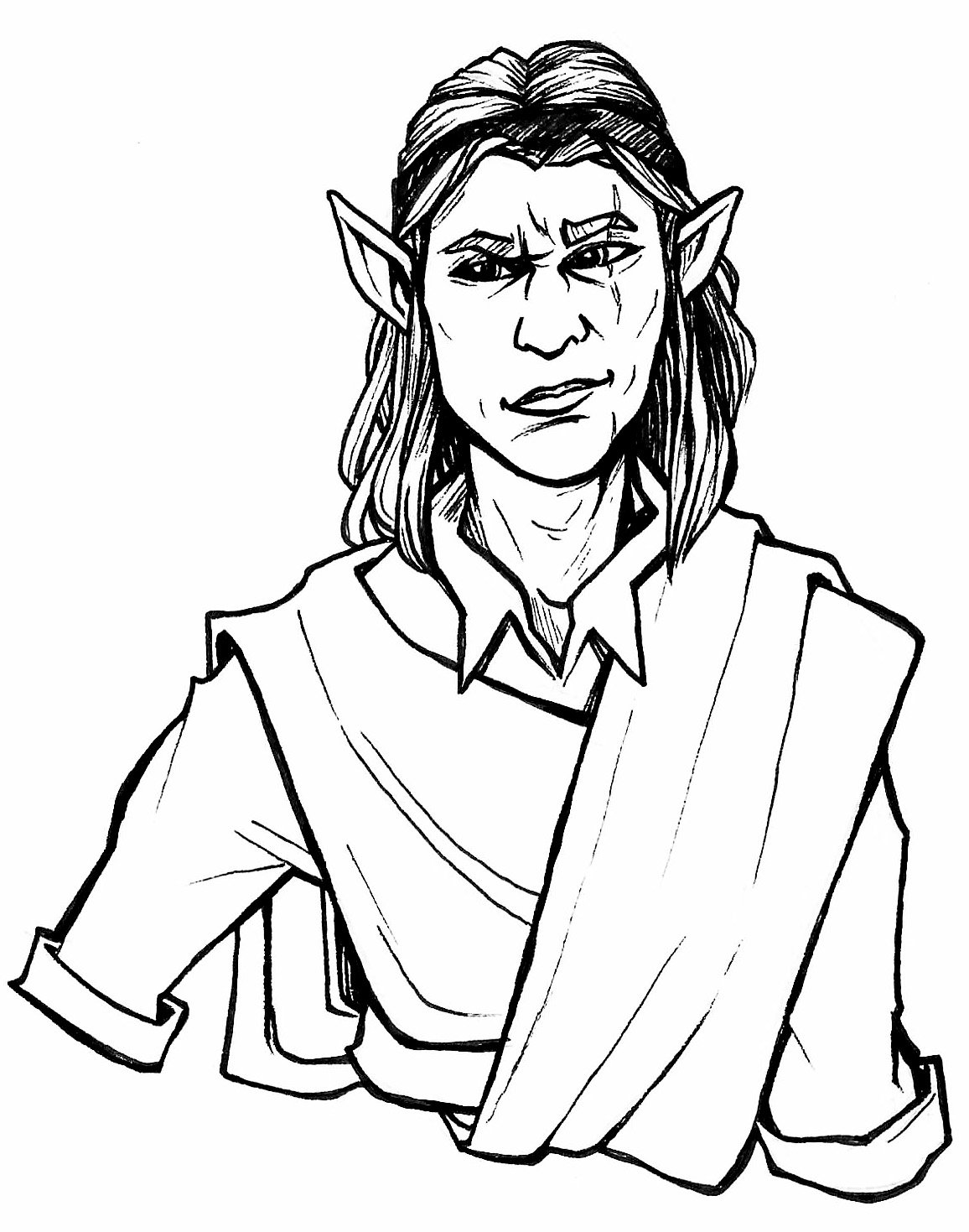
DESCRIPTION: Theren has copper-colored skin with a dark-brown/copper-colored hair (like dark, tarnished copper).

His clothes palette is standard dark forest colors; the sort of thing that would help with camouflage in Ardeep – deep greens, browns, dark grey/black. Theren’s original clothing would be elvish and probably trend more towards just greens and browns, emphasizing dark versions of those colors instead of a true black. (That said, the longer he’s in the city, the more likely he is to start wearing some greys that woud match stonework, etc. Maybe fewer greens as well, or even normal Waterdhavian clothing of a fashionable sort, but with subdued colors.) It’s ultimately all about camouflage; to blend into his environment.

Theren is 5’10”. Green eyes.

Hair is straight and shoulder length. Normally he just keeps it tucked behind his ears, which tends to keep it in place fairly well due to elvish ears being tall and pointy. But if it’s particularly windy (or similar conditions where his hair might obscure his vision), he’ll either wear a headband or tie his hair back.

There’s nothing particularly remarkable about Theren’s facial features – typical elvish face with thinner and more angular features than the average human. Rather, what is remarkable is the way that his life and outlook affect his skin, underlying musculature, and how he carries himself:

Theren has spent much of his life outdoors – baking in the sun, holding night-long vigils in the deep of the forest, and facing unafraid the heavy winds and storms which he is particularly fond of as a ceraunophile and worshiper of Aerdrie Faenya. Consequently, I think of Theren as looking a little weatherworn (or, at least, weatherworn for a young elf). It’s not that he necessarily looks particularly aged or beaten down by the elements, more like that subtle difference between how high quality furniture kept on a patio looks ever so slightly different than the exact same furniture kept in a three-season porch at the end of summer. He looks just a little out of place indoors and looks like he’s where he belongs when outdoors.

Similarly, his musculature looks just a little different than the average elf. He’s not particularly muscular or anything, though he still has an athletic build, but his muscles are all incredibly dense – like a rock climber’s, a farmer’s, or anyone else who’s primary form of exercise is one of intense and continuous use of their entire body. This also applies to the underlying musculature of his face, making him look a little extra solid/rugged/durable. I suppose it may look a little formidable in some cases, but Theren isn’t really threatening, scary, or even particularly imposing, he just looks like someone you’d rather not pick a fight with or try to rob.

His demeanor, posture, and manners have also been affected by his relative solitude and preference for the wilds. Having spent much of his time alone when he doesn’t need to worry about what others think about him, he displays his emotions a little more readily, he is a little more likely to speak his mind, his manners are a little more unchecked, and his posture and physical mannerism are a little more informal than a typical elf. To be clear, he’s still an elf raised on Evermeet, and a non-elf probably wouldn’t even notice anything at all, but to other elves he seems a little… wild/feral.

Finally, although his regular demeanor might be a bit more wild and relaxed, he also has a hunter mode that he shifts into when stalking prey or facing enemies. When he’s in this mood, he appears more cold, calculating, and emotionless. Unlike the differences described above, which might not be noticed by a non-elf, this shift is significant enough that everyone except the most unobservant can tell he’s hunting something or someone.

CREATING THEREN

The thing I always marvel at when revisiting Theren’s background is the intense depth of the physical description. I’ve had other players create similarly detailed descriptions, but usually it’s because EVERYTHING is lavishly detailed. The ratio between Theren’s physical description and everything else in Theren’s character background seems crazy at first glance.

But it works. And it’s a valuable reminder that everyone will have different touchstones that are most effective for them. (This will often depend not only on the player, but also the specific character.)

Look at how much amazing, actionable detail Erik works into Theren’s physical description! It’s all about blending into his environment? He’s a little bit uncomfortable inside? That’s gold. Even simple, specific physical actions like when/how he tucks back his hair.

PUBLIC INTEGRATION: Erik was the least versed in the Forgotten Realms at the table. Ironically, we ended up doing the most digging into the weird, esoteric corners of Realms Lore with his character.

The origin point was a simple question: Where would an elf ranger be from?

Evermeet was an easy answer: Big elven kingdom. Just across the ocean from Waterdeep. (Maybe he could be somehow tied into the maritime adventures of Kitti and Pashar?)

On the other hand, where might a wood elf live near Waterdeep? That led us to Ardeep Forest. And that’s where we really started digging in. I forget the exact path we followed, but I ended up not only pulling information from Lost Empires of Faerûn, but also tracking down an obscure article about the forest that was written by Ed Greenwood and published in Dragon Magazine #270.

There was also more recent lore, revolving around a conflict between Lord Nandar of Waterdeep and the elves of Ardeep in the 1470s. (The Waterdeep connection, however tenuous, made this appealing.) I was not particularly familiar with this era (and not at all familiar with these events), but they were intriguing.

PRIVATE INTEGRATION: The only thing of note here that I recall is that Volo was the “author” of the Dragon Magazine article. This didn’t really have anything to do with integrating the character into the campaign, but giving Erik a copy of the article was a nice way to subtly establish Volo’s existence for a player who otherwise wouldn’t be familiar with the name when it was dropped in the first session.

BRINGING THE PARTY TOGETHER: The key question which remained was how Theren would be pulled into Waterdeep. (Remember that every player needed to explain how their character ended up walking through the doors of the Yawning Portal at the beginning of the campaign.)

We looked at a few options, but what stuck was just aiming the Pashar-Kitti vector in the direction of Ardeep Forest: While passing through the forest on the way to Waterdeep, they would have met Theren. After helping him with some local trouble (or possibly being saved by him from local trouble, their mutual versions of the story had very different interpretations of those events), Theren was swayed by Pashar’s sob story and agreed to help him (them, really) raise the ransom money.

It was only six hundred gold pieces, right?

(He was in Waterdeep with them before he discovered that the actual ransom price was… uh… considerably more money than that. He hadn’t sworn an oath or anything… but good gods.)

Go to Part 5: Kora Marwood

Go to Part 1

Now that we’ve looked at what vaguely passes for continuity in Descent Into Avernus, let’s look at what preceded it.

The first thing to note is that Zariel was not previously involved in the famous Charge of the Hellriders. Variants in that continuity are covered in more depth as part of the Textual History of Elturel, but the short version is that:

  • The Charge was originally an almost legendary event in 1358 DR (which makes it unlikely that it happened in 1354 DR).
  • The original explanation for the Charge was that the knights were riding to rescue a companion.
  • This was later changed to “long ago warriors of Elturel literally rode through a gate into the Nine Hells to pursue and destroy devils that had been plaguing the people.”

You can see how, in Descent Into Avernus, this was changed again to something between “holy crusade that was the whole reason they had signed up in the first place” and “pursuing and destroying DEMONS that had been plaguing their people.”

TIAMAT, THE LORD OF AVERNUS (1977)

Way back in 1977, the original Monster Manual said that “Tiamat rules the first plane of the Nine Hells where she spawns all evil dragonkind.”

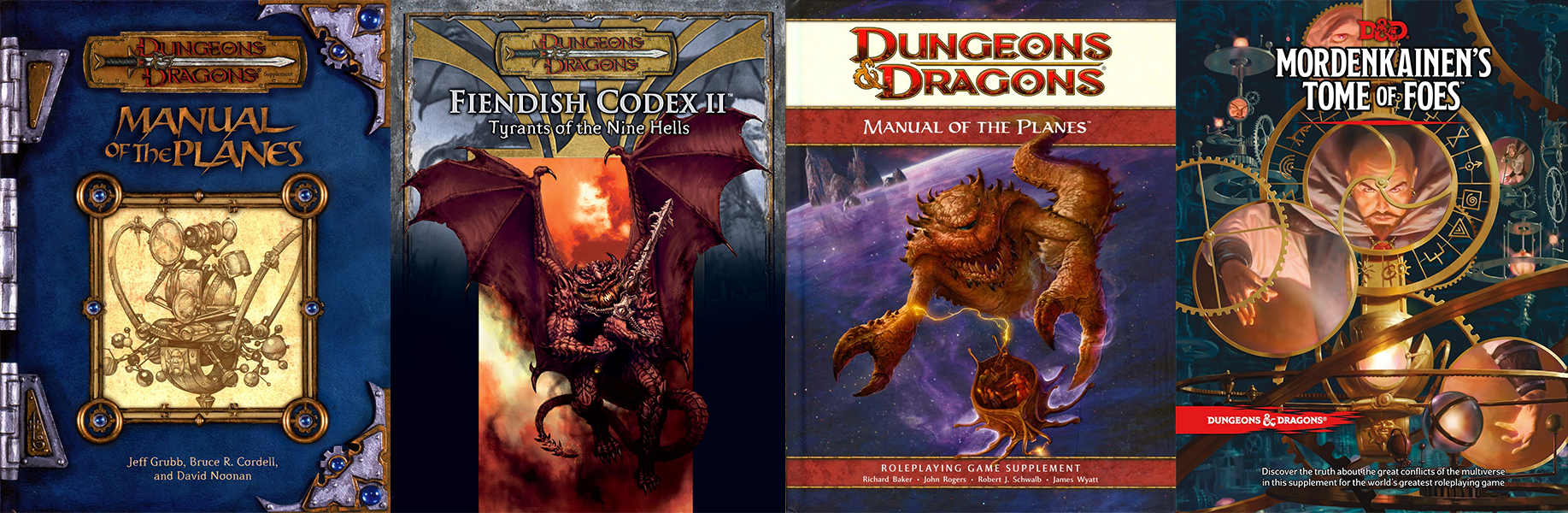
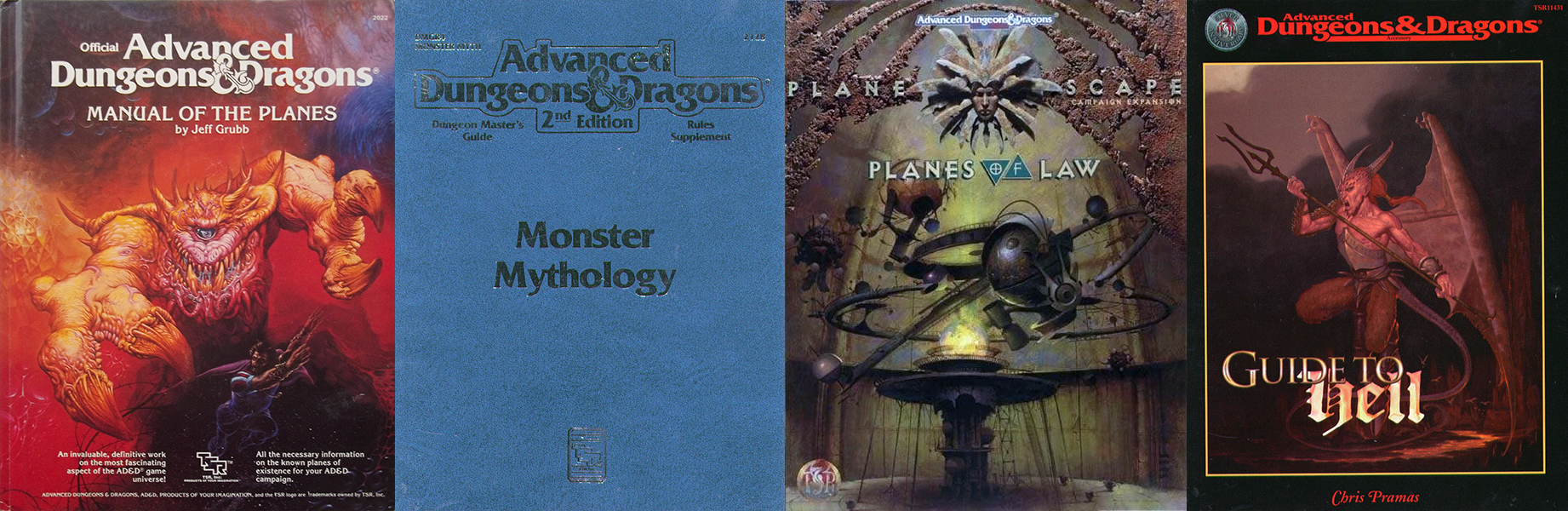
In the Manual of the Planes (1987), we are told that, “The watchdog of the Hells’ front parlor is Tiamat.”

In Monster Mythology (1992), Tiamat “infests the uppermost of the Nine Hells with her consorts, each a Great Wyrm of a different color — one red, one white, one green, one blue, and one black.” (These consorts are an evolution of Tiamat’s “guard” in Supplement I: Greyhawk (1975), when she was merely the Dragon Queen and her “major abode is in a stupendous cavern far beneath the earth.”)

We’re also told in Monster Mythology that Tiamat’s “relations with the baatezu [devils] that populate the Hells and stray into her realm at times is the subject of considerable speculation by sages.” (Which is basically the author, the esteemed Carl Sargent, saying, “I’m really trying to figure out why the evil Dragon Queen is in charge of Avernus.”) These “sages” have traditionally said that she’s been at war with the devils, but now it seems that the devils may be seeking to make some sort of pact with her to aid them in the Blood War.

PLANESCAPE: PLANES OF LAW (1995)

In Planescape: Planes of Law we are told that there are giant fireballs that just randomly appear around Avernus for no apparent reason. “Some sages say the fireballs represent the will of the nameless archduke of the level.” (emphasis added)

“Speaking of the archduke: Bel, the pit-fiend commander of the armies of this layer, leads immense legions across the plane, scouring every inch of it for invaders and searching for honors from the archduke.” Bel has “been appointed by the Dark Eight” and is the senior general of Avernus (with other generals “bowing to Bel’s experience and political muscle.”)

This is the first reference to an Archduke of Avernus. But if they’re nameless, what happened to Tiamat?

“Tiamat, the Lady of Dragonkind, guards the only known entrance to the next layer. It’s only through her lair that one can arrive in the verdigrised plains near the Iron City of Dis.”

Note: I’m pretty confident that “watchdog of the Hells’ front parlor” in the Manual of the Planes was just a poetic rephrasing of “Tiamat rules the first plane of the Nine Hells” from the original Monster Manual. Here, however, the meaning has glided towards guarding a literal “front parlor;” i.e., the path to Dis.

DRAGON #223 – THE LORDS OF THE NINE (1995)

Planes of Law came out in February 1995. As noted, it included Bel as a general and left all but three of the Lords of the Nine mysterious and unknown. This, it should be noted, was a diegetic mystery — it’s not just that TSR wasn’t telling you; it was that their identities were a mystery to the characters in the game world itself.

But in the November 1995 issue of Dragon Magazine (#223, which would have been released in August 1995), Colin McComb writes “The Lords of the Nine”: “The Lords of the Nine Layers of Baator have been revealed at last! Do you dare to read about them?”

And, indeed, McComb provides identities for all nine archdukes. And this is done diegetically. A character named Willgan the Dogged has discovered their identities and is ready to tell all!

Note: I belabor this mostly because I’m fascinated by the decision process to drop this entire aspect of the Planescape setting almost immediately after publishing the boxed set.

Regarding Bel, we are told, that “the original Lord of Avernus (not Tiamat, contrary to popular belief) found herself imprisoned and entrapped by her warlord, the pit fiend Bel, thousands of years ago.” Bel is siphoning more of the Lord’s power for himself, but is still beholden to the Dark Eight.

GUIDE TO HELL (1999)

Chris Pramas’ Guide to Hell is Zariel’s first named appearance. She is described as the “original Lord of Avernus.”

Pramas also described the Reckoning: A great war in Hell which started when Zariel laid siege to Dis. Her allies – Moloch and Belial – simultaneously launched an assault on Stygia. Mephistopheles eventually broke the siege on Dis, forcing Zariel back to Avernus. The final battle was to be fought in Maladomini (the seventh layer of Hell), but Asmodeus pulled a coup: Geryon, Lord of Stygia, had suborned the generals of the other Lords’ armies. On the day of the ultimate battle, the generals mutinied, declared their loyalty to Asmodeus, and ended the war. Bizarrely, only Geryon – the only Lord to remain loyal to Asmodeus – was subsequently ousted from his position of power.

The generals, however, were empowered as the newly created Dark Eight. This council runs the Blood War from Nessus, the lowest level of Hell.

The pit fiend Bel, after running successful covert ops missions during the Blood War under the command of the Dark Eight, became Zariel’s right-hand man in Avernus. He then betrayed and imprisoned her, rendering her powerless.

Note: Describing Zariel as the “original Lord of Avernus” might seem in direct contradiction to Tiamat having held that position before. This is most likely intended as a straight-up retcon, but it doesn’t necessarily have to be so: My head canon is that Zariel, the original Lord of Avernus, has been intermittently deposed from time to time over the course of long eons, including stints by both Tiamat and Bel.

MANUAL OF THE PLANES (3rd EDITION, 2001)

The references to Avernus in the Manual of the Planes are largely a very short summary of the material from Guide to Hell, but there’s one addition to the mythology: “Bel still keeps Zariel prisoner somewhere deep in the Bronze Citadel so that he can siphon her hellish power to himself, increasing his own abilities while slowly reducing her to just another soul shell.”

This is repeated in the Book of Vile Darkness (2002), where Zariel is kept in the Bronze Citadel where Bel “draws off her power to extend his own.”

FIENDISH CODEX II (2006)

Fiendish Codex II: Tyrants of the Nine Hells largely reiterates the continuity from Guide to Hell (in a more complete form than that necessarily found in the Manual of the Planes).

The Dark Eight, however, are now based out of Avernus where they “eschew the title of duke, preferring the rank of general.”

Zariel remains “imprisoned in the bowels of the Bronze Citadel,” where she “languishes under the cruel knives of the abishai torturers that carve bits off of her flesh to feed to their master.”

Note: The context here is somewhat confusing and could be interpreted as meaning that Zariel’s flesh is being fed to Tiamat, who is traditionally the master of the abishai. A closer reading, however, makes it clear that the “master” here is referring to Bel, and the abishai are those who are serving him due to a pact he has forged with Tiamat. (Remember Sargent’s sages who rumored that a pact was being negotiated with Tiamat?) This continuity is consistent with Bel “drawing off her power,” with the method now being defined as some sort of devilish cannibalism.

MANUAL OF THE PLANES (4th EDITION, 2008)

The 4th Edition of D&D really features a completely different planar cosmology, but there is some continuity here that makes it potentially worthwhile to take a peek.

Zariel is not referenced, but “a circle of pit fiends known as the Dark Eight serve as Bel’s vassals and councilors. Bel governs only at their pleasure, and he must constantly consider whether his actions will meet with the approval of the Dark Eight.”

Note: They are both his vassals AND he serves only at their pleasure? Go home, 4th Edition, you’re drunk.

What we’re seeing rather bluntly manifest in this text, however, is an uncertainty and confusion which has crept into who and what the Dark Eight are: They were originally established as being based out of Nessus (i.e., Asmodeus’ court) and could be seen as a parallel power to the Lords of the Nine: In other words, there were eight archdukes who ruled the layers of Hell (plus Asmodeus, the ninth) and there were the Dark Eight who served as military generals.

But somewhere along the way they had slid from Nessus to Avernus and ended up in the power structure of the Archduke of Avernus.

Having the Dark Eight be the generals of Avernus became my head canon more or less by accident, as I had not fully delved into their history yet when I started thinking about them in relation to the history of Gargauth and Bel.

DUNGEON #197 – CODEX OF BETRAYAL: GLASYA, PRINCESS OF THE NINE HELLS (2011)

This article by Robert J. Schwalb seems to be the only reference to Zariel in 4th Edition. She remains the original Lord of Avernus and she “ruled thus for many eons.”

We are also given a new continuity for the end of Zariel’s rule, revolving around an alternative version of the Reckoning.

This Reckoning was an incredibly convoluted soap opera involving Asmodeus’ daughter Glasya. Long story short, she single-handedly convinced all the Lords to go to war with each other. In this version of reality, the Dark Eight already existed but were also the pit fiend generals in command of the Archdukes’ armies. At Asmodeus’ command, the Dark Eight betrayed their masters and ended the conflict.

Note: The Reckoning reputedly lasted for an “eon,” but this doesn’t really track with the very specific series of events described in the text.

The Dark Eight then took all the legions of Baator to Avernus. Once there, they hunted Zariel down and imprisoned her. Bel was then raised up as “a puppet ruler over her realm.”

Why this happened is really unclear, because Zariel had actually been part of the faction loyal to Asmodeus. The article even says, “Strangely, though, Asmodeus’ allies suffered the worst,” but doesn’t have even the slightest hint of an explanation.

RISE OF TIAMAT (2014)

“Asmodeus recently reinstated the fallen angel Zariel as the Archduchess of Avernus, reversing an earlier decision that allowed a pit fiend named Bel to take the throne.”

Note: I’m fairly certain that this is the first reference to Zariel being a fallen angel.

“While in exile from her seat of power, Zariel was at the mercy of Tiamat — a fate that rankles her still.”

Note: Remember when I mentioned that the reference in Fiendish Codex II to Zariel being tortured by abishai on behalf of their master could erroneously lead one to believe that she was being fed to Tiamat? I’m fairly certain that’s exactly what happened here.

MORDENKAINEN’S TOME OF FOES (2018)

I’d be curious to know if Descent Into Avernus was already in development at the time this book was published. (And, if so, how much influence it had on the text.) In any case, this is the book that retcons the entire history of Zariel being the original Lord of Avernus.

Long, long ago, during the Trial of Asmodeus, Zariel got into a brawl with her fellow angels, demanding to give testimony to Asmodeus’ crimes.

We are also told that Zariel is Asmodeus’ “most recent recruit.” Zariel grew obsessed with the Blood War and believed that the hosts of Mount Celestia could descend upon Avernus and wipe out both the devils and the demons of the Blood War.

“Accompanied by a mob of mortal followers, she cut a swath through a legion of devils before their numbers overwhelmed her. A delegation of bone devils dispatched to the site by Asmodeus recovered her unconscious form beneath a small mountain of her slaughtered enemies. After allowing her to recover in the depths of Nessus, Asmodeus installed her on Avernus as his champion and new lord of that layer.”

Note: This probably explains where the random dream image of Zariel being unconscious on the battlefield – which is not consistent with any other continuity from Descent Into Avernus – came from.

This transition from Bel to Zariel is described as marking a new chapter in the Blood War, with Zariel preferring aggressive offensive tactics instead of simply sustaining a passive defense of the Avernian frontiers. Her obsession with fighting on the frontlines, however, has distracted her from the courts of Hell and made her a political pariah without alliances with the other Lords of the Nine.

Note: Oddly, this just takes the previous description of Bel from Guide to Hell – freshly aggressive, politically isolated (he was often referred to in Hell as Bel the Pretender) – and applies it to Zariel instead.

Go to the Avernus Remix

Go to Part 1

KITTISOTH KA’ITER

(Created by Heather Burmeister)

My mother was the wife of a fisherman on the main Pirate Isle. She became worried when he hadn’t come home as expected from what was supposed to be a routine trip out to sea. She tried to make a pact with a devil in the hopes that it would ensure his safe return, but it went horribly wrong. The end result was her giving birth to me.

Kittisoth Ka'iter (by @BroadfootLenny)She tried to raise me the best that she could, I guess, but most of what I remember is her desperately trying to make me look like a normal child by hiding my leathery bat-wings or crying. It wasn’t long before she disappeared entirely, leaving me to fend for myself.

The Pirate Isles are rife with underling children who have lost parents – either on great pirate raids or to great leviathans of the deep or simply to sad, lonely circumstance. I fell in with a group of street urchin kids who took care of each other and learned how to defend my odd looks with brute force. My group of k ids would make a little cash here and there by running errands or little missions for the pirate gangs when they’d dock.

When I was around fifteen (I’m not one-hundred percent sure what my birthday is), one of the pirate gangs tasked my group with stealing a compass imbued with magical properties from a well-known captain named Iriqoth Ka’iter. It was supposed to be an easy job, but grace, stealth, and patience were never my strong points. I botched the mission by panicking when I couldn’t get the lock on the chest open, trying to brute force said lock by kicking said chest over and over again, and trying to fight the crew when they inevitably found the source of the commotion. I was brought to Iriquoth by the crew so that he could decide what was to be done with me. Being devil-born himself, he took a shine to me immediately. He became me weird pirate captain dad, but insisted I work my way up from the bottom ranks if I was to take his place someday.

That day would never come.

After I’d been sailing for a few years and was just starting to take on the responsibilities of first mate, we were boarded in the middle of the night by a legendary pirate vessel, captained by none other than the Quiet Captain, Kip Braddock. Braddock and Iriqoth had long been at odds, but Iriqoth never took the threat seriously. Kip took the ship, killed my father, and took over the crew. Some day he’ll pay for what he’s done.

Shortly after, we came across a new piggy (that’s what we called merchant ships sailing low in the waves). The merchant watchmen – who turned out to be Pashar – had fallen asleep on duty, so we were onboard before they knew what was happening. It looked like the easiest piggy we’d ever taken. But when Kip started killing the crew (including Pashar’s father) so he could take the ship as a prize vessel, Pashar’s mother started fighting back. We eventually managed to take her prisoner, but she’d heavily damaged our ship. So we set sail on the littly piggy ship.

Pashar, though completely impractical and ridiculous, is a wonder. He can tell me the names of very devil, and has been trying to help me find out what sort of devil-spawn I might be. He also doesn’t seem to know when I’m making fun of him, which is a riot for me. He also has an indomitable good nature, which is rare on the high seas. We’re an unlikely pair, but I think he’s my first “friend”… whatever that means. I protected him and his mother from the rougher members of the crew and also offered to accompany him ashore when Kip came up with the idea of ransoming him and his mother for money for a new ship. I’m also hoping that the journey will give me time to plan my revenge.

CREATING KITTI

Heather’s central concept was “tiefling pirate.” Everything else more or less filled in around this central conceit. In Part 2, we looked at how the decision to link her maritime background to Pashar’s had a major effect on shaping the details of Pashar’s background. As we wrapped up our character creation session, however, Kittisoth largely remained a cluster of large concepts. There were a few idea floating around (like “devil-spawn pirate daddy”), but they hadn’t really been nailed down. So Heather developed a lot of these details by writing her background between sessions.

You might also note that, unlike Edana and Pashar, Heather chose to write her character background in the first person. There was a brief period when I was a youngling when I wanted consistency in this sort of thing across the characters in a campaign, and an even longer period when I thought that this choice was somehow reflective of what a player valued or was focused on in their play.

These days I don’t really think there’s a meaningful distinction. There’s obviously differences between first and third person and how they can be used, but I haven’t found that it reflects much beyond the document itself if at all. (There might be a slight bias towards first person being better for developing the voice of your characters, but even that’s not consistent: Talking at the table is very different from writing at your desk, and what you learn from one may or may not be applicable to the other. And, similarly third person might be slightly better at developing lore outside of your PC due to its objectivity, but not significantly so in the long run.)

With all that being said, one of the reasons I like having the characters actually write something up away from the table – even if it’s just a few sentences – is that exploring character through written fiction is a different way of engaging with your character, and you will find stuff (and develop stuff) that you wouldn’t necessarily find at the table. It’s the most elementary form of bluebooking, and also an excellent medium for thoughtful collaboration.

PUBLIC INTEGRATION: Heather was not the least knowledgeable player at the table when it came to the Forgotten Realms, but her exposure was limited to a handful of novels she had read when she was a teenager.

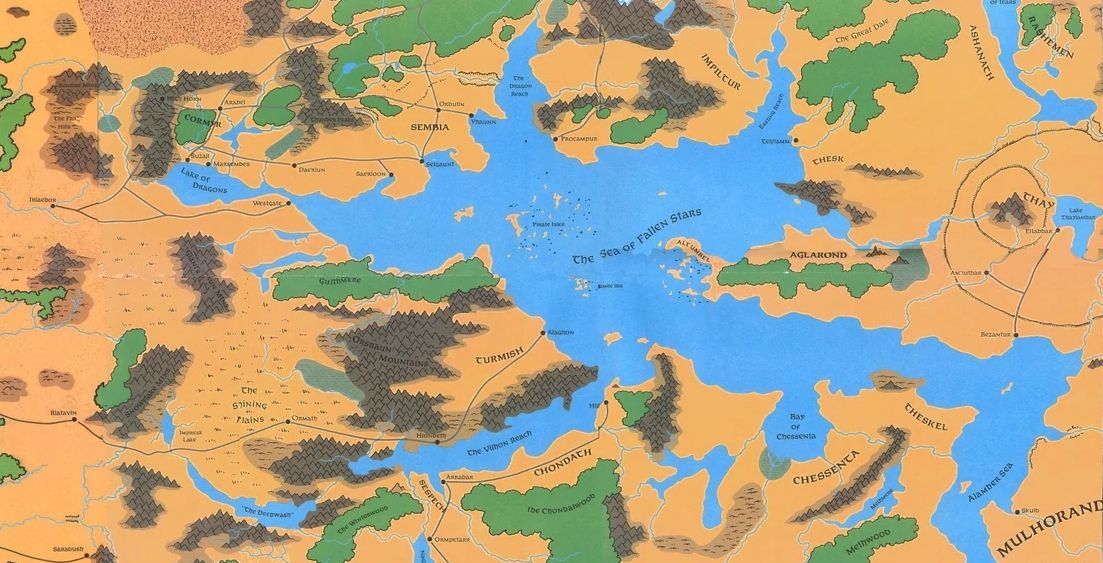
I’d made a point of putting a map of Faerûn on the wall and, when she suggested a pirate, I was able to point out the Pirate Isles. The Sea of Fallen Stars immediately captured her imagination and she was able to roll forward from that.

Forgotten Realms - Map of the Sea of Fallen Stars

PRIVATE INTEGRATION: Much like her friend Pashar, Kittisoth was going to be a newcomer to Waterdeep, so there wasn’t much to tie her into the extant elements of Dragon Heist. I did, actually, offer Luskan as an option if she was looking for a port that her pirates could be sailing out of (in which case there would have been some obvious hooks with Jarlaxle), but the Pirate Isles were just more interesting for her.

BRINGING THE PARTY TOGETHER: I’ve already described most of the initial work here, as it was done in collaboration with Peter/Pashar. Because of this connection, however, as Heather was writing up the details of Kittisoth’s background, she also made a point of prepping a short cheat sheet of details that were also pertinent to Pashar’s background. (This includes stuff like the name of the pirate captain who’d killed Pashar’s father and ransoming his mother.)

This is obviously a good technique for making sure intersecting continuity gets sorted correctly, but it can also be a “sneaky” trick for getting players to collaborate not just with you, but also with their fellow players between sessions.

Go to Part 4: Theren

Go to Table of Contents

I was trying to avoid doing this, but as with Elturel, I ended up doing a fairly deep dive into Zariel’s background as I was working on the Remix. After digging into sources from across multiple editions of the game, I thought it might be interesting to share the results. Perhaps more importantly, a lot of this material will influence Part 6D: Lulu’s Memories, but I don’t want to weigh that material down by trying to discuss all of this there.

In addition to Zariel herself, this textual history will also briefly look at adjacent topics (primarily how the rulership of Avernus shifted both diegetically and non-diegetically over time).

DESCENT INTO AVERNUS (2019)

Let’s start by looking at the version of events laid out in Descent Into Avernus itself. Or rather, as we’ll see, the many versions of those events. (The continuity is rather tangled.)

TO BEGIN WITH: Zariel and Lulu, her hollyphant warmount, were friends for centuries.

GENERATIONS BEFORE THE 14th CENTURY: In response to a prayer to Lathander, Zariel is sent to the village of Idyllglen in the Fields of the Dead to drive off a gnoll invasion.

13?? DR – ZARIEL’S CRUSADE: Zariel leaves Mount Celestia with Lulu. She goes to Elturel and creates the order of knights which would become the Hellriders.

  • The knights swear a personal oath to Zariel that binds them to her service even after death.
  • General Yael was Zariel’s most loyal general.
  • General Olanthius was in love with Yael. (It’s unclear if this was reciprocated.)
  • General Haruman
  • Among the knights was Jander Sunstar, a reformed vampire.

Note: I find the use of “General” (and the fact that the Crusade had so many of them) curious. It would seem to suggest that Zariel managed to raise an army of thousands or even tens of thousands.

The Crusade is referred to as such only twice (and in lower case). But I think it’s a useful term. And referring to Zariel’s knights as crusaders is probably a useful bit of nomenclature.

135? DR – IDYLLGLEN: Yeenoghu personally leads an attack on the village of Idyllglen. Zariel leads the Hellriders to repel the attack.

There is an implication that Yeenoghu fled to Avernus, leaving the portal open behind him and that the Riders immediately followed him on the Charge (see below): “As Zariel prepares to send her forces through the portal into Avernus…” (DIA, p. 144)

But this is a continuity error because the boxed text earlier on the same page reads: “The angel slashes her sword across Yeenoghu’s chest and utters a spell. A portal opens behind the demon lord as the mammoth rams its head into Yeenoghu. The demon lord is sent tumbling through the portal, which quickly closes behind him.”

Note: This material also contradicts how the Hellriders got their name – i.e., for riding into Hell – because they’re referred to as such before doing so.

1354 DR – THE CHARGE OF THE HELLRIDERS: Zariel leads the Elturian knights into Avernus.

Some of the knights panic, ride back through the gate, and seal it. They become the first Hellriders, telling a false tale of their “glorious” achievements.

  • VERSION 2: The future Hellriders didn’t flee until the middle of the battle. (Lulu says, “Victory was within our grasp until some of the Hellriders betrayed us. They retreated through the gate and sealed it behind them.”

Note: This is also inconsistent with how the Hellriders got their name, once again suggesting they were known as such before and/or during the Ride and not just after it.

  • Jander Sunstar was among those who fled back through the portal. It’s implied on p. 93 that he was the one to actually seal the portal.

Note: It’s possible he was also a general and actually led or triggered the retreat back through the portal, but it’s vague. I don’t think he was a general (see below), but my personal head canon is that he was the highest ranking officer among those who betrayed Zariel and he subsequently became the first High Rider of the Hellriders. (Partly I like the poetry of both the first and last High Rider having been vampires.)

The rest of Zariel’s army fights to utter destruction.

If the memories Lulu recovers in Fort Knucklebones are real (which they probably aren’t), then at some point during the fighting Zariel and Lulu are both knocked unconscious.

Zariel’s hand holding her Sword is cut off. As it falls towards the ground, she orders General Yael to take the Sword and hide it. Lulu goes with Yael and they hide the Sword.

  • VERSION 2: Zariel ordered Lulu (not Yael) to hide the Sword and Yael went with Lulu.
  • VERSION 3: Zariel ordered Yael to hide the Sword and also ordered Lulu to help Yael do it.

Note: These seem like subtle differences, but thematically there’s actually quite a bit of weight to exactly who was charged to do what in those final moments.

Olanthius, Haruman, and Zariel are captured and sent to Nessus, the lowest of the Nine Hells.

  • VERSION 2: Asmodeus appeared in front of Zariel on the Avernian battlefield and immediately offered her command of the Blood Legions in exchange for her fealty. In this version, Yael and Lulu are there to witness Asmodeus make the offer, but flee with Zariel’s Sword before Zariel accepts and becomes an archdevil.

1354 DR – LULU AND YAEL HIDE THE SWORD OF ZARIEL.

Lulu and Yael blundered into a group of demons led by Yeenoghu, but narrowly escaped.

Note: This probably makes more sense if we assume they crossed the Styx in an effort to escape Avernus with the Sword, only to be forced back across the River when they encountered Yeenoghu’s legions.

Crokek’toeck, a demon follower of Yeenoghu, chased them across the Avernian plains.

Just before Crokek’toeck could catch them, Yael plunged the Sword into a rock and Lulu “made a trumpet sound” with her trunk before pouring “every ounce of her celestial being into it,” causing a fortress or alabaster palace to spring up around the sword “hedging out evil.”

  • VERSION 2: Lulu “gave up [her] magic and memories, and Yael gave her life” to construct the palace.

Lulu flew up into the sky and watched as a bloody scab grew from the ground to engulf the palace and the enormous demon.

Lulu became disoriented and flew away, leaving Yael behind.

1354 DR – ZARIEL’S FALL: Asmodeus immediately offers Zariel rulership of Avernus, replacing Bel. She accepts. (This either happens on the battlefield in Avernus or in Nessus, see variants above.)

General Haruman joined Zariel in swearing fealty to Asmodeus and became a devil. He ends up watching over Haruman’s Hill.

General Olanthius commits suicide. He’s raised as a death knight and ends up watching over the Crypt of the Hellriders.

Note: This is described as “most of her generals fell to evil.” This would suggest there were only three generals in her army – Haruman, Olanthius, and Yael – and two of them fell to evil.

1354 DR – LULU WANDERS AVERNUS: For “several months.”

Lulu goes to Fort Knucklebones and meets two kenku named Chukka and Clonk who were working on an infernal war machine.

Lulu goes to the Wandering Emporium, where she is “befriended” by a rakshasa named Mahadi.

Mahadi splashes Lulu with water from the River Styx, stripping her memory and her spellcasting.

Note: This contradicts the version of events in which Lulu sacrificed her memories to make the alabaster fortress. See above.

Mahadi gives Lulu to a group of devils who take her to Zariel as a gift. “Zariel had Lulu sent back to Faerun with her mental faculties restored. Unfortunately, the damage to Lulu’s memories was not so easy to repair.”

Note: No idea what “with her mental faculties restored” is supposed to mean. Neither her memories nor her spellcasting abilities were restored to her.

Zariel’s last words to her were: “This is who I am. When demons die, they cry out my name in terror.”

1444 DR – THE PACT OF THE COMPANION: Zariel makes the Pact of the Companion with Thavius Kreeg.

149? DR – SYLVIRA FINDS LULU: Sylvira finds Lulu near a portal to the Nine Hells in the Fields of the Dead west of Elturel.

Note: So did Lulu spend 140-ish years just floating around the portal she came back through? Was this originally meant to be the portal that the Hellriders used (even though we’re told that it was “sealed” elsewhere)? If not, then… what was this portal? Why was Lulu there? Is it still open? Where in Hell does it lead, exactly?

1494 DR – TODAY.

Go to Part 2: Previous Zariel Continuity

Archives

Recent Posts

Recent Comments

Copyright © The Alexandrian. All rights reserved.