The Alexandrian

Archive for the ‘Roleplaying Games’ category

This simplified method for handling encumbrance will be used in Legends & Labyrinths, but it can also be easily dropped into any 3rd Edition game. (The rules for encumbrance by armor and the effects of encumbrance can be found in the core rulebooks.) The design is indebted to Delta’s D&D Hotspot and Lamentations of the Flame Princess.

Encumbrance, measured in stones carried, determines the load a character is currently carrying. Loads are either light, medium, or heavy and a character with Strength 10 follows an encumbrance rule of 10-5-3:  At 3 stones they are carrying a medium load, at 5 stones they are carrying a heavy load, and their maximum load is 10 stones.
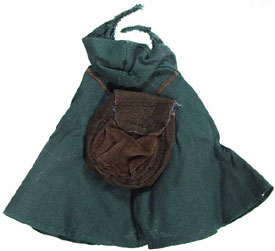
Cloak and BackpackCharacters with lower to higher Strength scores adjust this rule by 2-1-½ per point of Strength. Partial stones can be rounded up. The minimum possible rule, regardless of Strength score, is 2-1-½. (For example, a character with Strength 8 would have an encumbrance rule of 6-3-2. A character with Strength 18 would have an encumbrance rule of 26-13-7.) These adjustments are summarized for convenience on the table at the end of this post.

Lifting and Pulling: The character can lift and carry the amount indicated on the table above their head. They can lift twice this amount and stagger around with it (moving only 5 feet per round as a full action and losing their Dexterity bonus to AC). They can generally drag or pull five times this amount along the ground (favorable conditions can double this; bad circumstances can reduce the amount to one-half or less at the DM’s discretion).

Tremendous Strength: For scores higher than 29, find the Strength score between 20 and 29 with the same final digit and multiply the listed lift score by 4 for every ten points the creature’s strength is above that score. (For example, a creature with Strength 38 would be able to lift 1,200 x 4 = 4,800 lbs.)

Adjusting for Size: The encumbrance rule for a creature is doubled for each size category above Medium and reduced by ½ for each size category below Medium (to a minimum of 1-½-¼). The encumbrance of armor, however, is also adjusted by the same factor (to a minimum of a half stone).

Quadrupeds: Quadrupeds can carry heavier loads, equal to 150% of a biped.

WEIGHT BY STONE

To determine the number of stones carried by a character, simply consult the table below.

ItemWeight in Stones
Heavy Armor5 stones
Medium Armor3 stones
Light Armor1 stone
Shield1 stone
Weapon1 stone
Weapon, lightMisc. Equipment
AmmunitionMisc. Equipment
Miscellaneous Equipment1 stone per 5 bundles
Stowed Weapons1 bundle
Heavy Items1 or more stones
Light Clothing / Worn Items0 stones
500 coins or gems1 stone

Miscellaneous Equipment: Up to twenty items of the same type (scrolls, arrows, potions, rope) can be bundled together for the purposes of encumbrance. Items of different types aren’t bundled when determining encumbrance.

Stowed Weapons: Stowed weapons have been compactly stored in a way which makes them more difficult to draw (but easier to carry). Stowed weapons must be retrieved before they can be used, but they only count as 1 stone per 5 weapons.

Heavy Items: Anything weighing more than roughly 10 pounds can’t be effectively bundled. Estimate a weight in stones (about 10-20 pounds to the stone). When in doubt, call it a stone.

Clothing / Worn Items: Worn items don’t count for encumbrance, unless the individual items would qualify as heavy items.

CONTAINERS

Weapons are assumed to be in sheaths, armor is worn, and you might have a wineskin or two strapped to your belt. But since there’s a limit to how much you can hold in your hands, everything else you’re carrying needs a place to live. As a rule of thumb, containers can carry:

ContainerCapacity
Belt, Pouch1/2 stone
Sack, Small1 stone
Sack, Large2 stones
Backpack3 stones
Backpack, Large5 stones

Empty containers count as miscellaneous equipment. Containers being used to carry items don’t count towards encumbrance.

Larger sacks (often referred to as “loot sacks”) are also possible, but these cannot generally be stored on the body. They must be carried in both hands.

CREATURE WEIGHT BY SIZE

Your own weight does not count against your encumbrance, but these figures are important for mounts. (They’ll also come in handy if you need to carry a corpse or prisoner.)

Creature SizeWeight in Stones
Diminutve or smallerMisc. Equipment
Tiny1 stone
Small2 stones
Medium12 stones
Large100 stones
Huge800 stones
Gargantuan6,400 stones
Colossal50,000 stones

These figures are meant to serve as a useful rule of thumb, being roughly accurate for creatures similar in build and type to humans (i.e. fleshy humanoids). There will, however, be significant variance within each size category. Even typical animals of Huge size, for example, can easily range anywhere from 400 stones to 3,000 stones. Creatures of unusual material can obviously shatter these assumptions entirely (ranging from light-as-air ether cloud fairies to impossibly dense neutronium golems).

ENCUMBRANCE RULES

Strength
Light Load
Medium Load
Heavy Load
Lift
1
1/2
1
2
10 lb.
2
1/2
1
2
20 lb.
3
1/2
1
2
30 lb.
4
1/2
1
2
40 lb.
5
1
1
2
50 lb.
6
1
1
2
60 lb.
7
2
2
4
70 lb.
8
2
3
6
80 lb.
9
3
4
8
90 lb.
10
3
5
10
100 lb.
11
4
6
12
115 lb.
12
4
7
14
130 lb.
13
5
8
16
150 lb.
14
5
9
18
175 lb.
15
6
10
20
200 lb.
16
6
11
22
230 lb.
17
7
12
24
260 lb.
18
7
13
26
300 lb.
19
8
14
28
350 lb.
20
8
15
30
400 lb.
21
9
16
32
460 lb.
22
9
17
34
520 lb.
23
10
18
36
600 lb.
24
10
19
38
700 lb.
25
11
20
40
800 lb.
26
11
21
42
920 lb.
27
12
22
44
1,040 lb.
28
12
23
46
1,200 lb.
29
13
24
48
1,400 lb.

Go to Part 2: Encumbrance Sheet

This material is covered by the Open Game License.
Go to Part 1

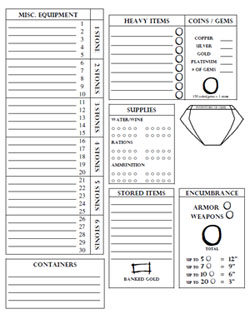
This is an equipment sheet designed to be used with the Encumbrance by Stone rules I posted yesterday.

Encumbrance by Stones - Equipment Sheet
(click for PDF)

USING THE SHEET

Using the sheet is really where this system comes alive, because it basically makes tracking encumbrance as easy as listing what you’re carrying.

Armor/Shield/Weapons: The assumption is that your currently equipped armor, shield, and weapons will be listed for reference on the front of your character sheet. You can jot down the current encumbrance values for these items in the spaces provided in the lower right hand corner of the sheet.

Coins/Gems: These are listed in the upper right and their encumbrance calculated as shown. (To quench the “I have one coin and it apparently weighs a ton” complaints, you can allow players who carrying 20 coins or less to list them as “loose change” in the miscellaneous equipment section.)

Heavy Items: This section is for listing anything that qualifies as a heavy item (i.e., weighs 1 or more stones all by itself).

Miscellaneous Items: The heart of the sheet. Simply list everything you’re carrying in bundles of 20 or less. When you’re done, you can immediately see how many stones of miscellaneous equipment you’re carrying. Bam.

Add Misc. Equipment + Heavy Items + Coins/Gems + Armor + Shield + Weapons = Total Encumbrance. In practice this is all single digit arithmetic and adjusting your encumbrance on-the-fly during an adventure is practically automatic.

Moved equipment to your horse? Picked up a bunch of treasure? Throwing away your shield in order to run away from the goblin horde at your heels? It can all be done in seconds.

TIPS AND TRICKS

Stored Items: This section of the sheet is for anything you own that isn’t currently being carried by your character.

Inventory of Gems: These are tracked separately to make calculating coin/gem encumbrance easier.

Containers: This area is used for listing containers in use (which don’t count against encumbrance). Empty containers should be listed as miscellaneous equipment. There are two easy methods for tracking which items are in which container:

(1) List miscellaneous equipment slot numbers next to the container.

(2) Put a symbol (star, circle, square, etc.) next to the container, then mark items in the container with the same symbol.

Tracking Supplies: The intention is that you list your supplies in the miscellaneous equipment section, but you can quickly check off supplies used on the trackers. At some point of convenience, you can go through your equipment list, adjust the totals, and then erase the supply checklists to start anew.

The Blank Space: After making the sheet I kept expecting something to crop up that I’d forgotten. (At which point I’d have this convenient blank space to slot it into.) After a half dozen sessions, nobody has suggested anything. (Let me know if you think of something.)

Go to Design Notes

This is a simplified method for handling encumbrance in OD&D and is designed to completely replace the existing encumbrance system. It’s indebted to both Delta’s D&D Hotspot and Lamentations of the Flame Princess. I’ll be posting full design notes in a few days.

Encumbrance, measured in stones carried, determines how much a character’s equipment slows them down, as shown on the table below:

EncumbranceMovement
up to 5 stones12"
up to 7 stones9"
up to 10 stones6"
up to 20 stones3"

This can be conveniently thought of as the 5-10-20 rule (which corresponds to the maximum movement rates of 12”, 6”, and 3”).

Mounts and Mules: Can carry three times as much, following a 15-30-60 rule. (The base movement for mounts and mules are given in Volume 2: 24″ for a light horse; 18″ for a medium horse; 12″ for heavy horses, draft horses, and mules.)

WEIGHT BY STONE

To determine the number of stones carried by a character, simply consult the table below.

ItemWeight in Stones
Heavy Armor (Plate-type)5 stones
Medium Armor (Chain-type)3 stones
Light Armor (Leather-type)1 stone
Shield1 stone
Weapon1 stone
Weapon, lightMisc. Equipment
AmmunitionMisc. Equipment
Miscellaneous Equipment1 stone per 5 bundles
Stowed Weapons1 bundle
Heavy Items1 or more stones
Light Clothing / Worn Items0 stones
150 coins or gems1 stone
Weight of a Man12 stones

Miscellaneous Equipment: Up to twenty items of the same type (scrolls, arrows, potions, rope) can be bundled together for the purposes of encumbrance. Items of different types aren’t bundled when determining encumbrance.

Stowed Weapons: Stowed weapons have been compactly stored in a way which makes them more difficult to draw (but easier to carry). Stowed weapons must be retrieved before they can be used, but they only count as 1 stone per 5 weapons.

Heavy Items: Anything weighing more than roughly 10 pounds can’t be effectively bundled. Estimate a weight in stones (about 10-20 pounds to the stone). When in doubt, call it a stone.

Clothing / Worn Items: Worn items don’t count for encumbrance, unless the individual items would qualify as heavy items.

Weight of a Man: A human can generally be assumed to weigh about a dozen stones. Halflings weigh only 2 stones. (Your own weight does not count towards your encumbrance.)

CONTAINERS

Weapons are assumed to be in sheaths, armor is worn, and you might have a wineskin or two strapped to your belt. But since there’s a limit to how much you can hold in your hands, everything else you’re carrying needs a place to live. As a rule of thumb, containers can carry:

ContainerCapacity
Belt, Pouch1/2 stone
Sack, Small1 stone
Sack, Large2 stones
Backpack3 stones
Backpack, Large5 stones

Empty containers count as miscellaneous equipment. Containers being used to carry items don’t count towards encumbrance.

Larger sacks (often referred to as “loot sacks”) are also possible, but these cannot generally be stored on the body. They must be carried in both hands.

Go to Part 2: Encumbrance Sheet

Draconic Memory Crystals

March 22nd, 2011

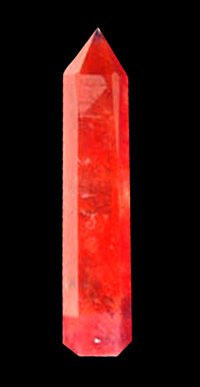
Draconic Memory CrystalDraconic memory crystals are used by dragons to preserve their idle thoughts during their decades of long sleep. (Such thoughts are otherwise often lost within the winding corridors of a dragon’s dreams.) When the dragon awakes, they merely need to reach into the draconic memory crystal to recall dormant trains of their thoughts.

Other creatures can attempt to use a draconic memory crystal by simply grasping it firmly, but they must make a Will save (DC 1/2 dragon’s HD + dragon’s Wisdom modifier) or be overwhelmed by the immensity of draconic thought. If the saving throw is a failure, the victim falls into a coma for 1d10 days. On a success, however, they hear the last thoughts the dragon imprinted into the crystal.

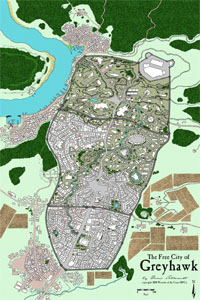
City of GreyhawkYesterday I posted a conceptual system for generating the local market for magic items. Today, using the automatic treasure generator at Alderon’s Tower, I’m going to rapidly generate the local market for magic items in the City of Greyhawk.

THE MARKET LIST

(1) The City of Greyhawk has a population of 160,000. So using Treasure Type A I generate 160 treasure parcels and write down the resulting list of magic items. This took me about 15 minutes and resulted in a list of 137 items.

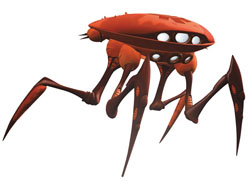
(2) While generating the list, I’m also jotting down ideas which occur to me during the process. For example, I notice that I’m generating an unusual number of cursed scimitars accompanied by a single magical scimitar. I’m struck with the idea of a con artist using the scimitar +2 to demonstrate how amazing his magical scimitar is, and then swapping it out for one of the cursed scimitars when the sale is actually completed. I also notice several water-themed items, including an Apparatus of Kwalish. Has someone discovered a sunken wreck in the Nyr Dyv?

Apparatus of Kwalish

MODIFYING THE MARKET

Greyhawk is a haven for adventuring-types and a hive of magic-users, so I’m going to posit that the market for magic items is fairly active and update it every session.

(1) I roll 16 new treasure parcels and add them to the market list:

oil of etherealness
wand of metal and mineral detection
libram of gainful conjuration
spear +2
bag of holding (500 lbs.)

(2) I roll 2d10 for (9 – 8 =) 1 + the 5 items I generated for a total of 6 items. I randomly eliminate 6 items from the market list:

potion of rainbow hues
cloak of protection +3
oil of air elemental invulnerability
pole arm +1
cloak of the bat
potion of blue dragon control

(3) Once again I try to keep the creative side of my brain churning: If a libram of gainful conjuration has been put up for sale, could it be from the collection of a local wizard? Is he dead and his estate being auctioned in pieces? Has she fallen on hard times and is trying to generate some fast coin?

And is there a reason somebody suddenly has a pressing need to control a blue dragon? Or is there perhaps a draconic cult trying to remove anti-dragon items from circulation? (If the PCs have such an item, might they be targeted?)

Archives

Recent Posts

Recent Comments

Copyright © The Alexandrian. All rights reserved.