I recently finished listening to the Dungeon Crawler Carl audiobooks written by Matt Dinniman and performed by Jeff Hays. I then immediately went back to the beginning of Book 1 and began reading the whole thing over again from the beginning, something which I’ve only done on the rarest of occasions for individual books and which I’ve literally never done for a full series before. The result is astonishing, because with the revelations of the later books in mind, the second time through is often like reading a whole new story. Dinniman’s plotting, character work, and worldbuilding are not only excellent; they’re simultaneously working on multiple, interwoven levels all at once. It’s dizzyingly brilliant.
So, in short: The hype is real. This series is insanely good. If you haven’t read it yet, you should seek it out with all haste.
This is not, however, a review of Dungeon Crawler Carl. If it were, I would talk about how the series’ themes are a vital response to the current zeitgeist; how Dinniman’s deconstruction of the LitRPG genre is perfectly mirrored by Carl’s diegetic destruction of the game; the deeply compelling plotting techniques centered around disrupted vectors, and how juggling those vectors almost “forces” the books into the aforementioned multilayer handling of not only plot, but also character and world.
Instead, though, I want to discuss a thought I’ve been mulling throughout the series: If you were a GM and a player came to you and said, “I want to play a Dungeon Crawler Carl roleplaying game!” what, exactly, would that mean?
This is not, it should be noted, about Renegade Games’ upcoming Dungeon Crawler Carl RPG, although it could obviously be relevant for that game. In truth, it’s not even specific to Dungeon Crawler Carl – it could apply equally well to Lord of the Rings or Star Wars or Marvel superheroes. Dungeon Crawler Carl does provide a particularly useful example, however, and so, although I’ll do my best to minimize them, the following discussion will contain meaningful spoilers for the books.
SPOILERS
Dungeon Crawler Carl begins with apocalypse. The eponymous Carl is outside when every building, vehicle, and other manmade structure is abruptly sucked into the ground, killing everyone within. A few moments later, a planetwide announcement explains what’s happening: A galactic civilization – or, more accurately, the Borant Corporation – has claimed Earth’s resources. The survivors will be offered the opportunity to enter the World Dungeon and the “crawler” who emerges victorious from the dungeon’s eighteenth level can reclaim the planet.
… except, as we discover soon after, in thousands of similar seasons, no crawler has ever reached the eighteenth level, let alone won it.
Plus, it turns out the mining rights are almost an afterthought at this point: The real money is in entertainment. The entire ‘crawl is streamed live to quintillions, creating a massive stream of revenue in the form of subscriptions, sponsorships, advertising, merchandise, and more.
Carl, of course, enters the dungeon, and what he discovers is a pretty standard LitRPG setup: There are vast underground corridors stocked with monsters. To survive and thrive, he needs to kill the monsters, loot their corpses, and level up.
As the series continues, however, these simple tropes are eroded and washed away: The dungeon itself becomes infinitely more complicated, revealing not just the artifice of its storytellers, but the far more poignant saga of its workers, legacies, and organic mythologies which stretch back over thousands of years. More importantly, the dungeon is revealed to be a major focal point for interstellar politics, and Carl quickly finds himself entangled in a web of corporate intrigue and corruption which extends far beyond the dungeon itself. Everything is woven together – a comprehensive system of oppression, the true scope and nature of which even those perpetuating the system don’t fully understand.
So your player comes to you and says, “I want to play a Dungeon Crawler Carl roleplaying game!”
The traditional default for an RPG is that this means “I want to create and play a character in that world!” So what you’d do is faithfully recreate the Borant World Dungeon – translating and expanding the lore from the novels into a useful setting gazetteer and/or playable scenarios. You’d likely kick off your campaign by playing through the same apocalypse described in the opening scenes of the series. The PCs would have their own adventures, of course, but they’d be playing alongside the canonical events of the original series. Maybe they’d have a chance to meet characters from the books like Carl, Ellie, and Imani, or maybe this is an alternate reality where those characters don’t exist and the PCs will have to find their own way.
This default is so engrained, in fact, that you’re more likely than not thinking to yourself, “Well, of course that’s what you’d do.”
But in many ways, this experience will be missing many of the elements that your player likely loved about the books. For example, as you’re reading Dungeon Crawler Carl, Dinniman is constantly revealing radical new truths about the setting that completely revolutionize your understanding of what’s really going on. If you just carbon copy the setting, of course, this revelatory experience – this thrill of discovery that transforms and expands the experience – will be completely absent: The player will already know all of the setting’s secrets.
So when a player says, “I want to play Dungeon Crawler Carl!” maybe what they’re really saying is, “I want a megadungeon story of epic scope where I’m learning the hidden secrets of the universe!” Or maybe it’s some other aspect of the story – “I want a zero-to-hero story where we overthrow galactic tyrants!” – that they’re hoping to experience. Either way, what they’re looking for isn’t the Borant World Dungeon; it’s their own dungeon.
This is the approach Luke Crane took with Burning Empires, an RPG adapting the Iron Empires graphic novels by Christopher Moeller. In the original space opera story, alien mind control parasites invade a 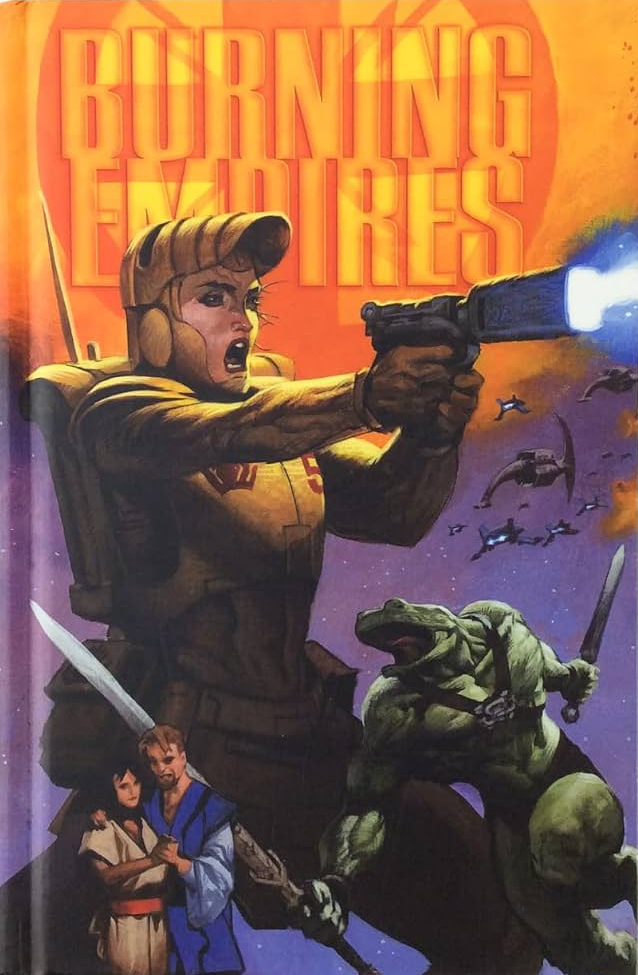 colonial world. Rather than detail the world of the original story, however, Crane implemented a robust procedure – played out alongside character creation – by which the entire group creates their own world, including competing factions and geographic features, for the aliens to invade.
You’ll notice, of course, that these two desires – I want to play in that world! vs. I want to live that experience! – can very easily be in direct conflict with each other: If I wanted to play a campaign set on the same world as the Iron Empires graphic novels, I’d be disappointed with Burning Empires setting the game on a different one. If I wanted to be the Big Damn Hero who saves the ‘verse, I’d be disappointed if my character just heard about those events on a news broadcast.
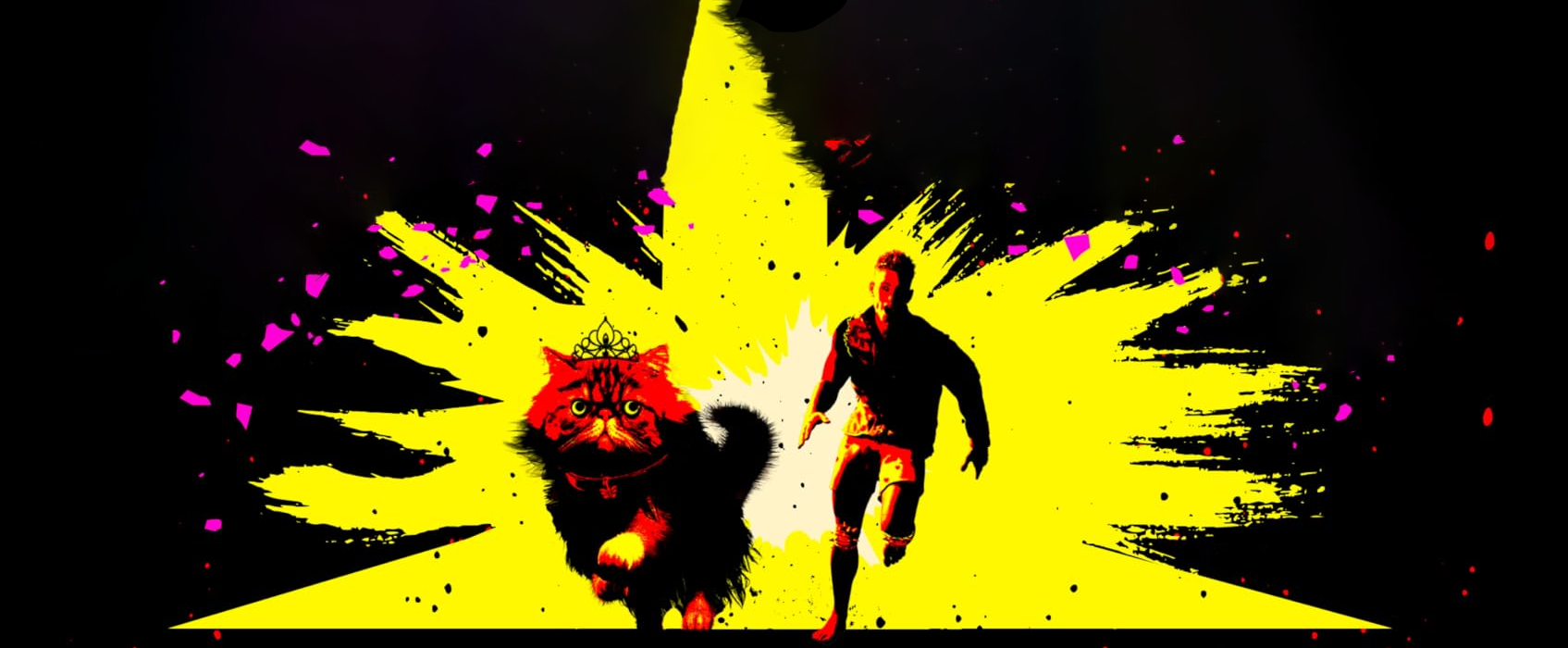
Here’s another desire: I want to play Carl! Not another character in the same setting; not a character like Carl. I want to literally play Carl and have a pet cat named Donut. (And maybe this means playing through the same events of the original story. Or maybe an alternative reality where events diverge. Or maybe it’s playing Carl in a completely different setting.)
I’ve seen this idea – of playing an established character instead of creating your own – get a wild amount of pushback over the years. (There are still people who will go on lengthy rants about TSR’s Indiana Jones RPG in the ‘80s that defaulted to playing Indiana Jones himself.) But it’s really not that different from an actor taking on the role of Hamlet, even though thousands of actors have done so before. It’s a unique creative challenge and there’s a reason why kids love pretending to be Luke Skywalker or Batman or Bluey, not just a generic Jedi, superhero, or talking dog.
And, again, if this is the itch that’s driving your player to the gaming table, it may not be scratched by the other approaches.
CONCLUSION
None of these desires are wrong and none of them are right. In fact, although they may contradict, they can just as readily complement and overlap each other.
The point is that, if you want to deliver the experience your players desire, you’ll often need to dive past the superficiality of their request and think a little more deeply about what experience they’re actually looking for.
Strangely, this can also apply to yourself. If you ever launch a Star Wars game with great excitement only to find yourself oddly dissatisfied with the result, take some time to really think about what you truly wanted from “a Star Wars game” and why your game didn’t achieve it. This will usually mean also talking with your players and making sure you get on the same page about how the game should work.