The Alexandrian

Archive for the ‘Roleplaying Games’ category

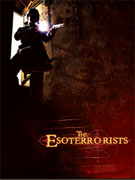
Esoterrorists - Robin D. LawsFor the GUMSHOE system (used in The Esoterrorists and The Trail of Cthulhu), Robin D. Laws decided to get rid of the concept of needing to find clues. In each “scene” of an investigation scenario, there is a “clue”. It’s automatically assumed that the investigators will find this clue.

This removes three of our four chokepoints, leaving only the necessity of using the clue to make the correct deduction (i.e., the deduction which moves you onto the next “scene” where the next clue can be imparted). And, in the case of the GUMSHOE system, even this step can be tackled mechanically (with the players committing points from their character’s skills to receive increasingly accurate “deductions” from the GM).

This is a mechanical solution to the problem. But while it may result in a game session which superficially follows the structure of a mystery story, I think it fails because it doesn’t particularly feel as if you’re playing a mystery.

Laws’ fundamental mistake, I think, is in assuming that a mystery story is fundamentally about following a “bread crumb trail” of clues. Here’s a quote from a design essay on the subject:

I’d argue, first of all, that these fears are misplaced, and arise from a fundamental misperception. The trail of clues, or bread crumb plot, is not the story, and does not constitute a pre-scripted experience. What the PCs choose to do, and how they interact with each other as they solve the mystery, is the story. As mentioned in The Esoterrorist rules, we saw this at work during playtest, as all of the groups had very different experiences of the sample scenario, as each GM and player combo riffed in their own unique ways off the situations it suggested.

But, in point of fact, this type of simplistic “A leads to B leads to C leads to D” plotting is not typical of the mystery genre. For a relatively simplistic counter-example, let’s return to Sherlock Holmes in A Study in Scarlet:

WATSON: “That seems simple enough,” said I; but how about the other man’s height?”

HOLMES: “Why, the height of a man, in nine cases out of ten, can be told from the length of his stride. It is a simple calculation enough, though there is no use my boring you with figures. I had this fellow’s stride both on the clay outside and on the dust within. Then I had a way of checking my calculation. When a man writes on a wall, his instinct leads him to write above the level of his own eyes. Now that writing was just over six feet from the ground. It was child’s play.”

This is just one small deduction in a much larger mystery, but you’ll note that Holmes has in fact gathered several clues, studied them, and then distilled a conclusion out of them. And this is, in fact, the typical structure of the mystery genre: The detective slowly gathers a body of evidence until, finally, a conclusion emerges. In the words of Holmes himself, “When you have eliminated the impossible, whatever remains, however improbable, must be the truth.”

What is true, however, is that in many cases it is necessary for many smaller deductions to be made in order for all of the evidence required to solve the mystery to be gathered. However, as the example from A Study in Scarlet demonstrates, even these smaller deductions can be based on a body of evidence and not just one clue in isolation.

This observation leads us, inexorably, to the solution we’ve been looking for.

Continued tomorrow…

Mystery scenarios for roleplaying games have earned a reputation for turning into unmitigated disasters: The PCs will end up veering wildly off-course or failing to find a particular clue and the entire scenario will grind to a screeching halt or go careening off the nearest cliff. The players will become unsure of what they should be doing. The GM will feel as if they’ve done something wrong. And the whole evening will probably end in either boredom or frustration or both.

Here’s a typical example: When the PCs approached a murder scene they don’t search outside the house, so they never find the wolf tracks which transform into the tracks of a human. They fail the Search check to find the hidden love letters, so they never realize that both women were being courted by the same man. They find the broken crate reading DANNER’S MEATS, but rather than going back to check on the local butcher they spoke to earlier they decide to go stake out the nearest meat processing plant instead.

As a result of problems like these, many people reach an erroneous conclusion: Mystery scenarios in RPGs are a bad idea. In a typical murder mystery, for example, the protagonist is a brilliant detective. The players are probably not brilliant detectives. Therefore, mysteries are impossible.

Or, as someone else once put it to me: “The players are not Sherlock Holmes.”

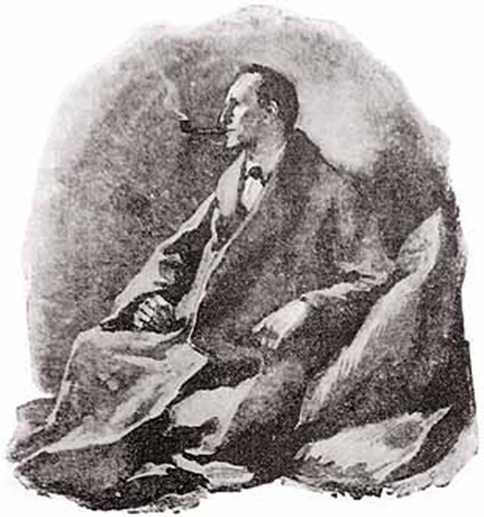
Three Clue Rule - Sherlock Holmes

Although the conclusion is incorrect, there’s an element of truth in this. For example, in A Study in Scarlet, Sherlock Holmes is investigating the scene of a murder. He discovers a small pile of ashes in the corner of the room. He studies them carefully and is able to conclude that the ashes have come from a Trichinopoly cigar.

Now, let’s analyze how this relatively minor example of Holmesian deduction would play out at the game table:

(1) The players would need to successfully search the room.

(2) They would need to care enough about the ashes to examine them.

(3) They would need to succeed at a skill check to identify them.

(4) They would need to use that knowledge to reach the correct conclusion.

That’s four potential points of failure: The PCs could fail to search the room (either because the players don’t think to do it or because their skill checks were poor). The PCs could fail to examine the ashes (because they don’t think them important). The PCs could fail the skill check to identify them. The PCs could fail to make the correct deduction.

If correctly understanding this clue is, in fact, essential to the adventure proceeding — if, for example, the PCs need to go to the nearest specialty cigar shop and start asking questions — then the clue serves as chokepoint: Either the PCs understand the clue or the PCs slam into a wall.

Chokepoints in adventure design are always a big problem and need to be avoided, but we can see that when it comes to a mystery scenario the problem is much worse: Each clue is not just one chokepoint, it’s actually multiple chokepoints.

So the solution here is simple: Remove the chokepoints.

Continued tomorrow…

In Memoriam: Gary Gygax

March 4th, 2008

Gary Gygax died today. Gygax, along with Dave Arneson, have had a tremendous impact on my life and on the lives of millions of others. Not only did they single-handedly create an entirely new form of entertainment, but D&D-inspired games were responsible for the dawn of the computer gaming industry, as well.

Rest in peace, Gary. The world is a poorer place without you.

Super Simple Grappling

February 16th, 2008

DM: With a leering grin, the orc turns towards Eldath the Arcane!
Peter: Shit! That axe will kill me quicker than spit!
Bob: I grab him!
Peter: NO!
Bob: What’s wrong? You want to stop the orc, right?
DM: Okay, what page were the grappling rules on, again?

What do you call a rule that people don’t use because it’s too much hassle to use it?

Useless.

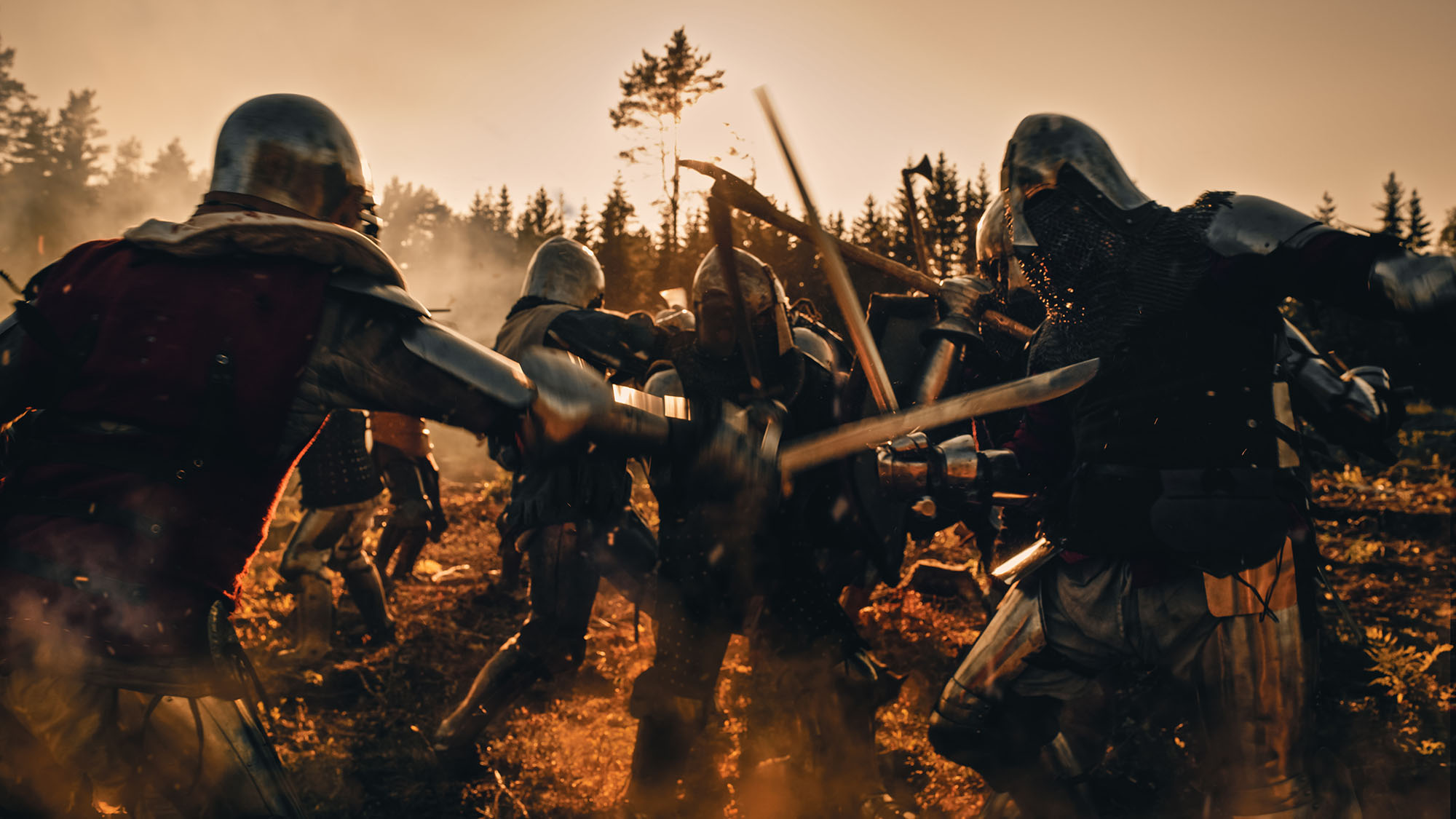
Which is the fate of the grappling rules in many, many gaming tables. Action movies are full of heroes and villains grabbing each other, throwing each other around, and generally wrestling of all kinds. When we see Indiana Jones grab a Nazi and throw him off a zeppelin we cheer. But if Bob’s character tries to leap on the back of the dragon and hurl the dragonrider to the ground, we cringe at the thought of looking up all those rules.

What’s the problem here? Why are so many people leery of the grappling rules?

The rules for actually initiating a grapple are relatively simply (being largely similar to the rules for bull rushing, disarming, and the like). The problem is that, once you’re in a grapple, there’s a whole slew of new rules to determine what you can and cannot do in the grapple.

If you look at any one of these rules, you can easily see the logic of why the rule works that way. But the system, as a whole, doesn’t follow any kind of consistent pattern: You can’t just take what you know about Action A in normal combat, apply the “when in grappling” rule, and know what happens when you attempt Action A while grappling.

Sometimes you can’t attempt the action. Sometimes you have to make an opposed grapple check in addition to the normal check. Sometimes you make an opposed grapple check instead of the normal check. Sometimes the scope of the action is limited (attack, but only with a light weapon; cast a spell, but only if the action is no more than 1 standard action). Sometimes the rules aren’t changed at all.

And then, on top of all that, there’s pinning… which introduces a completely different set of conditional rules. These aren’t as complicated as the rules in a non-pinned grapple, but they’re kind of a cherry on top of it all.

The net result of all this is to, effectively, double the complexity of the combat system. It’s essentially a completely new combat system which is just similar enough to the combat system you already know to add a little extra confusion to the mix.

This set of optional rules tries to fix that problem by applying a simple, consistent rule to actions attempted in grappling. You’ll find that, despite the streamlining to make them easy-to-use, they play very similarly to the existing rules for grappling.

GRAPPLING

GRAB: A character can attempt to grab another character by making a successful melee touch attack. This provokes an attack of opportunity from the target. If the attack of opportunity deals damage, the grappling attempt fails.

STARTING A GRAPPLE: Once they have grabbed an opponent, a character can immediately attempt to start a grapple by taking a free action and making an opposed grapple check. If the character fails, their grab is broken and the attempt fails. If the character succeeds, they move into their opponent’s space and begin grappling.

IN A GRAPPLE:

Characters in a grapple do not threaten opponents they are not grappling.

Characters in a grapple lose their Dexterity bonus to AC (if any) against opponents they are not grappling.

When attempting any action, a character in a grapple must first succeed at an opposed grapple check against everyone else in the grapple. This check is a free action. Opposing characters can choose to automatically fail their checks. (Note: When making a full attack you must make an opposed grapple check before each attack.)

ESCAPING A GRAPPLE: Escaping a grapple requires an attack action. As with any action in a grapple, the character must succeed at an opposed grapple check against everyone in the grapple.

MULTIPLE GRAPPLERS: Up to five combatants of the same size can grapple each other at the same time. Creatures smaller than the largest creature involved in the grapple count for half.

PINNING

A character in a grapple can attempt to pin their opponent for 1 round by making an opposed grapple check as an attack action. If the check is successful, the opponent cannot take any action except trying to escape the pin (by making an opposed grapple check as an attack action).

A character performing a pin can take additional actions normally (although they are considered to be in a grapple and must succeed at an opposed grapple check).

The character performing a pin can release it as a free action.

GRABBING WITHOUT HOLDING

When initiating a grapple, a character can attempt to grab an opponent without holding them. They (but not the opponent they are grabbing) are considered to be grappled: They do not threaten other opponents, gain no Dexterity bonus to AC against opponents they are not grabbing, and can’t move normally.

Each round, the character performing the grab must either release the grab (as a free action), use an attack action and make an opposed grapple check to maintain the grab, or use an attack action and an opposed grapple check to initiate a grapple.

Characters being grabbed can attempt to break the grab by making an opposed grapple check as an attack action. If the character being grabbed moves, they must carry the character grabbing them.

Explaining Hit Points

January 28th, 2008

Hit points have been around for more than 30 years now. (Longer if you count their antecedents in wargaming.) So you might think that, by now, people would have a pretty firm grasp on how these mechanics worked, what they represented, and what it means to lose hit points.

You might think that. But you would be horribly mistaken.

Basically I’m writing this little mini-essay because I’m tired of engaging in the same painful debate every two months. I want to be able to simply point people to this essay and say, “Look, this is the way it works.” (This won’t actually have much effect with people who prefer to be mired in fallacies and foolishness, but it will at least delay the day on which I will inevitably succumb to a lethal case of carpal tunnel syndrome.)

So, first I’m going to repudiate the two primary fallacies which lead the innocent astray when it comes to understanding hit points. And then I’m going to pull my Big Reveal an explain the beautiful abstraction which lies at the heart of the hit point system.

(It should be noted that this essay specifically deals with the type of inflationary hit point system found in D&D. The term “hit points” may also be used for very different damage tracking systems, to which this essay probably won’t apply at all.)

FALLACY THE FIRST: THE AXE TO THE FACE

The first fallacy goes like this:

1. Dupre has 100 hp.

2. A goblin with an axe has hit him 10 times and done 78 points of damage.

3. Clearly, the goblin has hit Dupre in the face 10 times and Dupre is still alive! That’s ridiculous!

The fallacy lies in the illogical leap from point 2 to point 3. A moment’s consideration clearly reveals that there is absolutely no reason to assume that, every single time the goblin landed a solid blow, it meant that the goblin planted his axe straight between Dupre’s eyes.

For example, imagine that you’re talking to someone in real life and they said, “Did you know that Bill was actually shot three times during a mugging a few years back?” Given that Bill is still alive, would you immediately assume that, during the mugging, Bill was dropped to his knees, a gun held to his head execution-style, and the trigger pulled three times?

Of course not. You would assume that Bill was probably hit in the legs or the arms. If he was hit in the chest, you’d assume that he only survived because he got prompt medical attention. And if one of the bullets actually did take him in the head, you’d know that it was a medical miracle that he was still alive.

Similarly, there’s no reason to assume that Dupre was hit in the face ten times with an axe. In fact, quite the opposite is true: There is every reason to assume that he wasn’t hit in the face ten times with an axe.

FALLACY THE SECOND: DEATH BY DODGING

The second fallacy is most often committed because, after escaping the trap of the first fallacy, people go to the other extreme:

1. Dupre could not have been hit 10 times in the face with axe and survived.

2. Therefore, Dupre was never hit with the axe.

3. Dupre won’t be hit by the axe until a blow causes his hit points to drop below 0. When that happens, the goblin will have finally hit him with the axe.

The fallacy here lies in the leap from point 1 to point 2.

Let’s go back to the example of Bill’s mugging. If you friend said to you, “Did you know that Bill was actually shot three times during a mugging a few years back?” Would you assume that he meant, “The guy mugging bill shot his gun three times, but never actually hit Bill.”?

Of course not.

In terms of D&D, the nature of this fallacy is more explicitly revealed when you look at something like poison. If the orc’s axe is coated with poison and we embrace this fallacy, then Dupre has been exposed to the poison 10 times despite the fact he’s never actually been hit by the axe.

And you can reproach this fallacy from multiple directions: If the hit point loss from blows that don’t “really” hit is because Dupre is wearing himself out from dodging, why is dodging a +1 flaming sword more exhausting then dodging a +1 sword?

And, of course, you also have the oddity that, apparently, dodging a blow from a sword can be even more deadly to you than being hit by the sword.

THE BEAUTIFUL ABSTRACTION

The trick to understanding the hit point system is understand that a hit point is not equal to a hit point. In D&D, 1 hit point of damage always represents a physical wound. However, the severity of the wound represented varies depending on how many hit points the victim has.

For a character with 1 hp, that 1 hp of damage represents a serious wound — a punctured lung, a broken leg, or something of that ilk.

For a character with 10 hp, that 1 hp of damage represents a meaningful wound — a deep but or a broken rib.

For a character with 100 hp, that 1 hp of damage represents an essentially inconsequential wound — a scratch, a bruise, or the like.

The reason any particular character has fewer of more hit points (and, thus, varying the severity of any given wound they receive) is abstracted. For some characters its skill; others luck; others physical toughness; others divine grace; others magical protection; and so forth. For most PCs, it’s some combination of all these things.

This is a beautiful abstraction because it allows for quick, simple, and entertaining gameplay. One could certainly design a system with variances in skill, luck, toughness, divine favor, magical protection, and the like were all separately modeled. Many such systems exist. But none of them are as simple, easy, or fun or as hit points have proven to be.

IS IT PERFECT?

No. The system is an abstraction, and that brings with it both advantages and disadvantages. The advantages are simplicity and completeness. The disadvantage is that you can’t reliably pull concrete information back out of the abstraction — and, if you try, you’ll eventually find corner cases where seeming absurdities crop up.

For example, it’s theoretically possible for a sufficiently weak character to deal no more than 1 hp of damage per attack. Such a character could, theoretically, land 100 blows on a character with 100 hp before taking him down. Add poison to the scenario, and you’ve now locked yourself down to a scenario where the weak character is, apparently, whittling his opponent to death.

Such corner cases are statistical oddities, but they’re going to reliably crop up in any system which doesn’t require several additional orders of complexity.

Which leaves the only significant and intractable problem with the hit point abstraction: The cure spells. Despite the fact that the number of hit points required to represent a wound with a particular severity varies depending on the character’s total hit points, a cure spell heals a flat number of hit points. Thus, a cure light wounds spell used on a 1st level fighter will heal grievous wounds. When the same spell is used on a 10th level fighter, on the other hand, it can’t handle more than a scratch.

This is a legacy issue which has been retained for reasons of game balance. But if you want to fix this, simply have cure spells work more like natural healing: Multiply the number of hit points cured by the creature’s HD.

Hit points aren’t a one-size-fits-all solution to tracking wounds in roleplaying games. There are lots of reasons why you might want a more concrete representation of actual wounds or a realistic modeling of incapacitation.

But hit points are often attacked for the most erroneous of reasons. And, as I said up front, I don’t necessarily expect this little essay to make any sort of huge dent in that tidal wave of ignorance and faulty logic. But it might help me keep my blood pressure down.

Archives

Recent Posts

Recent Comments

Copyright © The Alexandrian. All rights reserved.