IN THE SHADOW OF THE SPIRE
Character Background: Dominic Troya
 With the first prelude concluded, we now move on to introducing the rest of the main characters for In the Shadow of the Spire, starting with an Imperial priest named Dominic Troya.
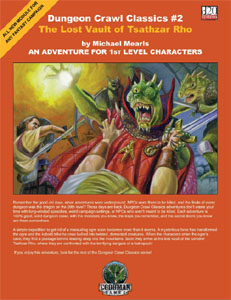
But while you’re reading that, I’m going to back up and continue talking about the first prelude featuring Tee and Agnarr. This prelude was a modified version of The Lost Vault of Tsathzar Rho, an adventure by Mike Mearls.
One of the issues I faced in designing the prelude was the non-standard party composition: Agnarr was a 1st-level barbarian and Tee was a 1st-level rogue. A barbarian is obviously pretty interchangeable with a fighter, but that still left two of the four core roles — cleric and wizard — unfilled.
But, truth be told, I find the typical hand-wringing over the need for a “standard party” to be a trifle overwrought. I’ve played with lots of odd-sized and odd-classed parties in D&D before, and I’ve virtually never found it to be a problem.
The one exception I’ve found is the mostly immutable need for some form of magical healing. Combat in D&D is strongly designed around the hit-and-heal cycle: The game assumes that you’re going to get hit and that you will then be healed.
Everything else, in my experience, is negotiable. Yes, if you’re missing other key roles in the party they will be missed. Without the consistency of a fighter, adventuring days will probably be shorter. Without the firepower of an arcanist, more powerful enemies will need to be avoided. Without a rogue, traps will become far more dangerous. And so forth. But, as I talked about in Fetishizing Balance, this is just a matter of adjusting the difficulty of encounters and the style of gameplay to suit the characters that the players want to play.
In fact, I’ve even played in a couple of short adventures without magical healing. This isn’t so much impossible as it is radically different. Without magical healing, combat in D&D almost instantly turns into a grim ‘n gritty exercise. Wounds take days or weeks to heal and any kind of serious injury — which can be almost trivial to receive — will force the party into rehabilitation. Hit point inflation still makes it possible for higher level characters to pull off some amazing things, but they’ll suffer for it.
In the case of the prelude, however, this grim ‘n gritty environment wasn’t what I was shooting for. (In no small part because I was using a published adventure as a foundation and I would have had to pretty much toss out the whole thing.) So I targeted the party’s shortcoming — magical healing — and provided a healing totem that had been given to Agnarr by the shamans of his tribe.
Mechanically this was basically just a wand of cure light wounds that worked with a command word instead of a spell trigger (so that it could be used without having a cleric in the party). And, if you’ll pardon the pun, it worked like a charm. Several encounters still needed to be adjusted due to the smaller group size, but with a large supply of magical healing available to them the barbarian and the rogue were still able to enjoy traditional-style romp through a dungeon crawl.