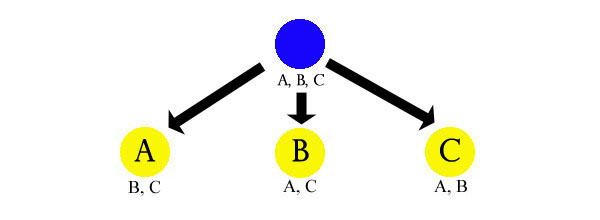
In Node-Based Scenario Design we explored an alternative to the typical plotted approach to scenario design: By designing a situation instead of a plot we create a flexible environment in which the meaningful choices of the players are allowed to flourish. And by organizing the elements of that situation into nodes we retain the clarity of the plotted approach without accepting the limitations of its straitjacket.
Now that we’ve established the basic elements of node-based design, however, I want to explore some of the tips and tricks I’ve learned in working with node-based prep.
Let’s start by taking a closer look at the fundamental structure of node-based design: How do the players move from one node to the next?
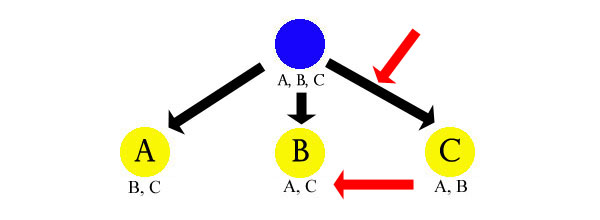
In discussing basic node-based design I defaulted to clue-based movement because (a) it’s simple; (b) it’s versatile; and (c) it clearly demonstrates just how powerful and flexible the node-based approach can be. It’s also fairly universal in my experience: Whatever other methods I may be using, the clue-based approach is virtually always part of the mix.
But it’s not the only way.
PUSH vs. PULL
Let’s start with a general principle.
In discussing narrative velocity in computer games, Andrew Doull coined the terms “push” and “pull”. I find Doull’s usage of the terminology a little vague, but nonetheless useful as a basic concept: A “pull” happens when the players want to explore, experience, or discover a node. A “push” happens when the players are forced to do these things.
A pull, by its nature, requires that the players have some sort of knowledge about the node which makes it desirable for them. The appeal of the pull can take the form of a reward, an opportunity, or any other form of benefit. In a typical D&D dungeon, the pull is the promise of treasure. In a mystery scenario, the simple promise that “you might find some clues over there” is often more than enough of a pull.
A push can similarly rely on player knowledge (“rob the bank or your girlfriend dies”), but it doesn’t necessarily require it. For example, the PCs can be pushed into an encounter with the assassin hunting them (by way of ambush) without ever being aware that the assassin was coming. In other cases, the PCs’ ignorance may be the entire difference between a push and a pull. For example, they might have loved to seek out the Hidden Citadel of the Golden Empire if they had ever heard about it. But since they didn’t, it was a complete push when they randomly stumbled across it during a hexcrawl.
In practice, the distinction between a push and a pull can be somewhat muddy. This is particularly true once you start layering motivations. (For example, the PCs might be forced to investigate the recent raids by giant war parties when the duke threatens to execute them if they don’t. But once they’re engaged in the investigation, the pursuit of individual clues might still be pulls. And maybe they’d already been pulled by the giant raids because Patric’s father was killed by frost giants.)
It should also be noted that pushes don’t need to be fait accompli. The duke threatening to kill them if they don’t investigate the giant raids is certainly a push, but it doesn’t necessarily mean they don’t have the option to leave the duchy and seek their fortunes elsewhere. (Or assassinate the duke. Or bribe him to leave them alone. Or kidnap his daughter and hold her hostage until he grants them a pardon. Or any number of other things.) In other words, the game world can push at the PCs without the GM railroading them.
Pulls and pushes also don’t have to be limited to character motivations; they can also act on player motivations. If you’ve ever heard your players say “let’s find some orcs to kill so that we can level up”, then you’ve heard the siren call of the metagame pull. But this can also take the simple form of “let’s explore the Eyrie of the Raven Queen ‘cause it sounds like the most fun”.
Whether pushing or pulling or both, a node still needs to overcome a certain “gravity” in order to be explored. For some groups, this gravity is simple apathy. (You need to make the place sound a lot more interesting or threaten them with a lot more consequences before they’ll drag their sorry asses out of the local tavern.) Sometimes it’s the competition with other active pulls and pushes. (“We’d love to deal with the Temple of Deep Chaos, but first we need to make sure the Pactlords can’t breach the Banewarrens.”) Or it might be the known and suspected costs of going to the node. (“The Tomb of Horrors may contain a ton of treasure and that’s a fantastic pull… but it’s still a bloody death trap and I don’t want to go there.”)